You turn the key, hear a reluctant click, and then get silence. The lights may still work, but the starter hasn't got enough current to turn the engine. A car battery jumper can get you moving again, but choosing between traditional jumper leads and a portable jump starter matters, especially when you're dealing with a small petrol hatchback, a diesel SUV, or a commercial van.
A flat battery isn't an unusual roadside inconvenience. Green Flag's 2023 UK research found that 25% of drivers had experienced one in the previous 12 months, while only 13% could restart their car themselves. The same research found that just 38% kept jump leads in the car and knew how to use them, while 24% said they'd need professional help. You don't need to become a mechanic, but you do need equipment that suits your vehicle and a safe method for using it.
The All-Too-Familiar Silence of a Flat Battery
The usual warning signs are easy to recognise after you've seen them once. The interior lights look weak, the central locking sounds sluggish, or the engine turns over slowly before giving up. Sometimes there's no warning at all. A car left standing, a light left on, or an ageing battery can leave you stuck outside work, at the supermarket, or on a cold driveway.
That's why a jumper is more than another accessory in the boot. It's a practical way to bridge the gap between a battery that's too weak to crank the engine and an engine that can run its charging system. The tool gets the starter motor turning, but it won't repair a battery that's failing internally or solve an alternator fault.
Practical rule: Treat a jump start as a way to get safely mobile, not as proof that the battery is healthy.
Green Flag identified old or tired batteries as the most common cause of flat batteries, at 38% in the same UK research. That makes preparation particularly useful for drivers of older vehicles, cars used mainly for short journeys, and vans that power electrical equipment while parked. A successful start is only the immediate result. You'll still need to establish why the battery went flat if the problem returns.
Traditional leads remain useful because they're simple and don't need charging. A portable pack offers independence, but it must be kept charged and stored properly. The right choice depends on whether you usually have access to another vehicle, how large your engine is, and whether you want an emergency tool that works without outside help.
Jumper Leads vs Portable Jump Starters
Jumper leads are the established two-car solution. You connect the flat vehicle to a second vehicle with a healthy battery, transfer enough electrical support to help the starter operate, and then remove the leads safely. They're like a landline phone. Reliable when the connection is available, but dependent on something else being present.
A portable jump starter contains its own battery. You carry it in the vehicle, connect it to the disabled car, and use its stored energy to support the starting attempt. It's closer to a mobile phone because it works without finding another vehicle, although it introduces a new responsibility: the pack must be charged and suitable for the engine.
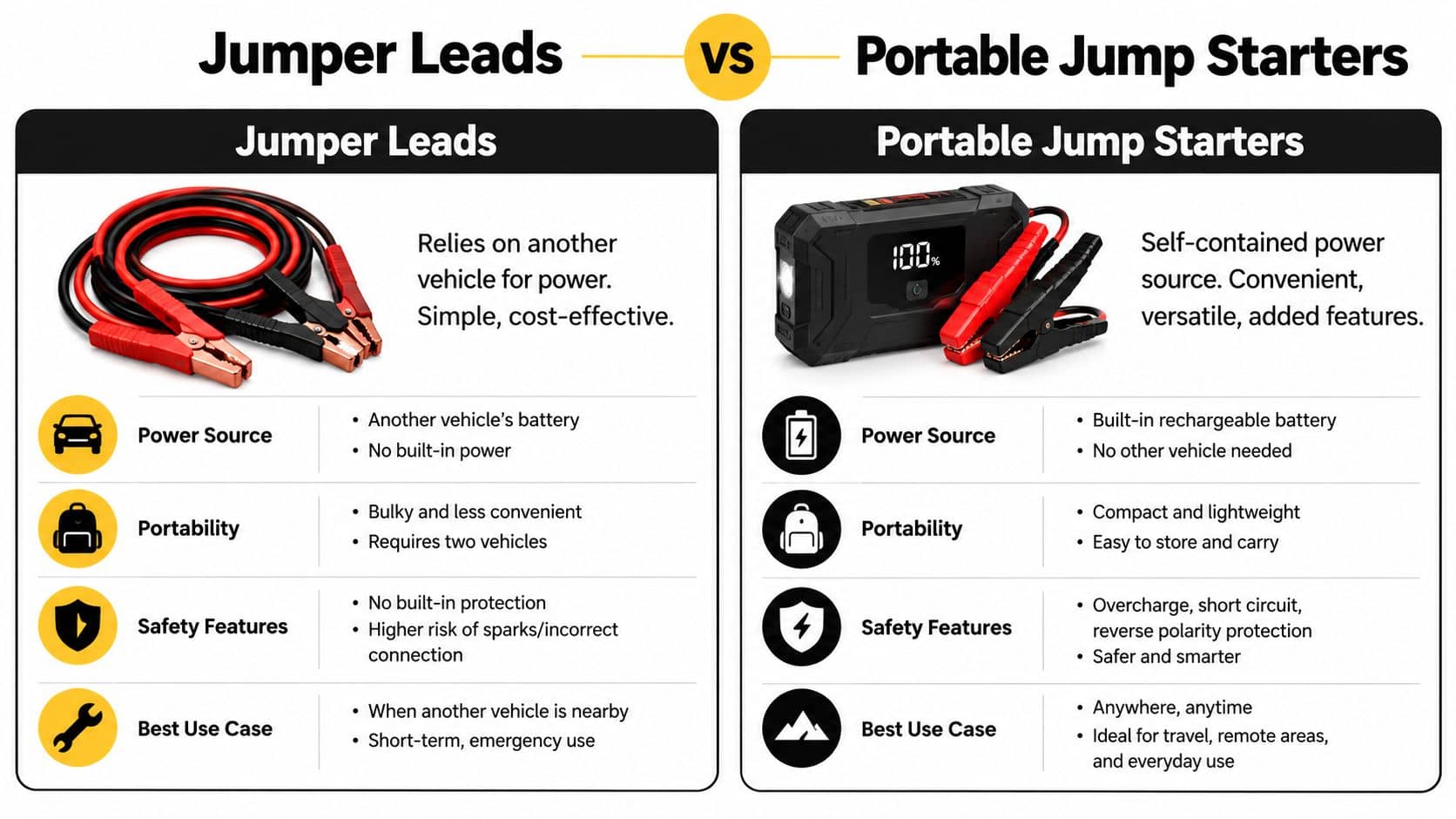
Jumper Leads vs Portable Jump Starters at a Glance
Feature | Jumper Leads | Portable Jump Starter |
Power source | A second vehicle with a charged battery | Built-in rechargeable battery |
Portability | Light and easy to store, but needs another vehicle | Self-contained and designed for roadside use |
Safety features | Depends heavily on correct connection | Many units include polarity and connection protection |
Best use case | Home, workshop, or situations where another car is available | Commuters, isolated breakdowns, and drivers who want independence |
Main limitation | You can't use them alone | You must maintain the unit's charge and match its output to the vehicle |
Leads are often the economical choice, particularly if you already travel with another vehicle or work from a home garage. Their weakness is practical rather than electrical. You need a suitable donor vehicle close enough to reach, safe space to position both cars, and someone willing to help.
A portable unit costs more than a basic set of leads, but it earns that space when you drive alone, operate a fleet, or regularly work away from home. Look for a model with clear status lights, insulated clamps, reverse-polarity protection, and a casing that won't get damaged by movement in the boot. You can compare the available car jump starters before deciding which format suits your routine.
Decoding the Jargon Key Jumper Specs Explained
A flat battery on a small petrol hatchback does not create the same starting demand as a diesel van on a cold Scottish morning. The largest figure printed on a jumper's box is therefore not automatically the most useful. Check how the unit delivers current, how your engine starts, and the conditions in which you may need it.
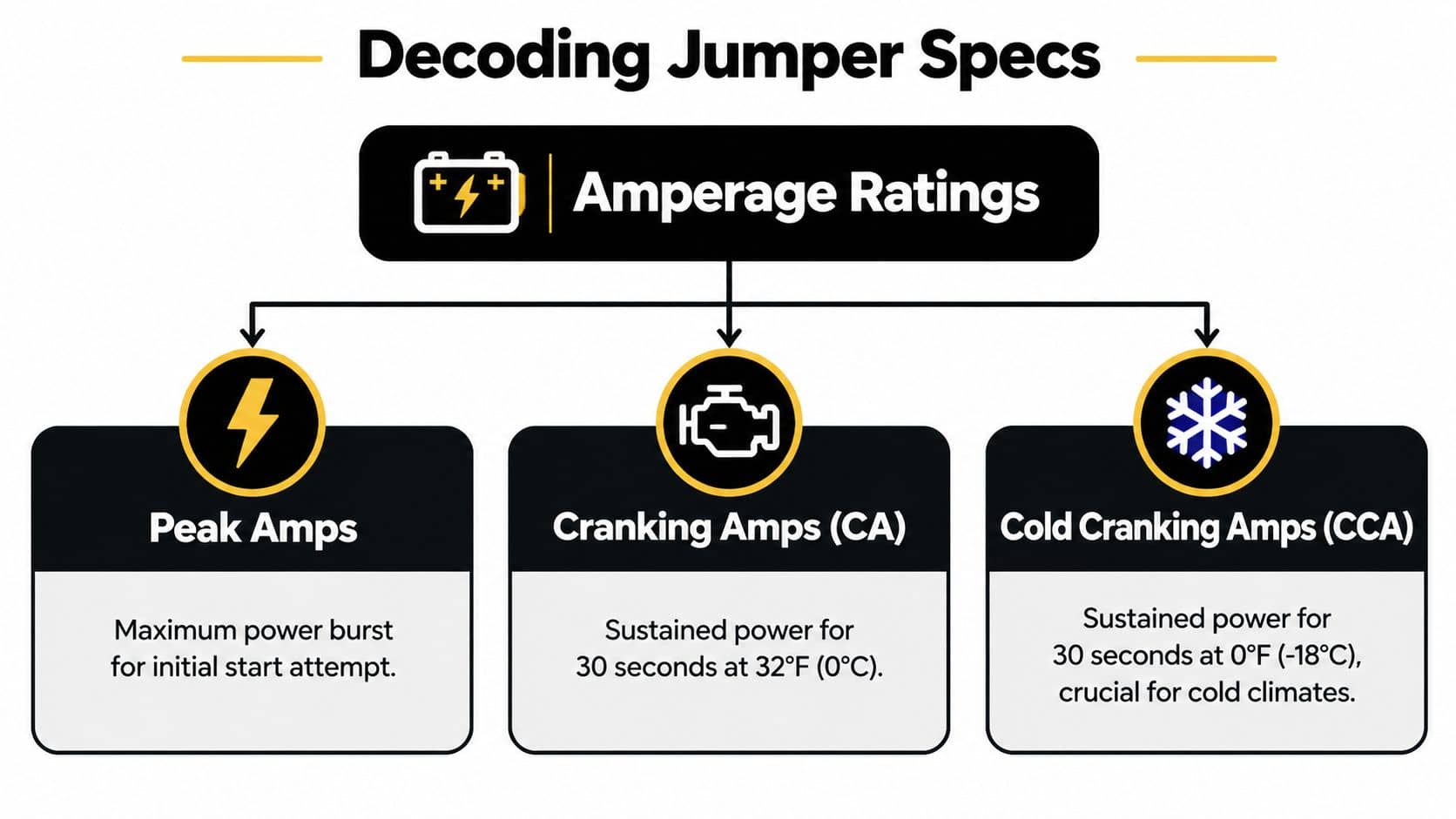
What the amperage labels really mean
Peak amps describe a brief maximum burst. The figure may look impressive, but it does not show how long the unit can support the starter or how reliably it will handle a larger engines.
Cranking amps, usually marked CA, give a more useful indication of starting performance under a stated test condition.
Cold cranking amps, or CCA, relate to starting at low temperatures, when battery performance falls and engine oil becomes harder to move. That matters for a diesel van used in northern England or Scotland, where cold starts place greater demand on the system. A small petrol car used mainly for short urban journeys still needs a suitable pack, although its starter normally faces less resistance than that of a large diesel.
Portable jump starters sold in the UK commonly advertise cranking capacity in the 600A to 1000A range. UK guidance also suggests minimum lead cross-sections of 16mm² for petrol cars and 25mm² for diesel vehicles. The guidance is discussed in portable jump starter specifications for UK vehicles. Use these figures as a starting point, then check the vehicle handbook and the jumper's approved vehicle list. One compact pack should not be assumed suitable for every car and van.
Capacity and cable construction
Portable packs may list their battery capacity in mAh. This describes the electrical energy stored inside the unit, not its guaranteed starting performance. A pack with a high capacity can still be unsuitable if its output, clamps, or protection system does not match the vehicle.
Standalone leads need the right conductor thickness and length. Thin or poorly made cables can lose energy as heat before enough current reaches the starter. For a heavier diesel or long-wheelbase van, choose heavy-duty leads with secure clamps and sufficient reach. That lets you position the donor vehicle safely instead of forcing both vehicles into an awkward nose-to-nose position.
See the range of standalone jump leads when comparing cable construction and reach.Choose equipment by starting with the engine type and battery requirements. Then consider the lowest temperatures in which you expect to use it. USB charging, a torch, or an air compressor can be useful extras, but they cannot make up for inadequate starting capacity.
How to Use a Car Battery Jumper Safely
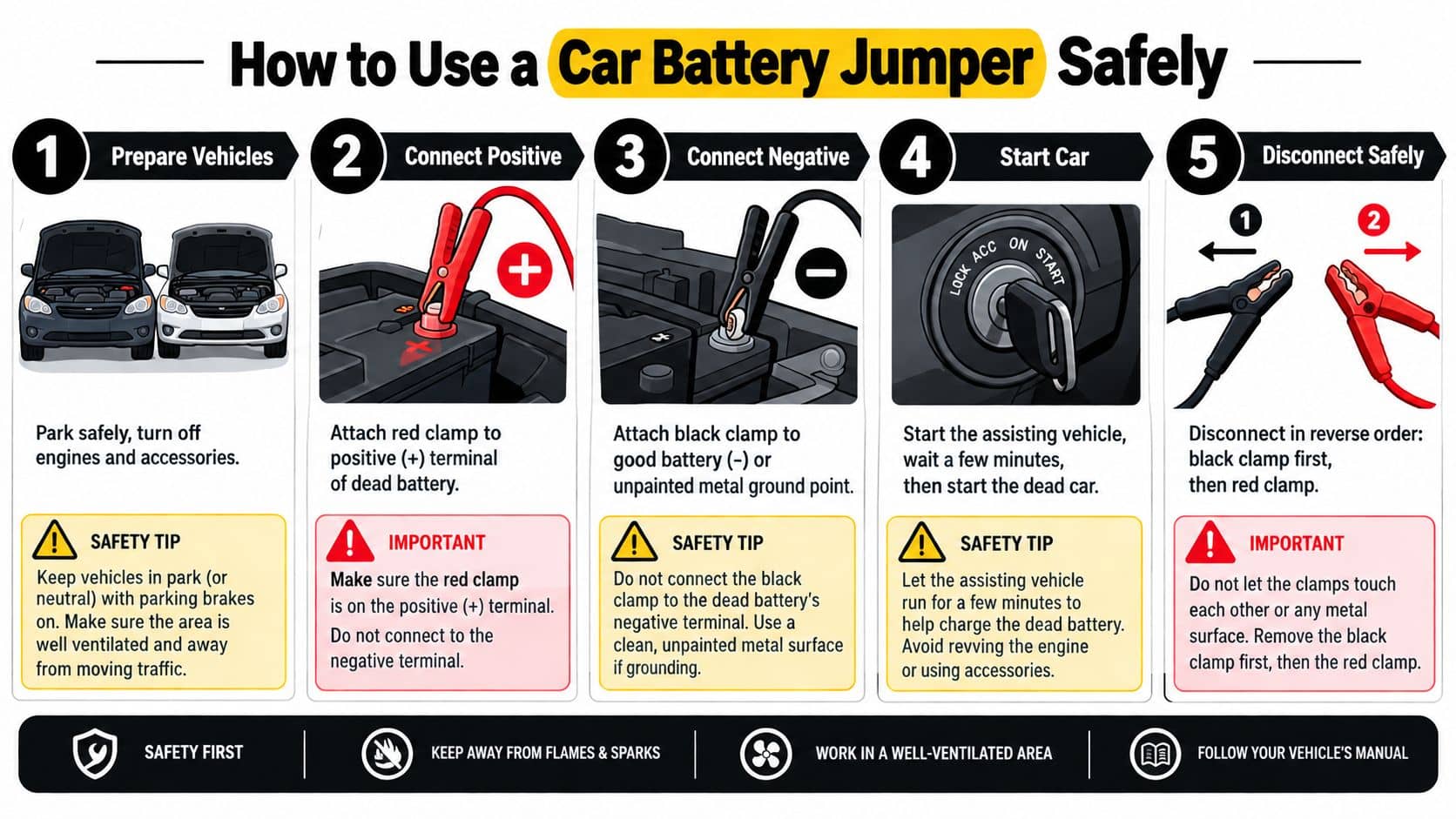
Read the vehicle handbook and the jumper's instructions before connecting anything. Park both vehicles safely, apply the handbrakes, switch off the engines and electrical accessories, and keep the clamps away from moving belts and fans. Don't attempt the job if the battery is damaged, leaking, swollen, or giving off a strong sulphur smell.
A frozen battery is also a stop sign. UK safety guidance says never to jump-start a battery when its fluids are frozen. In freezing weather, inspect the casing and terminals first, and follow the manufacturer's instructions rather than assuming a portable lithium pack can overcome every cold-weather condition.
The correct connection order
For conventional leads, use this sequence:
Connect the red clamp to the flat battery's positive terminal.
Connect the other red clamp to the donor battery's positive terminal.
Connect the black clamp to the donor battery's negative terminal.
Connect the remaining black clamp to an unpainted metal earth point on the disabled vehicle, away from the battery.
That final earth connection matters. Sparks near a battery can ignite hydrogen gas, so UK guidance recommends using bare metal on the disabled car rather than clamping directly to its negative terminal. Ageas's jump-start safety guidance explains the same risk-reducing terminal arrangement.
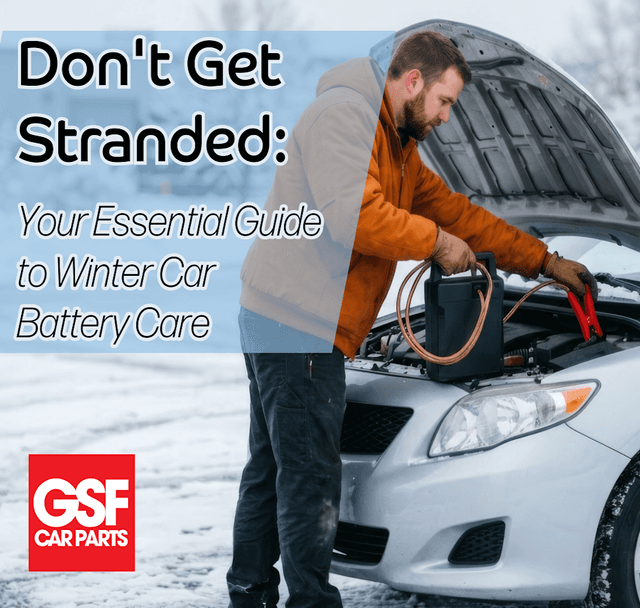
Start the donor vehicle if using leads, allow the systems to connect, and then try the disabled car without prolonged repeated cranking. With a power pack, connect the clamps as directed, switch the unit on when instructed, and watch for any warning indicator before attempting to start.
Once the engine runs, remove the connections in reverse order. Take off the black clamp from the disabled vehicle first, then the black donor clamp, followed by the red clamps. If the leads become hot, smoke, or show signs of damage, stop immediately and move away from the battery until it's safe to investigate.
How To Safely Jump Start A Vehicle With A Dead Battery & The Correct Way To Hook Up Jumper Cables
A jump starter provides starting assistance, not a full battery recharge. Once mobile, arrange a proper battery check or charge if appropriate. Repeated flat batteries point to a battery, charging, or electrical fault that needs diagnosis.
Choosing the Right Jumper for Your Car or Van
Match the equipment to the vehicle you drive, not the smallest car shown in a product advert. A compact petrol hatchback has a different starting demand from a diesel SUV, and a commercial van may need more capacity again, particularly if it spends long periods parked with electrical equipment operating.
For a small petrol car, a compact portable starter can be a sensible boot tool if its stated cranking capability covers the vehicle. Leads remain perfectly practical for home use, provided they're long enough to connect safely and have substantial conductors. Don't pay for a heavy professional pack if you only need occasional assistance for a modest petrol engine, but don't choose purely by physical size either.
A family diesel SUV needs more reserve. Look for a portable unit intended for diesel engines, strong clamps, clear protection alerts, and enough starting capacity for the vehicle's battery and engine. A larger pack takes more room, but that trade-off is preferable to carrying a device that can't support the engine when the battery is weak and the weather is cold.
Buying for vans and workshop use
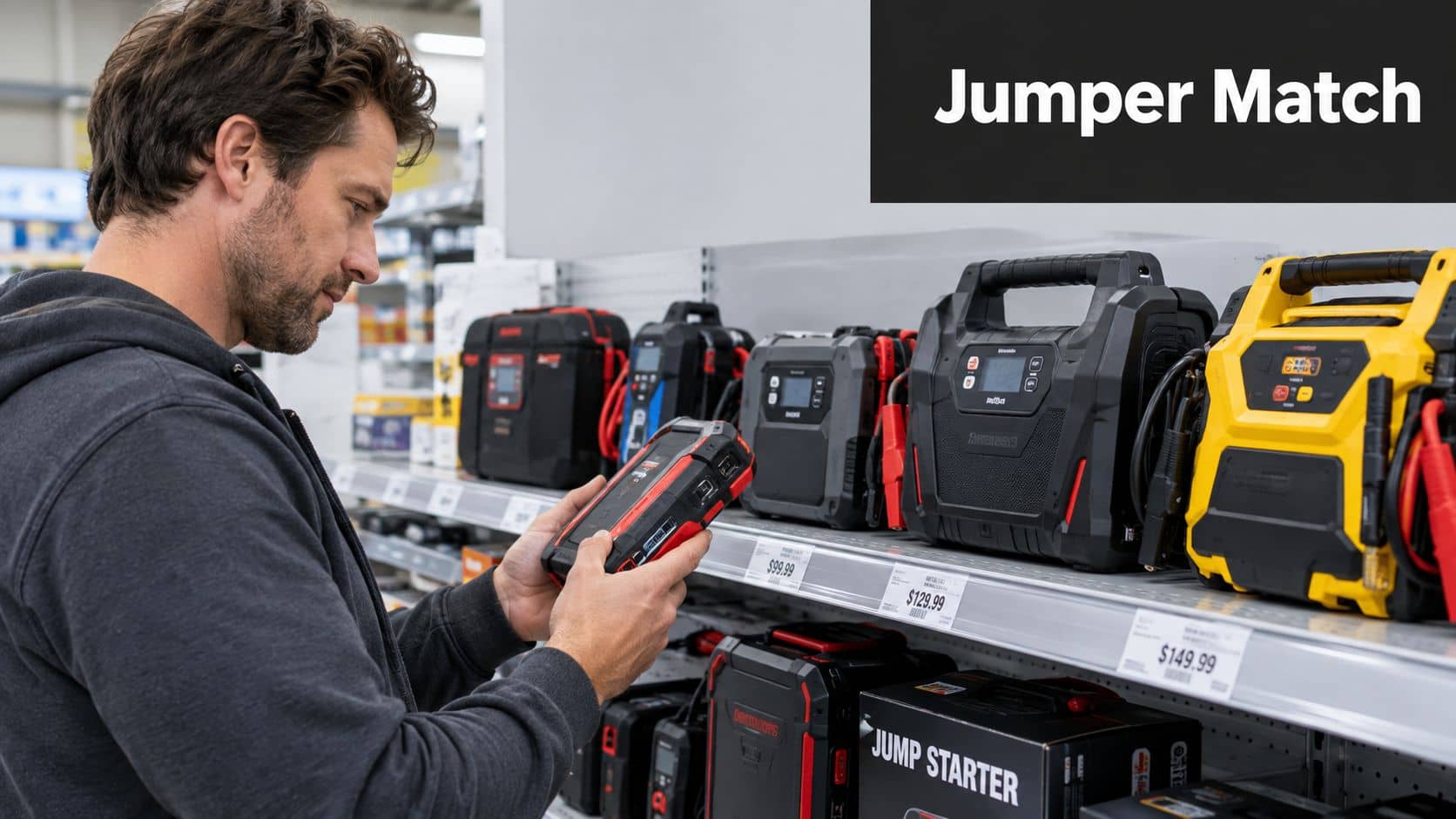
A tradesperson's van needs equipment that can tolerate regular handling. Choose durable clamps, thick flexible cables, a protective case, and a pack rated for the largest vehicle you operate. If several drivers share the same equipment, simple indicators and clear instructions reduce connection mistakes when the person using it isn't mechanically experienced.
For traditional leads, the AA recommendation gives a useful UK benchmark: 25mm², or 4-gauge, cables at least 3 metres long for most UK vehicles, as detailed in the RAC jump-start guide. Longer, heavier leads are less convenient to store, but they offer more freedom when positioning vehicles. Very short leads can force unsafe parking or leave the clamps unable to reach.
GSF Car Parts lists power packs and battery starting equipment, including options such as NOCO Boost units. Compare the vehicle coverage, output, clamp design, charging method, and storage requirements before choosing. Features such as a torch or USB outlet are useful secondary benefits, but starting performance and safe construction come first.
Whatever your vehicle, keep the pack charged, inspect leads for damaged insulation, and store the equipment where it can be reached without unloading the entire boot. A jumper that's buried, flat, or corroded isn't much help during a roadside problem.
Be Prepared and Drive with Confidence
Jumper leads are straightforward and cost-effective, but they depend on a second vehicle. A portable jump starter gives you independence, provided you keep it charged and choose a model suited to your engine. Small petrol cars can often use compact equipment, while diesel SUVs and vans demand more attention to cranking capacity, cable thickness, clamp quality, and cold-weather performance.
Safety comes before speed. Check the battery, follow the positive-to-positive and final-earth connection order, keep metal objects and sparks away, and stop if the battery leaks or the leads heat up. Remember that starting the engine doesn't prove the battery is fixed. Arrange a proper test if the fault repeats.
Keep the right car battery jumper in the vehicle, practise identifying the terminals before an emergency, and check the equipment periodically. That preparation turns a stressful silence into a manageable roadside task.
GSF Car Parts offers jump starters, jump leads, power packs and other vehicle maintenance equipment for UK motorists, DIY owners and light commercial users. Visit GSF Car Parts to compare suitable options online or arrange Click & Collect for an urgent repair.