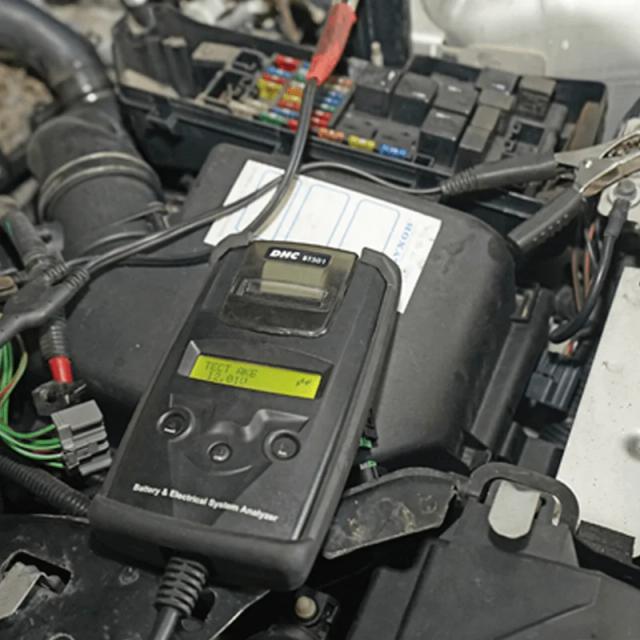
You’re driving normally, the car feels fine, then an amber EPC light pops up on the dash. If you’ve searched epc in car, there’s a fair chance you’re in that exact moment now, wondering whether you can carry on, whether it’s serious, and whether this is about to turn into a painful garage bill.
The good news is that EPC faults are usually diagnosable. The less-good news is that the light covers several different components, so guessing rarely saves time or money. The sensible move is to understand what the light is watching, check the easy things first, and then decide whether you’re dealing with a simple switch, a sensor problem, or a fault that needs proper Volkswagen Group diagnostics.
That Sudden EPC Light on Your Dash
You pull out into traffic, press the accelerator, and the car suddenly feels half asleep. It still runs, but it will not pick up speed cleanly. Then you spot the amber EPC light on the dash.

That catches a lot of drivers out because the warning often appears with no drama beforehand. One minute the car feels normal. The next, the throttle response is dull, the revs are limited, or the engine feels hesitant pulling away from a junction or joining a dual carriageway.
The first job is simple. Pay attention to how the car is behaving, not just the light itself.
If the EPC light comes on but the car still idles cleanly, accelerates normally, and no other warning lights appear, you can usually get home or to a garage without panic. If it starts misfiring, struggling to hold speed, cutting power sharply, or showing a flashing engine light as well, ease off and stop somewhere safe as soon as you can. At that point, the sensible question is not whether the light might clear on its own. It is whether the car is safe to keep driving.
Why the car can suddenly feel weak
On many VW Group cars, the system will reduce power when it sees a fault it does not like. That is why drivers often describe the car as flat, reluctant, or stuck with poor throttle response even though the engine has not fully stopped.
Practical rule: If the EPC light appears and the car loses power, treat the loss of performance as the main warning sign.
In the workshop, I have seen EPC faults turn out to be fairly small jobs, such as a brake light switch, a dirty throttle body, or a failed sensor. I have also seen cars arrive on recovery because the owner carried on driving with severe hesitation and barely any response from the pedal. The trade-off is straightforward. A short, careful drive to a safe place can be reasonable. Pushing on with a car that feels unpredictable is not.
What to do next, in plain terms
For a UK driver at the roadside, the next steps should be practical. Find a safe place to pull over. Restart the car once if it is safe to do so, because some temporary faults will change or become easier to judge after a restart. Check for obvious issues such as a loose battery connection, damaged brake lights, or a very rough idle. Then decide whether you are dealing with a car that feels usable, or one that needs proper diagnosis before it goes any farther.
That is the gap most drivers get stuck in. The warning light is vague, but the next move should not be. Start with the easy checks, avoid guessing at parts, and if the car still feels wrong, book a scan or get professional help before a minor fault turns into wasted time and money.
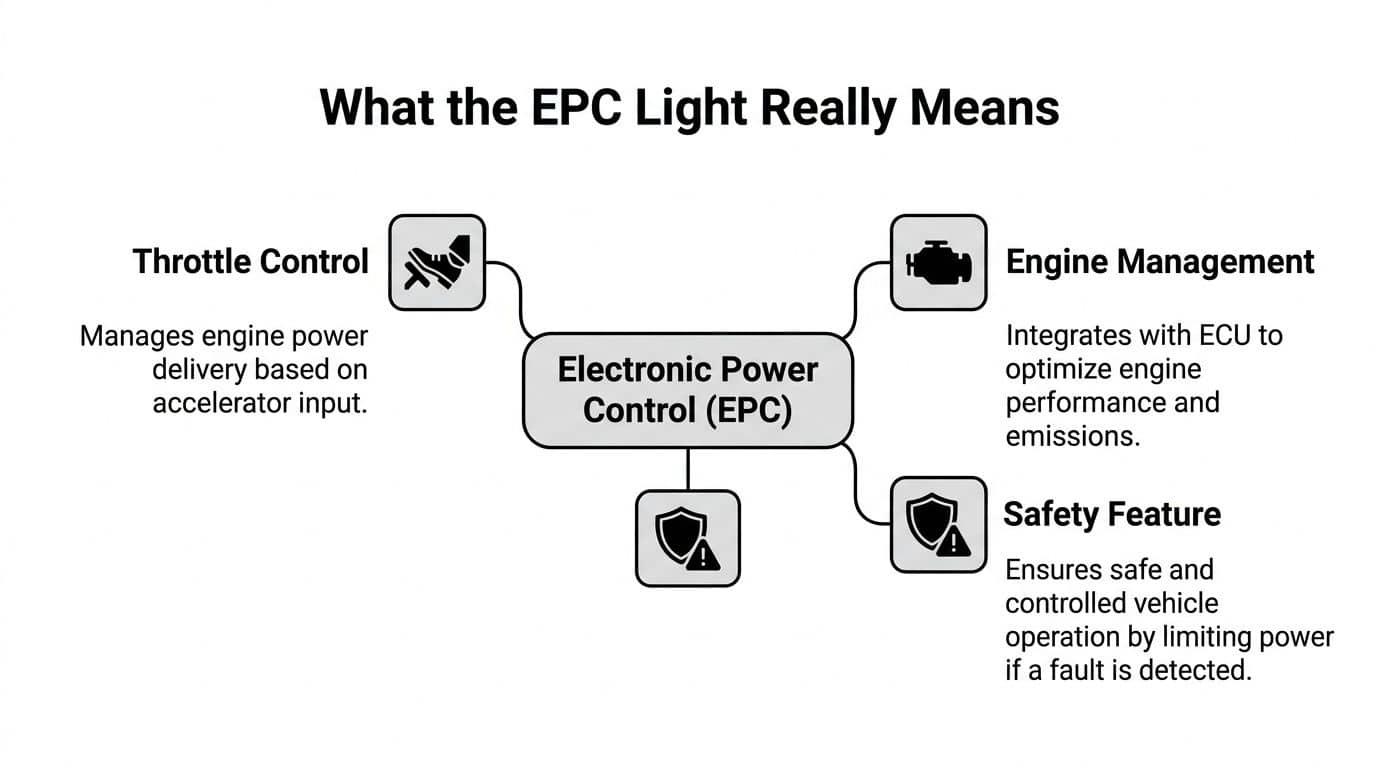
What the EPC Light Really Means
EPC stands for Electronic Power Control. On cars that use it, usually Volkswagen Group models, the warning refers to the electronic side of how the engine responds to your right foot and how the car checks that response is safe and believable.
How the system works in real life
Older throttle systems used a physical cable between the pedal and the throttle. Modern cars use sensors instead. You press the accelerator, the pedal sensor sends a signal, the engine control unit checks it, and the throttle body opens by command rather than by cable.
That extra layer of control is why the car can manage idle speed, traction interventions, emissions, cruise control, and throttle response much more precisely. It is also why one bad signal can bring on an EPC light even when the engine itself still starts and runs.
The control unit sits at the centre of that decision-making. If you need to understand what that part does, or you are pricing up a replacement after proper testing, it helps to look at an electronic control unit for engine management.
What the EPC system is checking
The EPC warning usually appears when the car sees a mismatch in the power-control system. In plain English, one part says one thing and another part disagrees, or a signal drops out altogether.
The system may be monitoring:
Accelerator pedal position, to see what the driver is requesting
Throttle body position, to confirm the throttle has moved correctly
Brake pedal switch input, because the car needs to know when braking overrides throttle demand
Airflow and engine load signals, which affect fuelling and response
Related traction or stability inputs, where fitted, if engine power needs to be cut for safety
That matters because the light is not limited to one single part. A dirty throttle body, a weak sensor signal, damaged wiring, or a faulty switch can all trigger the same warning.
Why it feels different from a standard engine light
An engine management light often points to emissions or general running faults. An EPC light is narrower than that. It usually points to the electronics that control throttle and power delivery.
In the workshop, that distinction changes the first checks. With an EPC fault, I pay close attention to pedal input, brake switch operation, throttle readings, and live data from the control unit before assuming anything major has failed.
The car may still drive, but the response can feel odd. You might get hesitation, poor pick-up, uneven idle, or a reduced-power mode because the system no longer trusts one of the signals it relies on.
The EPC light often means the car has spotted a control problem, not that the engine has suffered internal damage.
For a UK driver, that is useful because it points you towards sensible next steps. Start with the basics, avoid guessing, and if the warning stays on or the throttle response feels wrong, get the fault codes read before buying parts.
Common Causes of an EPC Warning Light
When you strip away the mystery, most EPC faults come back to a short list of usual suspects. Some are cheap and simple. Others take proper testing because several parts can trigger the same warning.

The parts that fail most often
Throttle body
This is the unit that controls airflow into the engine. On an electronic setup, it opens and closes based on commands from the control unit.
Problems usually come from:
carbon build-up around the throttle plate
an internal motor fault
position feedback that no longer matches what the control unit expects
A dirty throttle body can cause poor idle and hesitation. A failing electronic throttle body can push the car straight into reduced power.
Brake light switch
This catches people out. The EPC system expects sensible information about when the brake pedal is pressed. If the switch fails, the car can see conflicting data and turn the light on.
This is one reason a quick brake light check is worth doing before anything more involved.
Mass airflow sensor and related intake faults
If the engine can’t trust the airflow reading, fuel and throttle control can get messy. A contaminated mass airflow sensor, a poorly fitted hose, or a leak in the intake side can all cause trouble.
Vacuum leaks can do the same thing. Split hoses and perished rubber don’t always look dramatic, but they can upset idle quality and trigger warnings.
A useful visual walkthrough helps here:
6 Causes of EPC light coming on VW vehicles. How to diagnose and fix?
Accelerator pedal sensor
The pedal itself contains a sensor. If that signal becomes erratic, the car may no longer trust driver input. That often shows up as delayed response or sudden limp-home behaviour.
Wiring and connectors
This is the part DIY owners often miss. A perfectly good sensor can appear faulty if the wiring is damaged, a connector is loose, or corrosion has crept into a plug.
On older cars especially, never rule wiring out just because the fault code names a component.
Common EPC faults and their characteristics
Faulty Component | Common Symptoms | DIY Difficulty | Approx. Part Cost (GSF) |
Brake light switch | EPC light, odd brake light behaviour, reduced response | Low | £20-£50 |
Throttle position sensor | Hesitation, poor throttle response, limp mode | Medium | Varies by vehicle |
Throttle body | Rough idle, stalling tendency, reduced power | Medium to high | Varies by vehicle |
Mass airflow sensor | Flat acceleration, unstable running, fault recurrence | Medium | Varies by vehicle |
Wiring or connector fault | Intermittent EPC light, inconsistent symptoms | High | Depends on repair |
Engine control unit related fault | Persistent warning, multiple related faults | High | Varies by vehicle |
If the diagnosis points deeper into control electronics, it may involve the engine management ECU parts category, but proper testing holds utmost importance. Replacing control units on suspicion is expensive and often unnecessary.
Symptoms and Immediate Safe Actions
The moment the light appears, focus on what the car is doing, not just the symbol on the dash. The symptoms tell you how urgent the situation is.
What you might notice
Some cars light the warning and carry on. Others go into limp mode, where the engine power is deliberately restricted.
You may notice:
Weak acceleration, especially when pulling away or overtaking
Low rev limit, where the engine won’t climb freely
Rough idle, hunting, shaking, or a sense that it might stall
Poor throttle response, where the pedal feels disconnected from the engine
Other warning lights, especially traction or stability related lights
In the verified data, limp mode commonly limits engine speed to around 3,000 to 4,000 RPM, and the point of that strategy is to prevent further damage while still allowing limited movement.
What to do at the roadside
If the car still steers and brakes normally, don’t panic. Pull over somewhere safe and work through a calm check.
Stop safely
Use a lay-by, service area, or a safe side road. Avoid hard acceleration or trying to “drive through it”.Switch the engine off
Leave it for a short moment, then restart. Some temporary faults clear briefly after a restart.Check brake lights
If someone’s with you, ask them to stand behind the car while you press the brake pedal. If the brake lights aren’t behaving properly, the switch becomes a strong suspect.Listen and look
Lift the bonnet if it’s safe. Check for a loose intake hose, a connector that looks disturbed, or anything obvious after recent work.Decide based on behaviour
If the light has gone and the car feels normal, you may have had a temporary fault. If it stays on, or the car still lacks power, don’t push your luck.
If the car is sluggish, won’t rev properly, or feels unsafe in traffic, the smart move is recovery or a short trip directly to a garage, not business as usual.
When driving on is a bad idea
Avoid motorway driving if the car is in reduced power mode. Joining fast traffic with poor acceleration is where a manageable fault turns into a safety issue.
If the engine is stalling, misbehaving badly, or the warning returns immediately after restart, get it diagnosed before using the car normally again.
How to Diagnose an EPC Fault Yourself
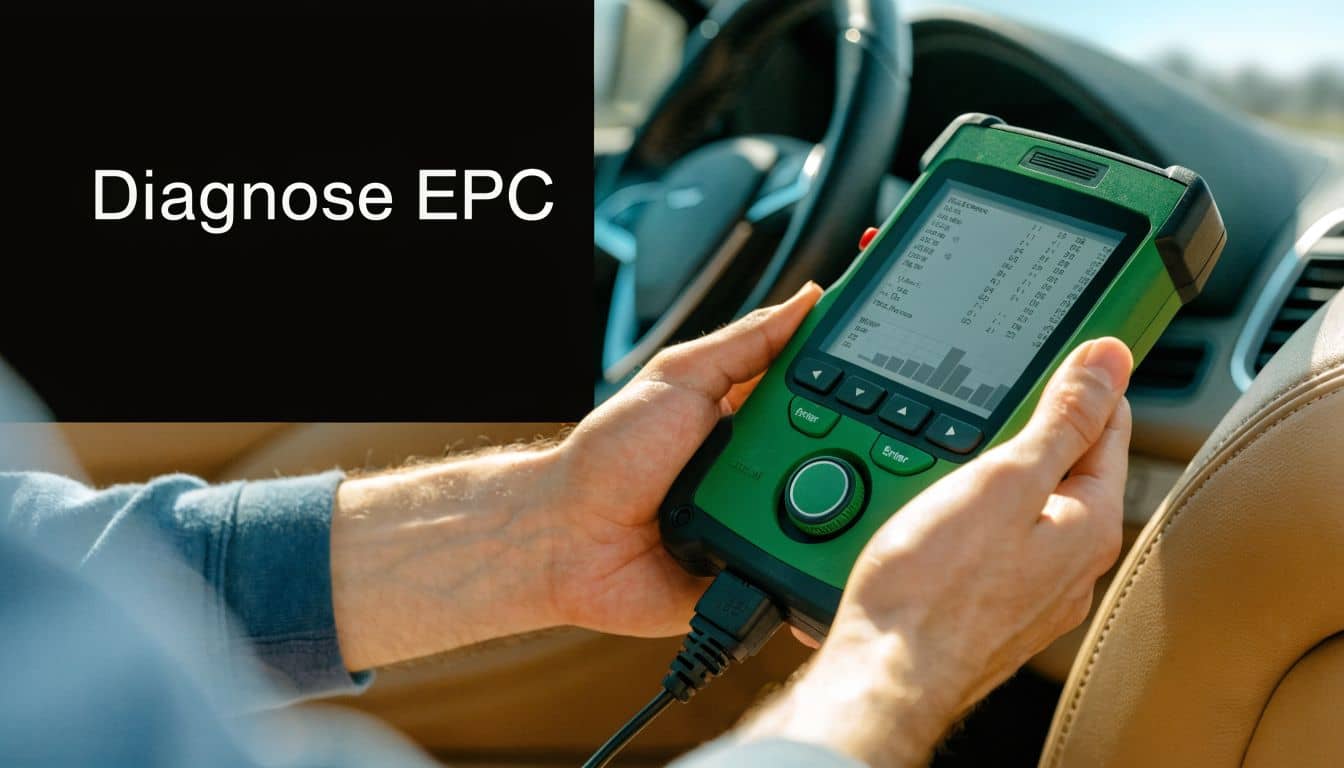
DIY diagnosis starts with one simple rule. Read the fault codes before you buy parts. Without that, you’re only guessing.
Start with a scan
Use an OBD2 scanner and pull the stored diagnostic trouble codes. The port is usually under the dashboard on the driver’s side.
A basic scanner can still be useful. It may point you toward a throttle signal problem, airflow issue, or brake-related fault. That’s enough to begin checking the right area.
But there’s an important catch. The EPC system relies on multiple sensors and modules communicating with the ECU over CAN bus, and MJ Electrical’s explanation of Electronic Power Control systems notes that proper diagnosis often requires specialised tools such as VCDS or ODIS, because generic OBD2 scanners may not interpret Volkswagen Group proprietary fault codes correctly.
What you can check after reading codes
Once you have a code or at least a fault area, inspect before replacing anything.
Check the obvious first
Connectors. Unplugged, loose, wet, or corroded plugs are common.
Wiring. Look for rubbing, broken insulation, or stretched harness sections.
Intake hoses. A loose hose can create faults that feel much bigger than they are.
Throttle body area. Dirt and carbon build-up can affect operation.
Match the symptom to the part
A brake switch fault often shows up with odd brake light behaviour. A throttle-related code with rough idle points you more toward the throttle body or its sensor feedback. An intermittent fault that disappears and returns often deserves extra suspicion around wiring and connectors.
Don’t treat a code as a command to replace a part. Treat it as a signpost telling you where to inspect.
Where DIY diagnosis usually hits a wall
Many owners struggle at this stage. Generic code readers are helpful, but they don’t always tell the full story on VW Group cars. A code might tell you a signal is implausible without confirming whether the sensor, the wiring, or the control unit is at fault.
That’s why proper scan tools matter. They can read manufacturer-specific codes, show live data, and help you compare what the pedal, throttle body, and related systems are doing in real time.
If you want to start with your own kit, the vehicle electrics tool range is the kind of category worth browsing for basic diagnostic and test equipment. It won’t replace dealer-level software, but it can make first checks far more informed.
A sensible DIY limit
DIY works best when the fault is clear, accessible, and supported by the symptoms. If the codes are vague, the fault is intermittent, or multiple warning lights are involved, that’s usually the point to hand the car over to a specialist with proper Volkswagen Group diagnostics.
Finding Parts and Deciding on a Fix
Once you’ve narrowed the problem down, the next decision is practical rather than technical. Do you fit the part yourself, or book it into a garage?
Jobs that often suit DIY
Simple EPC-related jobs are usually manageable at home if you’re comfortable with basic tools and working carefully.
Good DIY candidates include:
Brake light switch replacement, because access is often straightforward
Some sensor changes, where the component is easy to reach
Throttle body cleaning, if the unit is dirty rather than failed
Basic intake and connector repairs, where the problem is clearly visible
These jobs suit owners who can read a code, inspect carefully, and avoid forcing brittle clips or connectors.
Jobs that usually need a garage
Some EPC repairs look simple on paper but become awkward in practice.
A throttle body replacement is the classic example. Fitting the unit is only part of the job. Some vehicles need adaptation or calibration afterwards. Wiring faults are another time sink. They can take far longer to prove than to repair.
There’s also the diagnostic side. According to Motronix’s guide to Audi EPC causes and fixes, a generic code reader is often insufficient for EPC faults and a proper diagnosis often needs a factory-level scan tool to read Audi or VW-specific codes. That creates a real trade-off. Either invest in better diagnostic capability, or pay a garage to diagnose accurately and avoid replacing good parts.
A practical decision test
If you’re unsure, use this filter:
Situation | Best move |
Fault code points clearly to a cheap switch or accessible sensor | DIY is reasonable |
You’ve got one obvious issue after recent work, such as a loose hose or disturbed connector | Check and fix it yourself first |
The car is in limp mode and the code is vague or manufacturer-specific | Book proper diagnostics |
Multiple warning lights are on or the fault keeps returning | Use a specialist |
You suspect wiring, ECU, or adaptation is involved | Don’t guess |
Buying the right part matters more than buying the fastest part
The biggest mistake isn’t usually fitting a part badly. It’s fitting the wrong one because the diagnosis was vague or the vehicle match was wrong.
Throttle and pedal-related components can vary by engine code, registration year, and system version. That’s why accurate vehicle matching matters. If your diagnosis points to the throttle side of the system, browsing the correct throttle position sensor options is far better than buying by rough description alone.
What works and what doesn’t
What works:
confirming the fault with a scan
checking plugs, hoses and wiring before ordering parts
replacing simple failed switches and sensors when the evidence is strong
using a garage for coding, adaptation, and deep diagnostics
What doesn’t:
clearing the light and hoping it stays away
replacing the first part named by a generic fault code
ignoring reduced power because the engine still starts
assuming every EPC light means a failed throttle body
In practice, the cheapest repair is often the one diagnosed properly the first time.
EPC Light Frequently Asked Questions
Can I drive with the EPC light on
Sometimes, but that doesn’t mean you should carry on normally. If the car feels unchanged and you’re only moving a short distance to get it checked, that may be workable. If it’s in limp mode, struggling to accelerate, or behaving unpredictably, stop using it except to move it somewhere safe.
Does EPC always mean an expensive repair
No. Some EPC faults come from simple components such as a brake light switch. Others involve sensors, throttle cleaning, or basic wiring repairs. The expensive bills usually come from misdiagnosis, repeated guesswork, or leaving the problem too long.
Will restarting the car clear it
It can clear a temporary or soft fault for a while. That doesn’t prove the problem has gone away. If the light returns, the underlying issue is still there and needs diagnosing.
Is the EPC light the same as the engine management light
No. They can appear together, but they don’t mean exactly the same thing. The EPC warning is aimed more specifically at electronic power and throttle-related control systems.
Can I fix epc in car problems without a garage
Sometimes, yes. If the fault is a clearly identified switch, accessible sensor, or obvious loose connection, a competent DIY owner can often sort it. If the scan data is vague or the vehicle needs brand-specific diagnostics, a garage with VW Group software is the safer route.
What should I check first at home
Start with the easy, low-risk checks:
Brake lights
Loose intake hoses
Disturbed connectors
Stored fault codes with an OBD2 scanner
Visible wiring damage near related components
If the car still runs, can I ignore it for a week
That’s a gamble. Some faults stay mild. Others worsen quickly or leave you stuck in reduced power at the worst moment. Treat the warning as a fault to diagnose promptly, not a light to live with.
If your EPC light has narrowed down to a likely switch, sensor, throttle, tool, or electrical fault, GSF Car Parts is a practical place to get the parts and workshop essentials you need. Use the number plate finder to match components correctly, choose Click & Collect if you need the repair moving today, or speak to the team if you want help identifying the right replacement before you order.