


That cold-start rattle can make any driver wince. You turn the key, hear a brief metallic chatter from the engine bay, and for a second you wonder whether you're about to be stranded or facing a bill you didn't budget for. In a lot of cases, the culprit is the timing chain tensioner, a small part doing a big job to keep the engine's camshaft and crankshaft in step.
The awkward part is that a noisy start-up doesn't always mean the same thing. It can point to a worn tensioner, but it can also be tied to oil condition, oil pressure, or a stretched chain, which is why guessing often leads to the wrong repair. The sensible approach is to understand how the system works, learn the warning signs, and check the basics before you buy parts.
That Engine Rattle Explained
A customer comes in on a damp morning, says the car only rattles for a second or two, then settles down and drives fine. That is the kind of complaint that gets a mechanic's attention straight away, because a brief metallic rattle on cold start is one of the most common clues that the timing chain tensioner is not doing its job cleanly.
That noise usually shows up before oil pressure has fully built and before the tensioner has extended properly. Automotive Tech Info notes that chain-related problems commonly present as chain stretch, worn components, or tensioning failure, and it also describes the cold-start rattle pattern technicians often hear before a deeper fault develops. Snap-on's UK technical guidance links chain elongation to missed oil changes and the wrong oil, which is why the same noise can point to maintenance history as much as to the part itself. Timing chain tensioner symptoms and chain wear guidance
A short rattle isn't proof of total failure, it's a warning that the chain system has started losing control of slack.
The smart move is to treat that sound as a clue, not a verdict. A tensioner is a silent stabiliser, and when it starts slipping behind, the engine tells you with noise long before it tells you with a breakdown.
The Role of Your Timing Chain and Tensioner
A timing chain is the engine's synchronising link. It keeps the crankshaft and camshafts moving in the right relationship so the valves open and close at the correct moment. A timing chain works like the chain between bicycle pedals and the rear wheel, if it is loose, the motion still happens, but the transfer becomes sloppy and unreliable.
Why tension matters
Inside an engine, slack is more than a nuisance. If the chain runs with too much looseness, it can slap against guides, make noise, and in bad cases move far enough to disturb valve timing. That creates rough running, poor response, and the kind of mechanical damage nobody wants to find after the fact.
The timing chain tensioner exists to keep constant pressure on the chain so it stays taut under changing engine loads. Ford's installation procedure for its 4.6L 4V timing kit says to compress the tensioner plunger in a soft-jawed vise before fitting the chain and tensioner assembly, which shows how important controlled tension is right from startup. That preload prevents slack at the moment the engine first fires and helps the chain align correctly with the crankshaft and cam sprocket timing marks. Ford timing kit installation procedure
What the tensioner is really doing
The tensioner does more than press on a chain. It manages slack so the chain can follow engine speed changes without whipping around inside the cover. On a healthy engine, you never notice it working because its job is to stay out of the way while keeping everything organised.
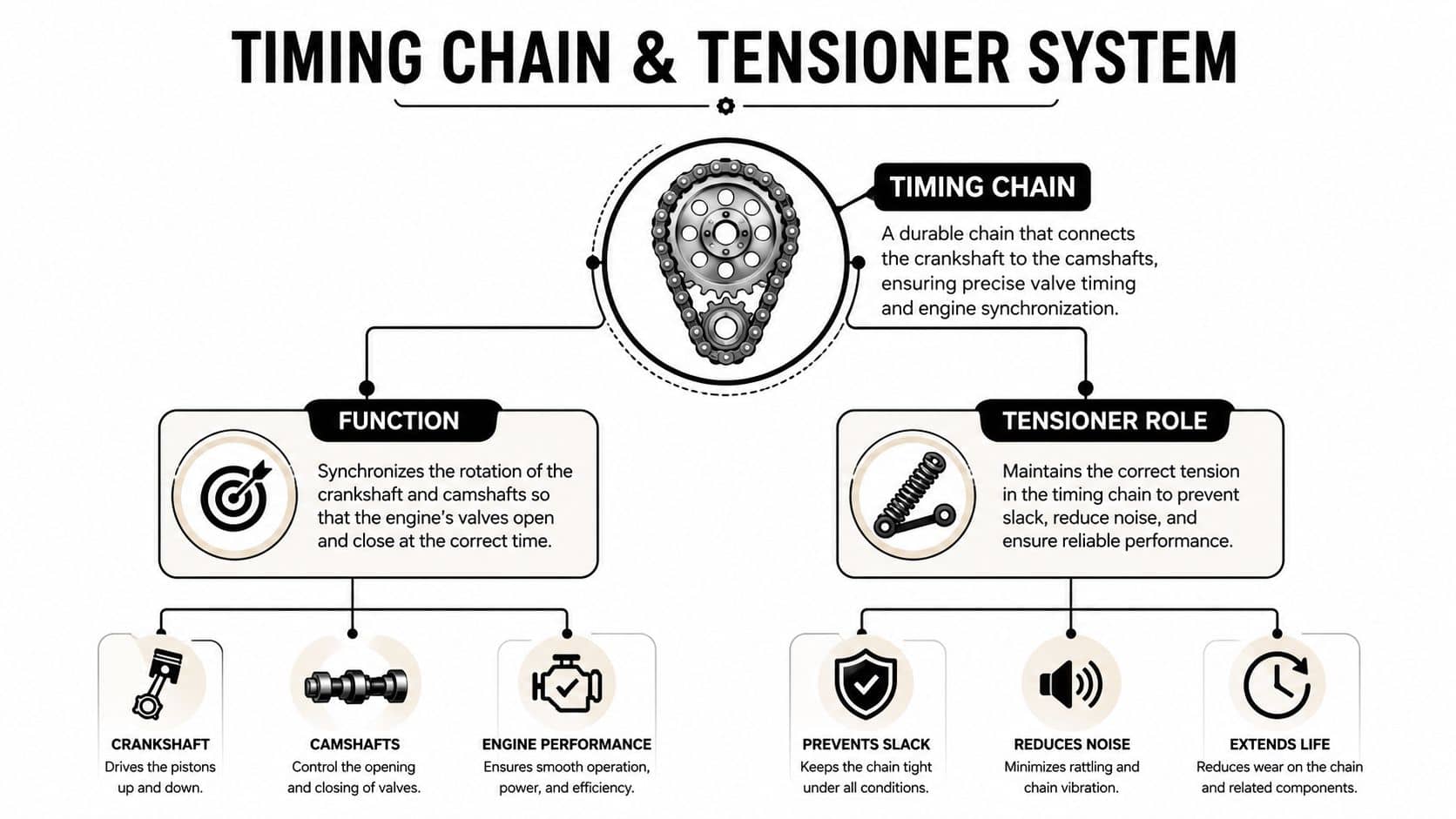
If you want to see how the rest of the system fits together, a timing chain guide page such as this timing chain guide component overview shows how the chain, guides, and tensioner work as one assembly rather than as separate parts.
Common Types of Timing Chain Tensioners
Not every timing chain tensioner works the same way. The two broad designs you'll run into are hydraulic tensioners and mechanical tensioners, and the difference matters because each one fails for slightly different reasons.
Hydraulic tensioners
Hydraulic types use engine oil pressure to extend a plunger and apply tension. That makes them smooth in operation and well suited to modern engines, but it also means they're only as good as the oil feeding them. If the oil is dirty, degraded, or low, the tensioner can react slowly or lose its ability to keep the chain tight when the engine starts.
Mechanical tensioners
Mechanical tensioners rely on a spring or a ratchet-style mechanism to maintain pressure. They don't depend as heavily on oil flow, which makes the design simpler in some older engines, but they can still wear, stick, or lose effectiveness over time. A ratchet can only take up so much slack before the rest of the chain system starts showing its age.
Practical rule: if a hydraulic tensioner is acting up, check the oil first. If a mechanical one is noisy, don't assume the tensioner is the only worn part.
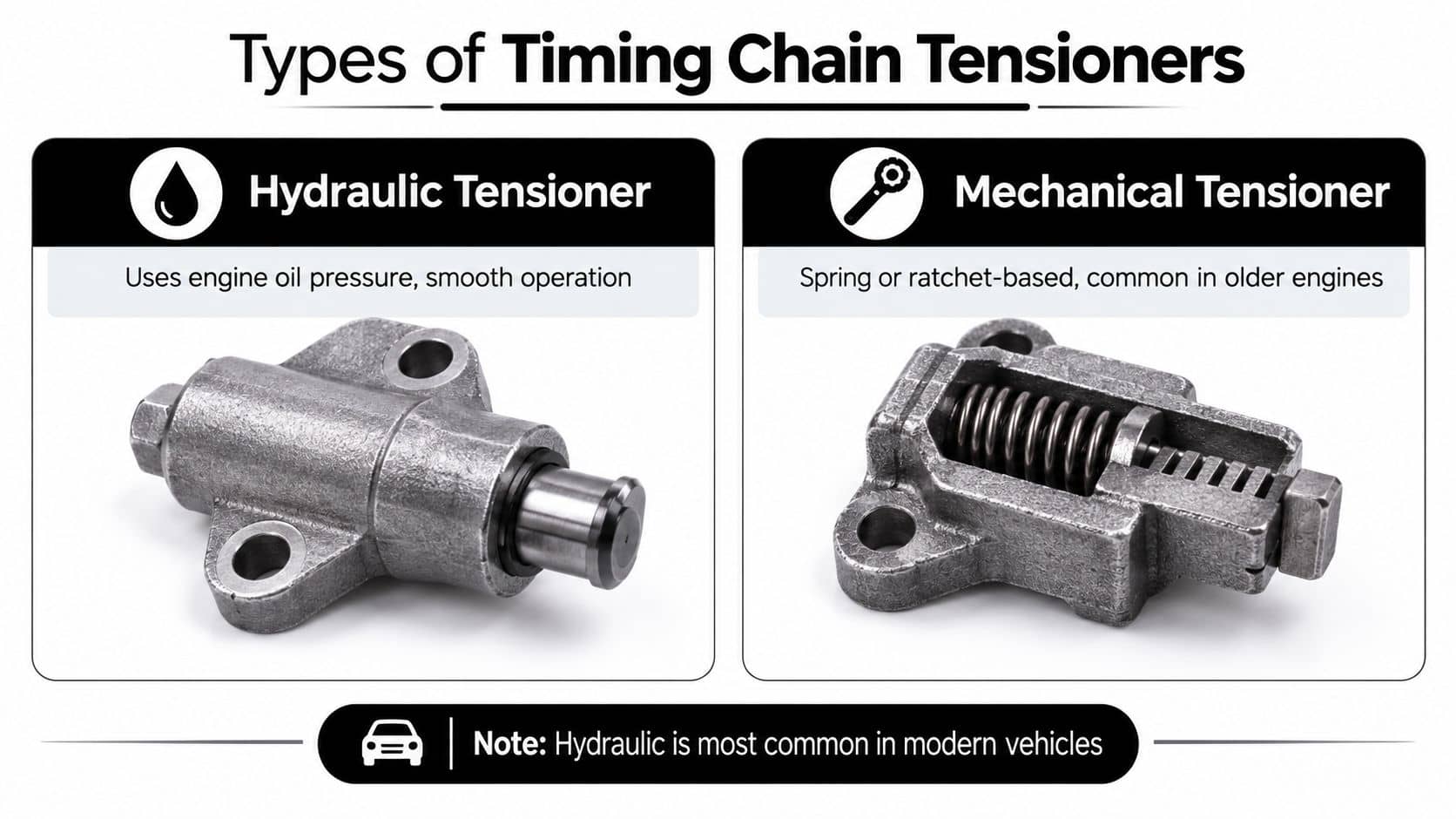
The broad takeaway is simple. Hydraulic tensioners make oil condition critical, while mechanical tensioners make wear and spring force the main concerns. Either way, the chain only stays quiet when the tensioner is keeping up.
Key Symptoms of a Failing Tensioner
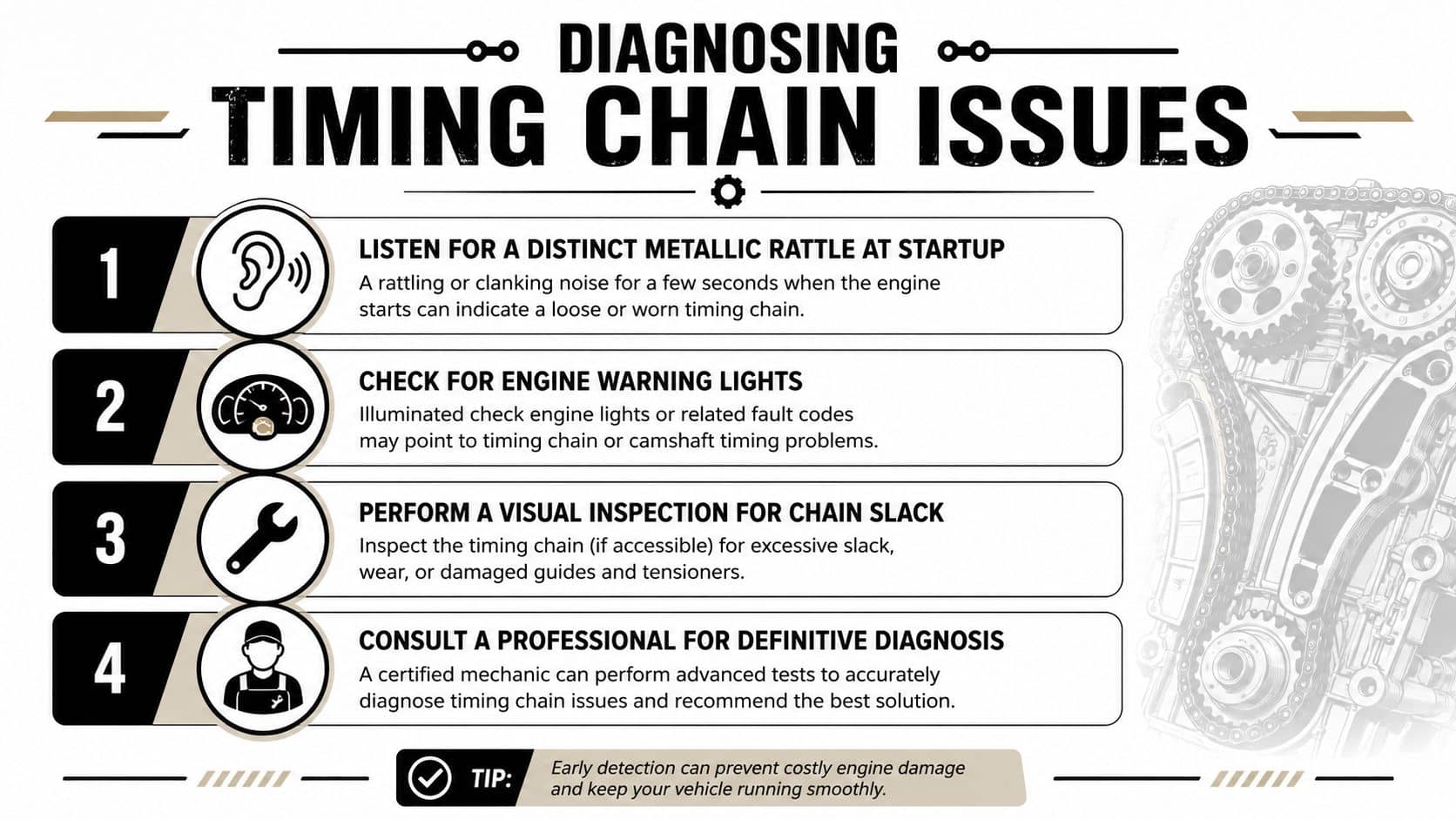
A timing chain tensioner often gives its first warning at startup. The classic sign is a metallic rattle for 1 to 3 seconds on cold start, then the noise fades as oil pressure builds and the tensioner extends. That brief rattle matters because it can show up before the problem turns into rough running or a no-start condition. Cold-start timing chain rattle is a common early clue technicians use to spot tensioner-related wear, as described in Cold-start timing chain tensioner rattle guidance.
Other warning signs that deserve attention
A noisy start is only part of the picture. A failing tensioner can also create a persistent whirring or rattling noise, especially if the chain stays loose while the engine is running. Some drivers also notice rough idle or hesitation, which can happen when cam timing begins to drift.
OBD-II codes can narrow the search. Codes such as P0016 and P0017 often point to a crankshaft and camshaft correlation problem, which means the engine control unit has seen timing relationship trouble. That does not prove the tensioner is the only worn part, but it does tell you the chain system needs a closer look.
A noisy engine can come from several different causes. Low oil pressure, degraded oil, a worn tensioner, or a stretched chain can all produce similar sounds.
The mistake many DIYers make is treating every rattle as a single-part failure. Some engines need only a tensioner, while others need guides, chain, and tensioner together, and the symptoms can overlap enough to mislead you if you skip diagnosis.
Diagnosing the Problem Before You Buy Parts
A rattle is a clue, not a shopping list. Before you order a new timing chain tensioner, check the oil and pull the fault codes, because those two checks often tell you whether you're dealing with a simple tensioner issue or a wider chain job.
Start with the oil
Look at the oil level first. Low oil can starve a hydraulic tensioner, and old or dirty oil can make it respond sluggishly even if the part itself isn't fully worn out. If the oil looks neglected, the noise might improve after servicing, or it might confirm that the engine has been running hard on poor lubrication.
Then read the codes
Use an OBD-II scanner and see whether P0016 or P0017 is stored. Those codes don't hand you the final answer, but they do point towards a timing correlation issue between crank and cam signals. That's enough to tell you the problem may be deeper than a simple tensioner swap.
Use the evidence together
If the oil is poor, the engine rattles briefly on cold start, and the codes lean towards correlation fault, you've got a much stronger case for chain system inspection. If the oil looks healthy and the rattle is still there, the tensioner or its related components move higher on the suspect list. If the noise is constant and the engine runs badly, the job may be larger than a tensioner alone.
Most manufacturer guidance does not give a fixed replacement interval for a timing chain, because these parts are generally engineered to last the engine's service life. Motronix says the practical focus should be on symptoms and oil condition rather than a routine mileage schedule, which is why diagnosis matters more than mileage guessing. Timing chain life and maintenance guidance
A sensible DIY decision path
Check the oil first: bad oil can mimic a bad tensioner.
Scan for codes next: correlation faults point towards timing concerns.
Listen for when the noise happens: start-up only is different from constant rattling.
Inspect before replacing parts: direct confirmation beats guesswork.
If you want a fuller breakdown of what points to a simple swap versus a deeper repair, the guidance at Alibaba's timing chain tension signs and fixes guide reflects the same diagnostic priority, inspect first, replace second.
Tensioner Failure Causes and Replacement Costs
Most tensioner problems don't happen for mysterious reasons. They're often tied to maintenance neglect, especially infrequent oil changes or using the wrong oil grade. That matters most on hydraulic designs, where the tensioner depends on clean, healthy oil pressure to keep the chain under control.
Why these parts fail
When oil is old or contaminated, the tensioner can stick, respond slowly, or lose its ability to hold pressure during start-up. If the chain has already worn or stretched, the tensioner may be chasing a problem that has moved beyond simple adjustment. That's why a rattle can be the beginning of a bigger chain-and-guide conversation, not just a part swap.
Most manufacturers treat timing chains and their tensioners as service-life components, not parts with a fixed replacement schedule. That means there's no universal mileage marker to chase, only symptoms, inspection findings, and oil history to work from.
Estimated Timing Chain Tensioner Replacement Costs
Item | Typical DIY Cost | Typical Garage Cost including labour |
Timing chain tensioner part | Varies by engine and brand | Varies by engine and labour time |
Related seals, gaskets, and fluid top-up | Varies by vehicle | Varies by vehicle |
Full diagnosis before repair | DIY scanner and inspection tools | Workshop inspection and fault-finding |
The part itself is only one piece of the bill. Access can be awkward, and if the chain, guides, or timing cover have to come off, labour climbs quickly compared with a straightforward external component replacement. If you're comparing parts before deciding how far to go, this timing chain tensioner component page is the sort of product listing that helps you confirm the correct part family before you commit.
For many DIYers, the primary question isn't whether the part is affordable, it's whether the diagnosis is solid enough to justify opening the engine. That's the part that saves wasted money.
An Overview of DIY Tensioner Replacement
A tensioner swap starts with safe access. The engine needs to be cool, the battery isolated where appropriate, and the surrounding parts removed only as far as needed to reach the tensioner. On some engines that's a simple side access job, on others it means hours of strip-down just to see the part.
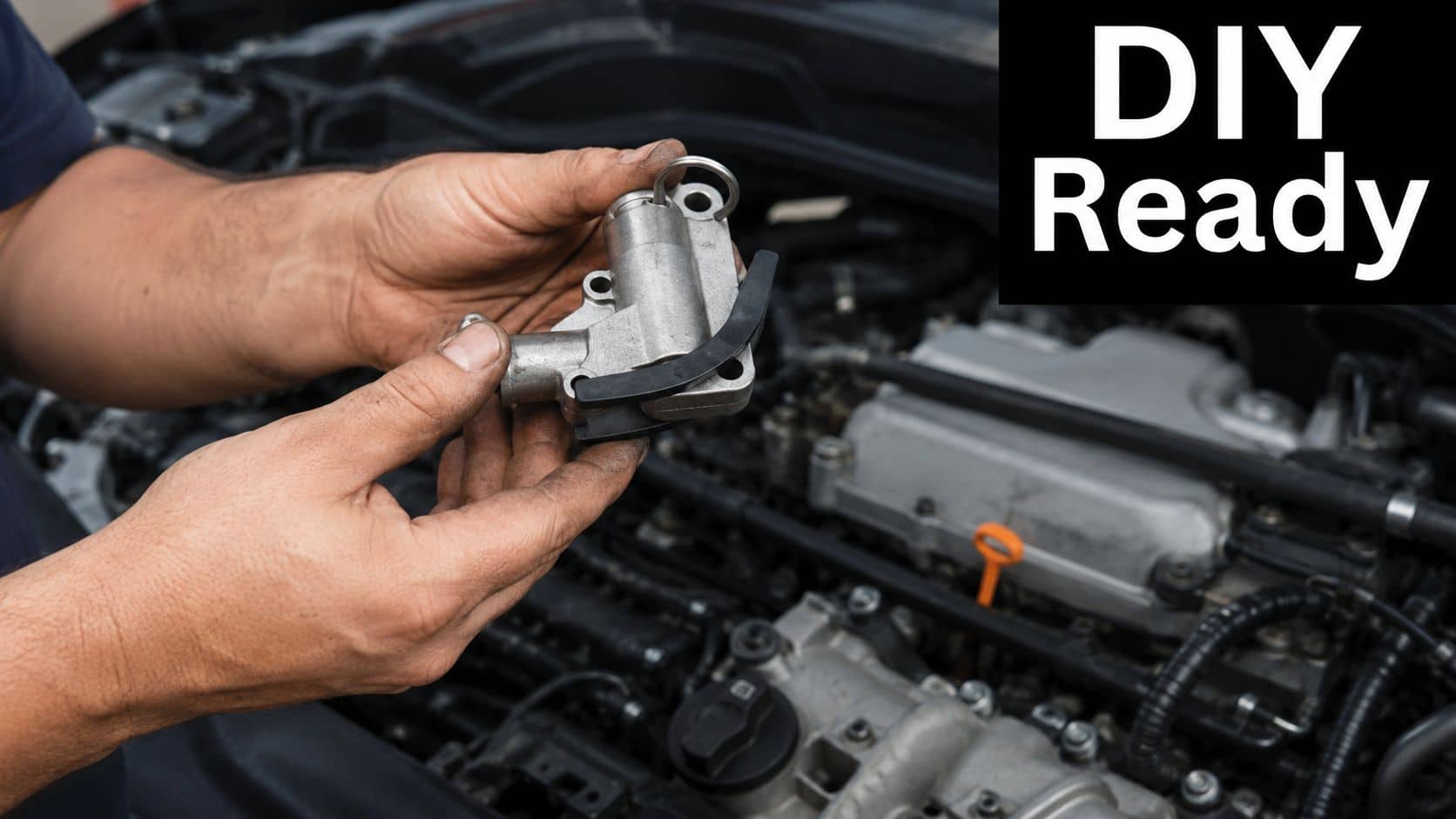
The basic sequence is straightforward. Remove access parts, release the old tensioner carefully, fit the replacement, and confirm the chain sits correctly on its marks before reassembly. Ford's procedure for its timing kit shows why pre-loading the plunger before installation matters, because the tensioner needs to start in a controlled state rather than slamming into the chain loose and late. Timing and locking tools reference
Use the right locking tools if the engine requires them, and stop if the chain has already jumped time. A chain that's off by more than a simple tension issue can turn a manageable DIY job into a full timing repair, and that's the point where a professional workshop usually makes more sense. The same goes for engines that need extensive disassembly just to reach the tensioner, because one wrong step can create a much bigger problem than the original rattle.
Jeep 2.0t Timing Chain Tensioner DIY
GSF Car Parts can help you get the right timing components, tools, oils, and workshop essentials when you're tracking down a timing chain tensioner issue. If you're diagnosing a rattle, checking the chain system, or planning a repair, visit GSF Car Parts to find quality parts and the support you need to finish the job properly.





