


The warning light is on, the car feels flat, and the last thing you want is another garage bill before payday. That is the point where many diesel owners start searching for how to replace a Diesel Particulate Filter, but the better move is to pause and diagnose properly first. A blocked DPF is often the result of something else, and if you fit a new filter without finding the root cause, you can end up right back where you started.
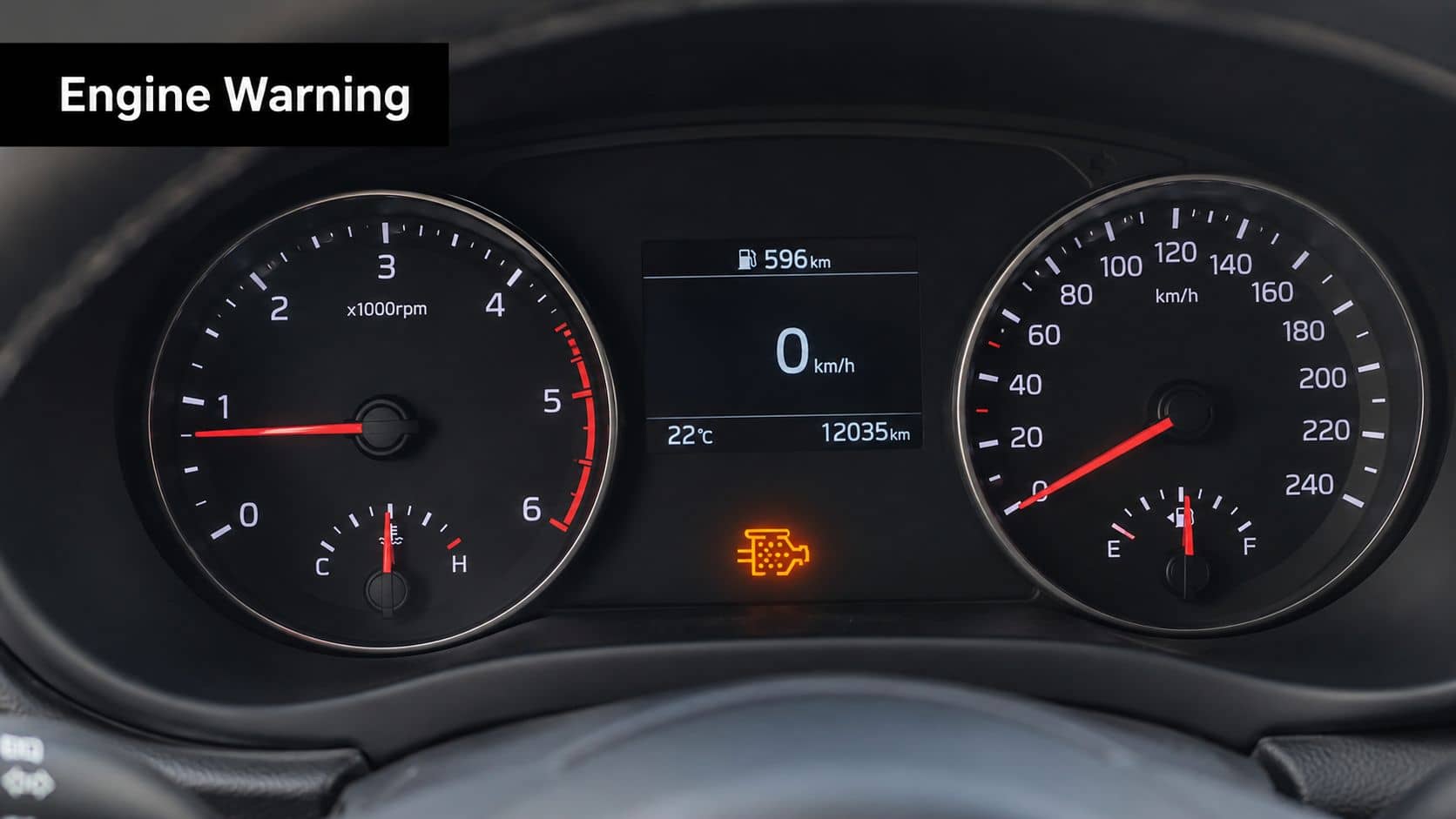
A DPF is part of the emissions system, not a comfort item. It traps soot and burns it off during regeneration, so the filter only stays healthy if the engine, sensors, and driving pattern all support that process. If the car mostly does short trips, if an EGR fault is feeding it extra soot, or if a pressure or temperature sensor is giving bad readings, a new filter will not fix the cause. That is why I always say to work through the diagnosis before you spend money on the part, because the expensive bit is often not the filter itself, it is everything that made it fail in the first place.
That Dreaded Light on Your Dash
The usual story is familiar. You're on the school run or heading to work, the dash throws up a DPF warning, the car feels flat, and then the engine management light joins in. If the car drops into limp mode, the message is plain enough, the exhaust aftertreatment system needs attention now, not after the weekend.
What the DPF is really doing
The Diesel Particulate Filter sits in the exhaust and traps soot before it leaves the tailpipe. Under the right conditions, the filter gets hot enough to burn that soot away in regeneration, which is why steady running helps and constant short trips work against it. A German motoring source explains that regeneration happens above 550°C, and that some older vehicles carry specified replacement intervals of roughly 120,000 km to 180,000 km source.
A healthy DPF is not a bolt-on accessory, it's part of the emissions strategy your car depends on every time it's driven.
That is the bit too many owners miss. If the filter is missing, tampered with, or so blocked that the car cannot manage regeneration properly, the problem goes beyond drivability. UK enforcement and emissions reporting make it clear why authorities take it seriously, because defective or removed filters affect air quality and can lead to legal consequences as reported in the UK coverage of DPF removal and enforcement.
For a competent DIYer, the first useful mindset shift is simple. Before you reach for the spanners, ask what killed the filter in the first place. That question saves money, avoids repeat work, and stops you fitting a fresh filter into a car that is still poisoning its own exhaust system.
Diagnosing DPF Problems Before You Spend a Penny
A blocked DPF is often the end result of another fault, not the starting point. That's why a good diagnosis begins with a scan tool, not a socket set. If the car's been throwing repeated regeneration faults, a generic code reader won't always tell the whole story, but it's still the right place to begin because you need to separate soot loading, ash loading, sensor issues, and system faults before buying a replacement.
Start with the reasons, not the part
Professional service guidance is blunt on this point, if a DPF has failed, the root cause must be identified and corrected first, and overlooked exhaust or boost leaks can reduce passive regeneration effectiveness Mercedes-Benz service guidance. That matters because a new filter won't fix a leak, a dosing fault, a sensor issue, or a driving pattern that never lets the exhaust get hot enough for regen.
Use the scanner to check for pressure sensor faults, temperature sensor faults, and regeneration-related codes. If you need a replacement pressure sensor as part of the diagnosis, this DPF pressure sensor reference is a practical example of the kind of part that often gets blamed when the underlying issue sits upstream.
Check the common causes in order
Look at the fault pattern. Repeated soot build-up points you towards incomplete regeneration, while ash loading points more towards a DPF that's reached the end of its service life.
Inspect the exhaust system. Leaks around joints, cracked pipework, or disturbed clamps can undermine regeneration, and a bad seal can keep the filter from working as intended.
Check sensors and wiring. A damaged differential pressure sensor or a lazy temperature sensor can make the ECU misread the DPF state.
Review engine behaviour. Frequent short trips interrupt regeneration, especially in urban use where the exhaust never gets the time or heat it needs.
Confirm fuel and oil spec. The wrong low-ash oil or poor-quality servicing practice can accelerate contamination and shorten the useful life of the filter.
If the car keeps blocking up, the part may be innocent. The cause is often somewhere else in the exhaust, the sensors, or the way the vehicle's used.
There's also the human-factor mistake, fitting a replacement because the old filter looked dirty. That isn't enough. The filter is there to collect soot, so some contamination is expected. The question is whether the soot is manageable through regeneration and cleaning, or whether the car has stopped doing the job properly because of a fault that still hasn't been fixed.
The Big Decision To Clean or Replace Your DPF
The choice usually comes down to two paths, professional cleaning or full replacement. Cleaning makes sense when the filter is blocked with soot or contaminated enough to need restoration, but not physically damaged. Replacement is for filters that are cracked, badly damaged, or loaded with non-burnable ash to the point that cleaning won't bring them back.
Cost and outcome side by side
A full replacement is expensive in the UK. The AA says a replacement can run from £1,000 for smaller cars to £3,500 or more for premium models AA guidance. That cost alone is why proper diagnosis matters before you buy anything.
Factor | Professional Cleaning | Full Replacement |
Best for | Soot loading, partial blockage, recoverable units | Cracked, damaged, or ash-saturated units |
Upfront cost | Usually lower than replacement | Usually the highest-cost option |
Root-cause sensitivity | Still needs the fault fixed first | Still needs the fault fixed first |
Long-term value | Good when the filter is structurally sound | Better when the filter can't be restored |
Risk if diagnosis is poor | Blockage can return | New part can fail early |
Cleaning is not a shortcut if the car has an underlying fault. The point is to restore a serviceable part, not to mask a leak or a sensor problem. That's why off-car cleaning works best when the filter is removed carefully, inspected properly, and sent to a service that can confirm the blockage is recoverable.
For owners comparing options, DPF additives can help in some maintenance contexts, but they're not a magic repair. GSF Car Parts also stocks emissions DPF additives, which sit in the broader maintenance picture, not as a substitute for diagnosis or a damaged filter.
How to choose the right path
Choose cleaning if the car was still regenerating before the fault, the filter isn't physically damaged, and the diagnostic data points to soot or incomplete burn-off.
Choose replacement if the filter has cracked, the substrate is damaged, or the ash loading has made cleaning a dead end.
Do neither yet if the scan tool shows a leak, sensor fault, injector dosing problem, or another issue that would just contaminate the new part.
The expensive mistake is not paying for replacement. It's paying for replacement too early, then paying again because the underlying cause was never fixed.
Your Step by Step DPF Replacement Guide
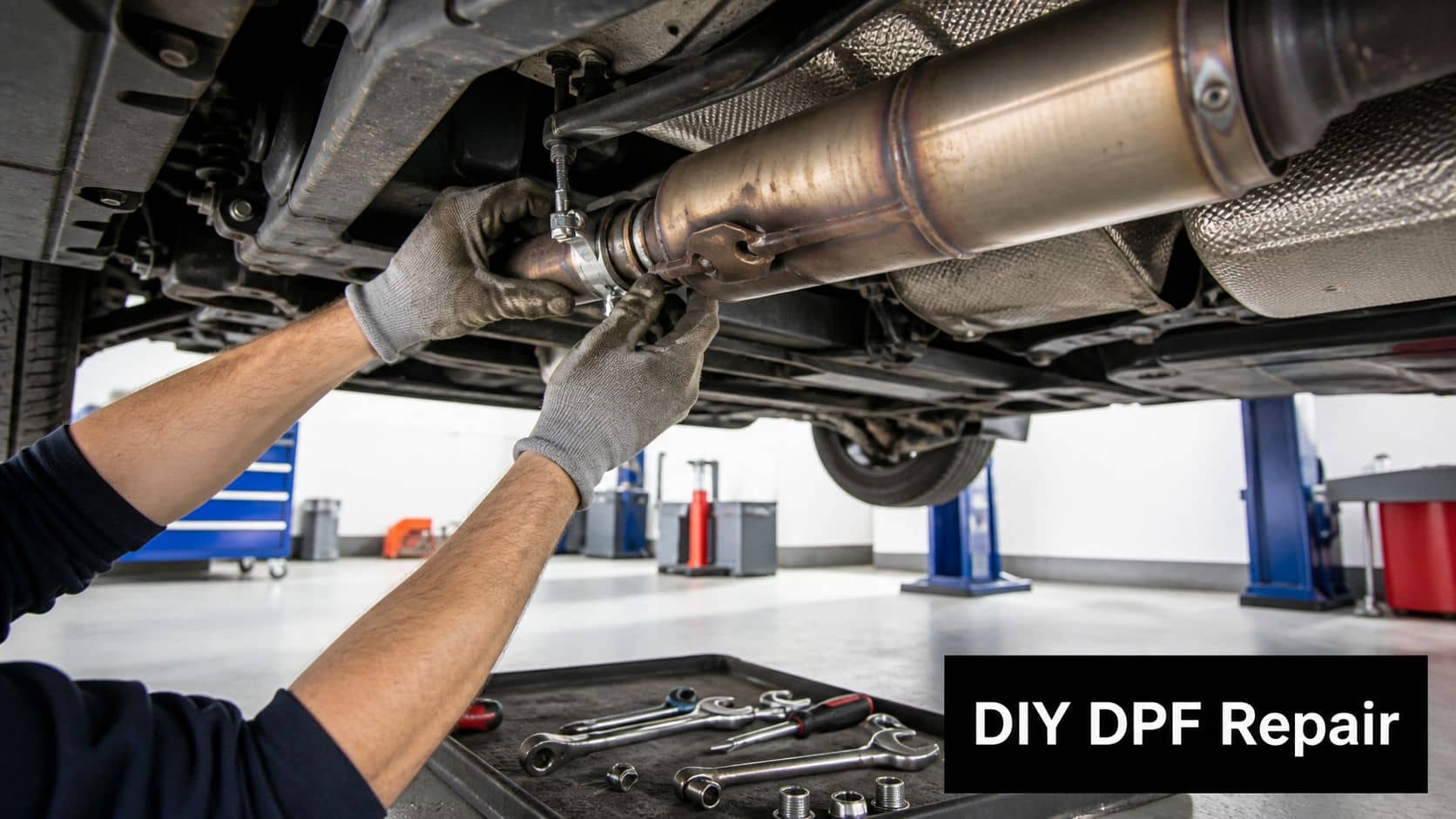
A DPF swap can look simple on the bench, then turn awkward as soon as you get underneath the car. The exhaust needs to be stone cold, the vehicle must be securely supported, and the sensors should come off in the right order so you do not tear threads or snap a connector. Patience saves more time than force on this job.
Prepare the car properly
Park on level ground, let the exhaust cool fully, and support the vehicle on proper axle stands if you are working underneath. Disconnect the battery if the service procedure for your vehicle calls for it, and have the new seals, gaskets, clamps, and any one-time-use fittings ready before you start turning bolts. A replacement fitted with tired sealing parts is a common way to end up chasing an exhaust leak later.
On heavier vehicles, the workflow follows the same logic. Cool the system, isolate the vehicle, disconnect the batteries, remove the outlet temperature and pressure hardware, and only then free the DPF mounting hardware, as shown in the technical workflow guidance. That order protects threads, sensors, and your hands.
It also pays to have the right hand tools ready before you get stuck in. A 10mm or 13mm socket often comes up on brackets and clamps, while 22mm or 24mm sockets are common on certain sensor fittings, and a decent penetrating oil can save a seized bolt from snapping. If the hardware looks crusted up, soak it first and give it time to work.
Remove the old filter carefully
Unplug the sensors first. Label connectors if the layout is cramped, because mixed-up plugs waste time when you go back together.
Undo the pressure and temperature hardware. Do not force seized fittings if there is any other option, because a broken sensor thread turns a routine job into a repair problem.
Support the exhaust. Once the mountings are free, the system can shift suddenly, so keep it controlled as you work.
Withdraw the DPF assembly. On some cars, access is tight, so easing the unit out in stages is safer than dragging it past nearby components.
Inspect the old seals and mating faces. Soot staining around the joints usually shows you where the leak path was.
The replacement itself is as much about what you avoid as what you do. Do not reuse crushed seals. Do not smear sealant where the manufacturer did not specify it. Do not treat “tight enough” as a substitute for the correct torque on clamps and fasteners. Exhaust leaks are a serious pitfall because they reduce the effectiveness of passive regeneration and can raise fuel consumption.
Fit the new unit with care
Install the new DPF using the correct brackets and alignment, then fit the new seals and tighten the joints evenly. If you have ordered a fitting kit, use it properly. It is there to restore the exhaust as a sealed system, not just to bolt in a fresh-looking part. A DPF fitting kit earns its place because disturbed seals and clamps are often the difference between a repair that lasts and one that lights the warning lamp again.
Take your time with the final position of the housing. If the pipework sits under stress, the joints can pull out of alignment once the engine heats up and the exhaust moves. Check that the clamps are seated square, the hangers are doing their job, and no part of the system is touching heat-sensitive trim, wiring, or shields.
Don't skip the post-fit inspection
After installation, check every disturbed joint with the engine running. Listen for leaks, look for soot traces, and make sure the pipes are not touching anything they should not. If the layout allows a road test, take one, because the system needs a proper run to show whether the filter and sensors are behaving as they should.
REMOVE AND REPLACE DPF ON HILUX AND FORTUNER (1GD ENGINE).
A good fitting job finishes cleanly. If the exhaust leaks, the sensors sit loose, or the unit is misaligned, the repair is not done, you have just assembled it.
Post Installation Essentials and Resetting Codes
The new filter is in, but the job still isn't finished. The ECU needs to know a new DPF has been fitted, and that means resetting the relevant soot and ash counters with a compatible diagnostic tool. If you skip that software step, the car can keep working from old assumptions and mishandle the fresh filter.
Tell the ECU what changed
A proper reset isn't optional housekeeping. It's the software side of the repair, and it tells the control unit that the aftertreatment system has been renewed. On some vehicles that also means running an adaptation or filter-cleanliness check, then confirming the warning light stays off once the engine's running and the system has settled.
A clean mechanical swap can still fail if the ECU thinks it's dealing with the old, blocked filter.
That's why the post-fit scan matters. Record the new filter details if the diagnostic software asks for them, clear stored faults only after the repair is complete, and check live data if your tool can read it. If the ECU still sees a pressure anomaly or a sensor error, you want to know that on the drive outside your workshop, not on the next motorway run.
Finish with a proper verification drive
Start the engine, inspect the joints again, and watch for any smell or soot marks that suggest a leak. Then take the car on a drive that lets the exhaust system heat up and stabilise. A short lap round the estate won't prove anything if the original fault was short-trip use and incomplete regeneration.
The point of the post-install check is simple. The vehicle has to confirm the repair, not just survive the first few minutes after fitting. If warning lights return, go back to the scan data before blaming the new part.
UK Legal Rules and When to Call a Professional
In the UK, removing a DPF from a car intended for road use is illegal, and a missing or tampered filter can lead to an MOT failure and a fine of up to £1,000 UK legal and MOT guidance. That makes the DPF a legal emissions component, not an optional extra, and it's why shortcuts like gutting the canister or pretending the issue doesn't exist are poor decisions.
A professional garage is the right call when the bolts are seized, the access is too tight for safe removal, or the diagnostic picture points to deeper engine-management faults. The same goes for cars that keep blocking because of EGR trouble, sensor failures, or driving-pattern issues that haven't been solved yet. If you can't confirm the cause, don't guess with an expensive part.
A good local specialist should be able to talk through the fault codes, the regeneration history, and the physical condition of the exhaust without pushing straight to replacement. If they can't explain why the DPF failed, they probably haven't diagnosed it properly.
GSF Car Parts stocks Diesel Particulate Filters, fitting hardware, and related maintenance parts for UK vehicles, so it's a useful place to compare the parts you may need before a repair. If you're dealing with a blocked filter, a suspect sensor, or a replacement that needs to be done properly, visit GSF Car Parts and check the parts that match your vehicle before you pick up a spanner.





