


You're loading the car after a wet school run, the back seats are marked with yesterday's juice, and there's that stale, lived-in smell that never quite goes away. That's usually the point where a proper car seat shampoo job earns its keep, because grime on the seat isn't just cosmetic, it changes how the interior feels, how long it stays fresh, and how the car presents when it's time to sell or hand it to a customer.
Used well, seat shampoo sits inside a much bigger vehicle-care habit. The wider car wash market reached $35.19 billion in 2025 and is projected to reach $45.24 billion by 2030 at a 5.1% CAGR, with Europe growing fastest (global car wash market report). That matters in the UK because seat cleaning isn't a one-off chore, it's part of routine maintenance that keeps fabric, vinyl, and leather looking and smelling right.
Introduction to Car Seat Shampoo Benefits
A tired family hatchback tells on itself fast. The seat bolsters hold crumbs, the centre section takes the coffee splash, and the rear bench traps wet dog smell after a weekend out. A good car seat shampoo pulls that mess out instead of just moving it around.
Why it matters in real use
The best seat cleaning jobs don't just brighten the upholstery. They deal with the things drivers notice every day, odour, staining, and the dull, greasy film that builds up from hands, clothes, and road dust. That's why dedicated seat shampoo outperforms a generic interior wipe when the goal is to restore the seat surface rather than just tidy it.
Professional detailers look for a cleaner that lifts soil without flooding the foam or leaving a sticky finish behind. That approach matters whether the car is a family runabout, a van, or a daily commute car that's starting to feel rough around the edges.
Practical rule: clean the seat for function first, appearance second. If the foam stays dry and the residue stays low, the finish lasts longer.
How to Choose the Right Car Seat Shampoo
The label is the first thing to read, not the fragrance or the foam photos on the bottle. For UK upholstery work, the safest starting point is a neutral to mildly alkaline formula, and UK car shampoo sheets commonly specify a pH of 7.0 to 8.5 at 20 °C (UK technical data sheet). That range gives you cleaning power without pushing into harsh territory.
Read the formula, not the marketing
A good upholstery shampoo usually uses surfactants to lift dirt off the fibre and keep it suspended until you wipe or extract it. One safety data sheet shows that car shampoos commonly use 1 to 10% active detergents for balanced performance, and it also notes that higher surfactant loading improves soil suspension but raises rinse demand (surfactant and SDS data). That's why a stronger bottle isn't automatically better for a seat.
For fabric seats, a low-foam or controlled-foam cleaner is easier to manage. For leather or vinyl, choose a product that doesn't leave the surface slick, because slick feels clean for a day and then attracts dust again. If the product is meant for exterior washing, leave it on the shelf unless the label specifically says it's suitable for upholstery.
What to look for on the shelf
pH range listed clearly: That tells you the cleaner is designed with controlled use in mind.
Surfactant details or dilution guidance: Good products explain how much to use and how much water to add.
Low residue finish: This matters more than heavy foam.
Material compatibility: Fabric, leather, and vinyl don't all like the same chemistry.
If you want a product category that's close to this job, GSF Car Parts carries an Upholstery & Carpet Cleaner 400ML, which fits the same general use case as interior seat cleaning products.
Preparing Tools and Vehicle for Seat Cleaning
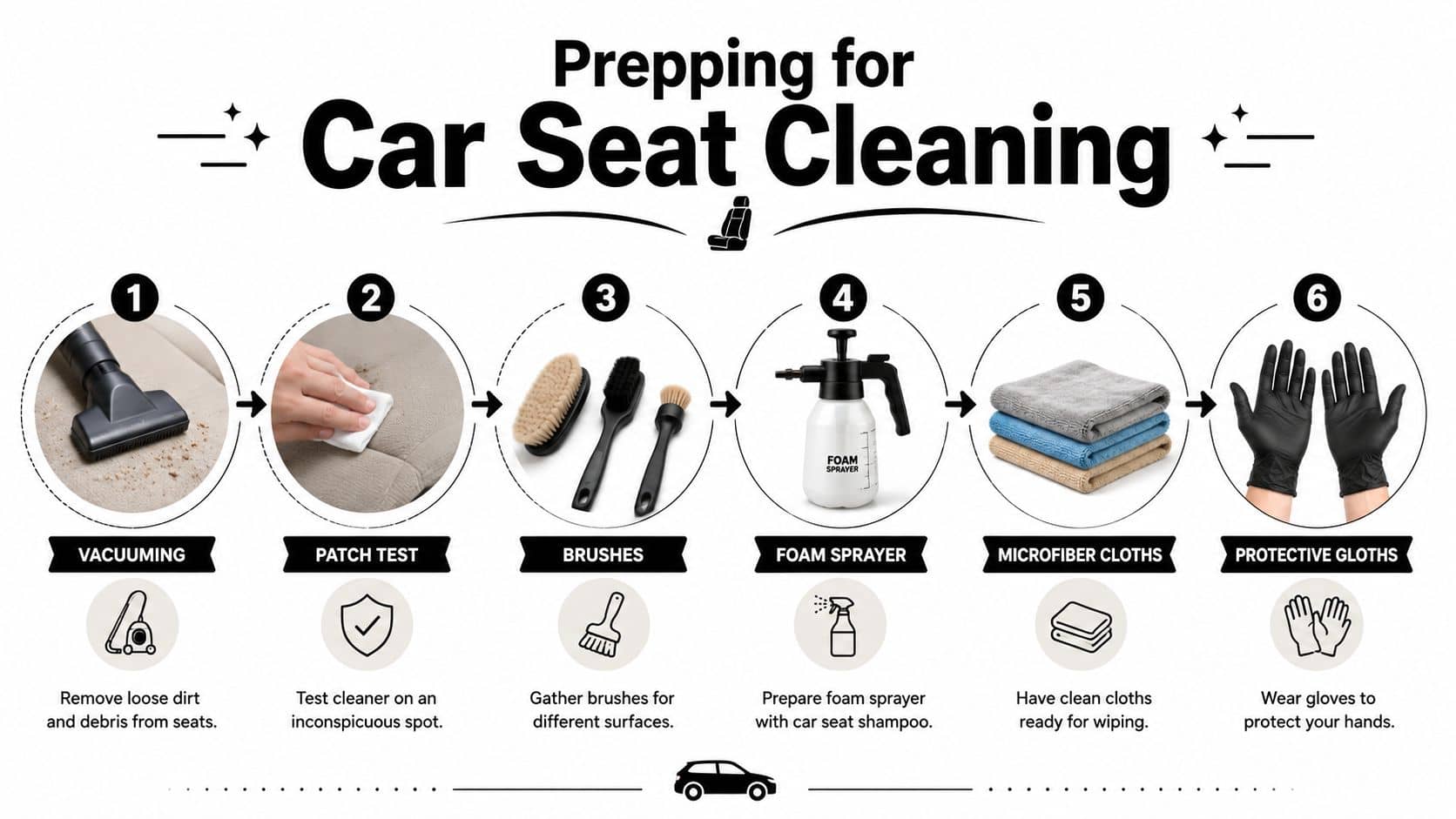
A clean result starts before the bottle opens. Vacuuming, seat positioning, and ventilation do more to protect the interior than any fancy cleaner, because they stop loose grit and trapped moisture from turning a small job into a wet one.
Set the workspace first
Start by moving the seats so you can reach the seams, edges, and side bolsters properly. Open the doors if weather allows, or park somewhere airy and sheltered if the car's on a damp street. In a British winter, you're usually balancing airflow with rain, so the goal is to ventilate without soaking the cabin again.
The right kit keeps the process controlled:
Vacuum attachments: A crevice tool and upholstery head pull grit out before it gets wet.
Soft and medium brushes: Use these to agitate fibres without roughing up the weave.
Microfiber cloths: Keep several clean ones ready for blotting and final wipe-downs.
Foam sprayer or trigger bottle: This helps control product placement.
Protective gloves: Useful when the label recommends them or the cleaner has a stronger SDS profile.
A wet-dry vacuum is worth having nearby for deeper soil or if you know the seats tend to hold moisture. A good reference point for tools and accessories is the wet-dry vacuum range, especially if you clean interiors regularly.
Workshop habit: don't spray until the seat is vacuumed and the trim is protected. Wet dirt is harder to lift and easier to spread.
Cleaning Fabric Seats with Shampoo
Fabric seats reward patience. If you rush them, they take longer to dry and the residue can sit deep in the weave, which is exactly how a seat looks dull again after one or two drives.

Work in small sections
Vacuum the seat thoroughly first, especially the seam line where crumbs and grit gather. Then test the shampoo on a hidden patch so you're not gambling with dye stability. After that, work one panel at a time, not the whole seat at once.
A practical rhythm is spray, agitate, blot. Use a medium-soft brush for the fibre face, because stiff bristles can rough up the cloth and make the surface look worn even when it's clean. Keep the cleaner localised, and don't flood the seat just because the stain looks stubborn.
For heavy spots, a second pass is fine if the first lift doesn't finish the job. The mistake is to keep adding liquid until the foam backing starts to feel damp underneath, because that's where dry time gets dragged out and the seat can start holding a stale smell.
A fabric-specific cleaner also helps keep the job cleaner from start to finish. If you're shopping for that category, the fabric carpet cleaner range is the right kind of product family to compare against general interior sprays.
Use blotting, not rubbing
Microfiber cloths should press and lift, not scrub wildly. Rubbing can spread a stain ring outward and leave the weave looking frayed. If the stain is old, do another controlled pass rather than pressing harder.
Clean in sections small enough that you can finish each one before it starts drying on its own.
Keep the foam backing dry
That's the biggest mistake on cloth seats. The top layer might look fine, but the foam underneath can stay wet for far longer than people expect, especially in a cool UK garage or on an overcast day. If the seat starts feeling heavy, stop and pull moisture back out with microfiber or extraction rather than adding more shampoo.
How To Super Clean Cloth and Leather Seats
Cleaning Leather and Vinyl Seats with Shampoo
Leather and vinyl don't want the same treatment as cloth. They need less liquid, gentler contact, and a cleaner that won't strip the finish or leave a greasy film on top of the surface.

Keep the cleaner light
For leather, use a product that's meant for the material or a low-foam interior cleaner applied to the cloth, not sprayed all over the seat. Wipe in small circles, then follow with a dry microfiber to lift away loosened grime. Vinyl can tolerate a little more than leather, but it still needs a light hand and immediate drying.
If the seat has a textured grain, dust likes to hide in the pattern. Use a soft brush only if the cleaner and surface call for it, and keep the bristles gentle. Don't chase shine with more product, because that's how streaking starts.
A dedicated product line makes this simpler. The leather and fabric cleaner range is the kind of category to look at when the car has mixed materials and you want one buying decision to cover more than one surface.
Condition after cleaning
Leather likes to be cleaned and then left with some protection, not scrubbed raw and forgotten. Once the surface is dry, a suitable conditioner helps keep it supple and reduces the harsh, chalky look that shows up when leather is over-cleaned. Vinyl doesn't need the same conditioning routine, but it still benefits from being wiped clean and left residue-free.
Watch for early warning signs
Cracking, dull patches, and sticky residue all tell you the previous products or habits weren't right for the material. If a seat feels tacky after cleaning, the product is still sitting on top of the surface. Wipe again with a clean cloth before the dirt sticks back to it.
Tackling Stains and Odours on Car Seats
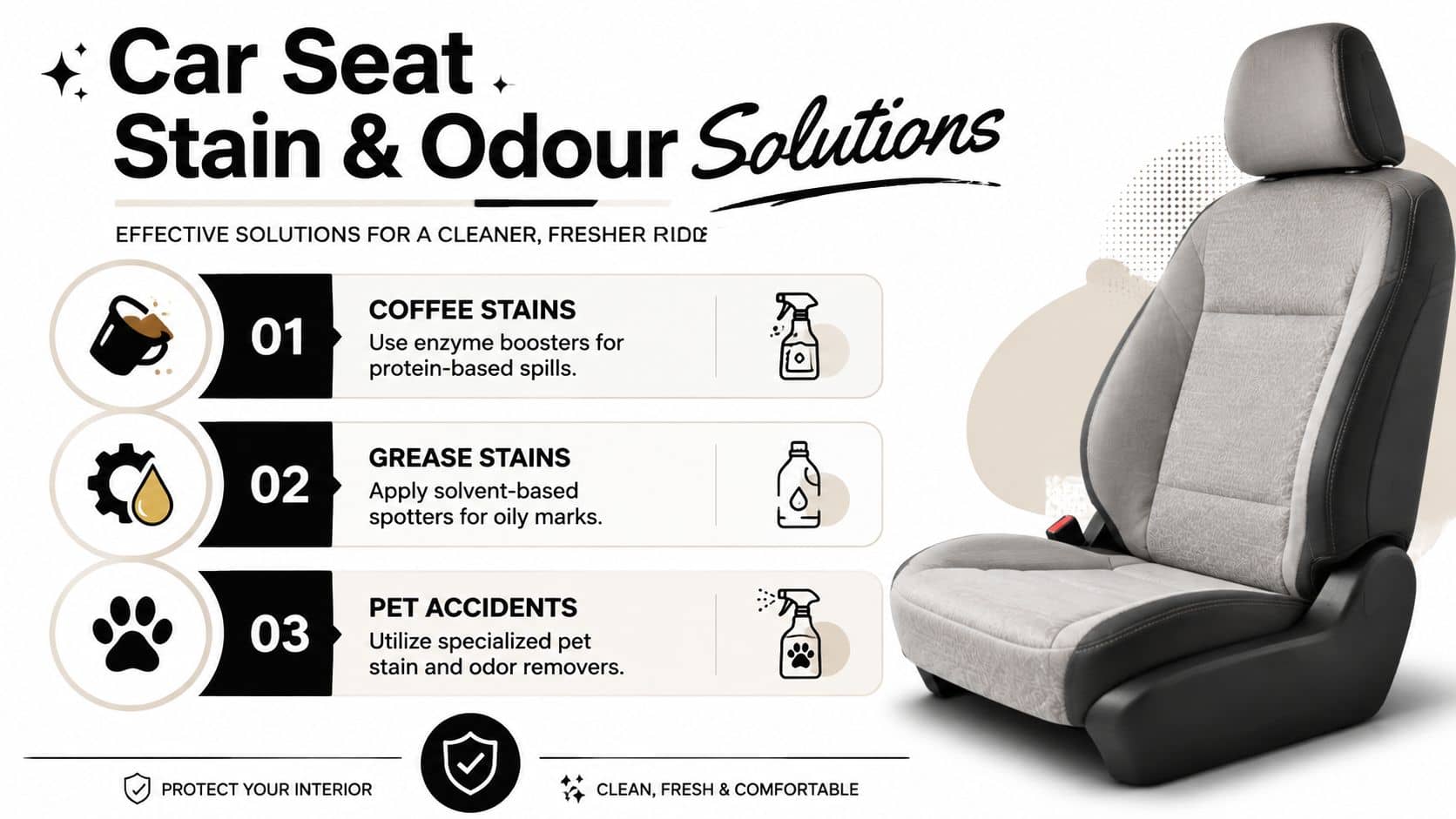
Coffee, grease, and pet accidents don't behave the same way, so one spray won't solve every mess. That's also where people get into trouble with child seats, because they use upholstery chemistry on harnesses and covers that have different safety rules.
Match the stain to the approach
Coffee and food spills usually respond well to a controlled upholstery cleaner and repeated blotting. Grease needs more care, because pushing it around with too much liquid can spread the mark deeper into the weave. Pet accidents are a different category again, because smell is often part of the problem, not just the visible stain.
Here's the practical split:
Coffee stains: Lift quickly, don't rub the mark wider, and repeat only on the spot that still shows colour.
Grease stains: Use the least liquid that gets the job done, then blot thoroughly so the residue doesn't sit in the fibres.
Pet accidents: Clean the area promptly and make sure the odour source is removed, not masked.
Keep child-seat areas conservative
Child-seat guidance is stricter than upholstery guidance. Safety sources warn against harsh chemicals on harness webbing and advise hand-cleaning with mild soap and water, while following the manufacturer's instructions for covers and removable parts (child seat cleaning guidance). That means you should never treat the harness like a fabric seat, and you should be careful about any shampoo overspray near the restraint system.
If a child seat is involved, clean the upholstery around it separately and keep the restraint itself on the manufacturer's method only.
For heavily set smells or stains that have soaked through multiple layers, a deep extraction machine or professional detailing pass makes more sense than repeating shampoo endlessly. Some seats just need extraction, not more chemistry.
Drying Aftercare Troubleshooting and Final Recommendations
Drying is where many good cleaning jobs go wrong. A seat can look perfect and still smell off later if moisture sits in the foam or along the seams, especially in a damp UK climate.
The useful benchmark is that excess moisture can take 1 to 2 hours to dry under good conditions, and UK damp environments often extend drying times without forced air or heated seats (drying guidance). In practice, cracked windows, cabin ventilation, and a fan or blower all help more than just leaving the car shut.
If a seat still feels cool or clammy, don't park it and forget it. Run the climate control, aim airflow at the seats, and check the seams again after a short interval. Heated seats can help, but only if you're not trapping moisture deeper into the padding first.
GSF Car Parts stocks interior cleaning options, tools, and consumables that fit this kind of work, including upholstery-related products for routine cabin care. If you're keeping a family car, trade vehicle, or daily driver in shape, visit GSF Car Parts and pick up the parts and detailing basics that make the next clean faster and tidier.





