That heart-stopping moment when you see your car's temperature gauge creeping into the red zone—we’ve all been there. It’s an instant sign that something is wrong, but what exactly causes a car to overheat? Nine times out of ten, it’s a problem with the cooling system.
The most common culprits are usually a straightforward fix, like low coolant from a leak, but it can also point to a faulty thermostat stuck shut, a failing water pump, or even a clogged radiator.
Why Your Car's Temperature Is Suddenly Spiking
An engine generates a massive amount of heat just doing its job. The cooling system's sole purpose is to keep that heat under control. It does this by circulating a special fluid—coolant, or antifreeze—through channels in the engine block. This fluid absorbs the intense heat and carries it away to the radiator at the front of the car. If any part of this system fails, the engine can quickly get dangerously hot, risking serious and expensive damage.
The Key Players in Your Cooling System
Think of your car's cooling system a bit like your own body's circulatory system. The coolant is the blood, the water pump is the heart, and the radiator acts as the lungs, releasing heat into the air. Hot coolant travels from the engine to the radiator, where heat dissipates into the air with help from a large cooling fan. The now-cooler fluid is then sent back to the engine by the water pump to start the cycle all over again.
This entire process is managed by the thermostat. It’s essentially a clever gatekeeper that stays closed when the engine is cold, helping it warm up quickly. Once the engine reaches the right temperature, the thermostat opens, allowing coolant to flow to the radiator.
When one of these parts falters, the chain reaction begins. For example, a thermostat that’s stuck shut will trap hot coolant inside the engine, meaning it never gets a chance to reach the radiator and cool down.
To help you get to the bottom of the issue, we've put together a quick diagnostic checklist. Use the table below to match the symptoms your car is showing to the most likely cause. It’s a great starting point for figuring out your next steps.
Common Car Overheating Causes at a Glance
Here’s a quick summary of the main reasons a car overheats, the classic symptoms to look for, and how often they pop up for UK drivers.
Potential Cause | Common Symptom(s) | Typical UK Breakdown Frequency* |
Low Coolant | Sweet smell, puddles under the car, frequent top-ups needed. | High |
Faulty Thermostat | Temperature gauge moves erratically or spikes quickly after starting. | High |
Water Pump Failure | High-pitched whining sound from the engine, coolant leaks near the front. | Medium |
Clogged Radiator | Overheating at high speeds or when climbing hills. | Medium |
Cooling Fan Fault | Overheating only in slow traffic or when stopped. | Medium |
*Frequency based on general breakdown data from UK motoring organisations.
This table should give you a better idea of what you might be dealing with. In the next sections, we'll dive into each of these causes in more detail, explaining what to look for and what you can do about it.
Understanding Your Car's Cooling System Parts
To get to the bottom of why a car overheats, you first need to know the role of each component under the bonnet. Think of the cooling system as a dedicated team of parts all working together on one job: to move punishing heat away from your engine and release it safely into the air. If one part stops pulling its weight, the whole system can quickly fall apart.
It all starts with the coolant, also known as antifreeze. This special fluid is pumped through little channels and passages built into the engine, soaking up heat as it goes. The water pump is the heart of this whole operation, tirelessly pushing the coolant around the circuit. Without it, the coolant would just sit there and boil.
How the System Manages Heat
The flow is cleverly controlled by the thermostat. It’s like a smart gatekeeper that stays shut when the engine is cold, helping it get up to temperature quickly and efficiently. Once the engine reaches its sweet spot, usually around 90°C, the thermostat opens up. This allows the now-hot coolant to flow out towards the radiator.
You’ll find the radiator at the front of the car. It’s a big, finned panel designed to get rid of all that collected heat. The hot coolant snakes its way through a network of tiny tubes, and as air rushes over the fins, the heat is drawn away. This can happen naturally as you drive, or with a helping hand from the cooling fan. Once cooled, the fluid is sent straight back to the engine to start the whole process over again.
This diagram shows a few of the key players whose failure can break this cycle and lead to that dreaded temperature warning light.
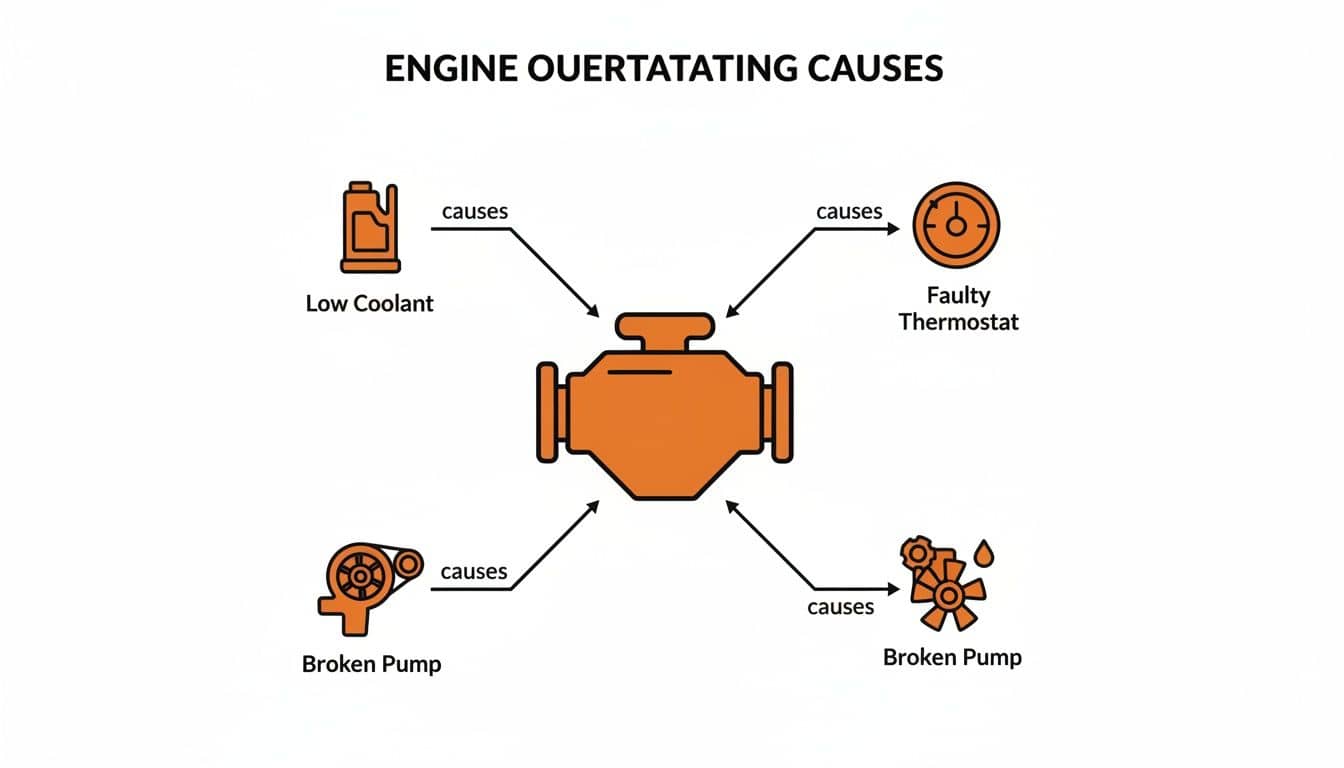
As you can see, something as simple as low coolant, a stuck thermostat, or a failing water pump can be the root cause of the problem. If you want to get a better look at how these pieces fit together, you can browse a full range of cooling system parts and see them for yourself.
Understanding how these parts cooperate is key. The cooling fan, for instance, is absolutely essential in stop-start traffic. When you aren’t moving fast enough for air to be forced through the radiator, the fan spins up to create that airflow and stop the engine temperature from climbing.
The Most Common Causes of Engine Overheating
Right, so you know the theory of how your car's cooling system keeps a lid on things. But what happens when one of the key players decides to clock off early? When a car overheats, it's almost always down to one of a handful of common culprits.
Let's get our hands dirty and look at the parts that are most likely to cause you grief.

Once you understand why these bits and pieces fail, you can go from just spotting steam to actually diagnosing the root of the problem. That's the kind of knowledge that gives any DIYer the confidence to grab the spanners.
Low Coolant Levels and Leaks
This is, by a long shot, the number one reason for an engine getting too hot. If you don't have enough coolant in the system, there’s simply not enough fluid to absorb and shift the engine's incredible heat. It’s like trying to put out a bonfire with a water pistol.
Coolant doesn’t just vanish into thin air. If your levels are low, you've almost certainly got a leak somewhere. These can be sneaky, starting as a tiny drip before turning into a full-blown puddle on your driveway.
Keep an eye out for leaks in these common spots:
Radiator: It’s at the front of the car, so it's prone to corrosion and damage from stones and road debris.
Hoses: Over time, rubber hoses get brittle, crack, or split. A simple squeeze (when the engine is cold!) can sometimes reveal a failing hose.
Water Pump Gasket: The seal around the water pump can wear out, causing a slow but steady leak.
Heater Core: A leak here is a bit different. You might notice a sweet smell inside the car or find a mysteriously damp patch in the passenger-side footwell.
A quick look for puddles under your car or catching a whiff of that sweet, syrupy smell are the classic tell-tale signs.
Thermostat Failure
The thermostat is a small, unassuming part, but it's absolutely vital. This component is essentially a temperature-sensitive valve that contains a wax-filled cylinder. As the coolant heats up, the wax expands, pushing a rod that opens the valve and allows coolant to flow to the radiator. When it fails, it usually gets stuck shut because the wax no longer expands properly.
Imagine this: your engine is getting hotter and hotter, but the fluid meant to cool it is trapped, unable to reach the radiator. This is a surprisingly common breakdown cause, especially in older cars where the thermostat has simply seen better days.
When a thermostat sticks closed, you’ll often see the temperature gauge spike very quickly. The giveaway is that while the engine is scorching hot, the radiator and its main hoses will feel surprisingly cool, because no hot coolant is getting to them.
This symptom is a massive clue that your thermostat is the troublemaker. The good news is that replacing a thermostat is often a straightforward and affordable job. You can find the right thermostat for your specific vehicle and get your cooling system working as it should.
Water Pump Issues
If the thermostat is the gatekeeper, the water pump is the heart of the whole operation. It’s a simple pump that does one crucial job: it physically shoves coolant through the engine, out to the radiator, and back again. When it gives up, the coolant stops moving, and your engine will overheat in no time.
A water pump can fail in a couple of ways:
Bearing Failure: The pump is driven by a belt from the engine. As the internal bearings wear out, you'll often hear a high-pitched whining or grinding noise coming from the front of the engine.
Impeller Failure: Inside the pump, a small fan-like part called an impeller pushes the fluid. These can corrode over time, and on some models with plastic impellers, the blades can snap off. When this happens, the pump still spins, but it’s not actually moving any coolant.
A failing water pump will often leak from a small ‘weep hole’ – it’s designed to do this to warn you the internal seals are shot. If you hear a whining noise and spot coolant dripping from the front and centre of your engine, a bad water pump is the prime suspect.
Right, so we've covered the usual suspects like coolant levels, thermostats, and water pumps. But if your car is still running hot and you’ve checked all those, it’s time to dig a little deeper. Your investigation isn't over yet.
Several other critical parts can fail and send your engine’s temperature gauge into the red. Understanding these less common, but just as serious, faults will round out your diagnostic skills and could save you from a major breakdown.
We'll now turn our attention to the radiator, the cooling fan, and the one every driver dreads: the head gasket. These are often the culprits behind those really stubborn overheating mysteries.
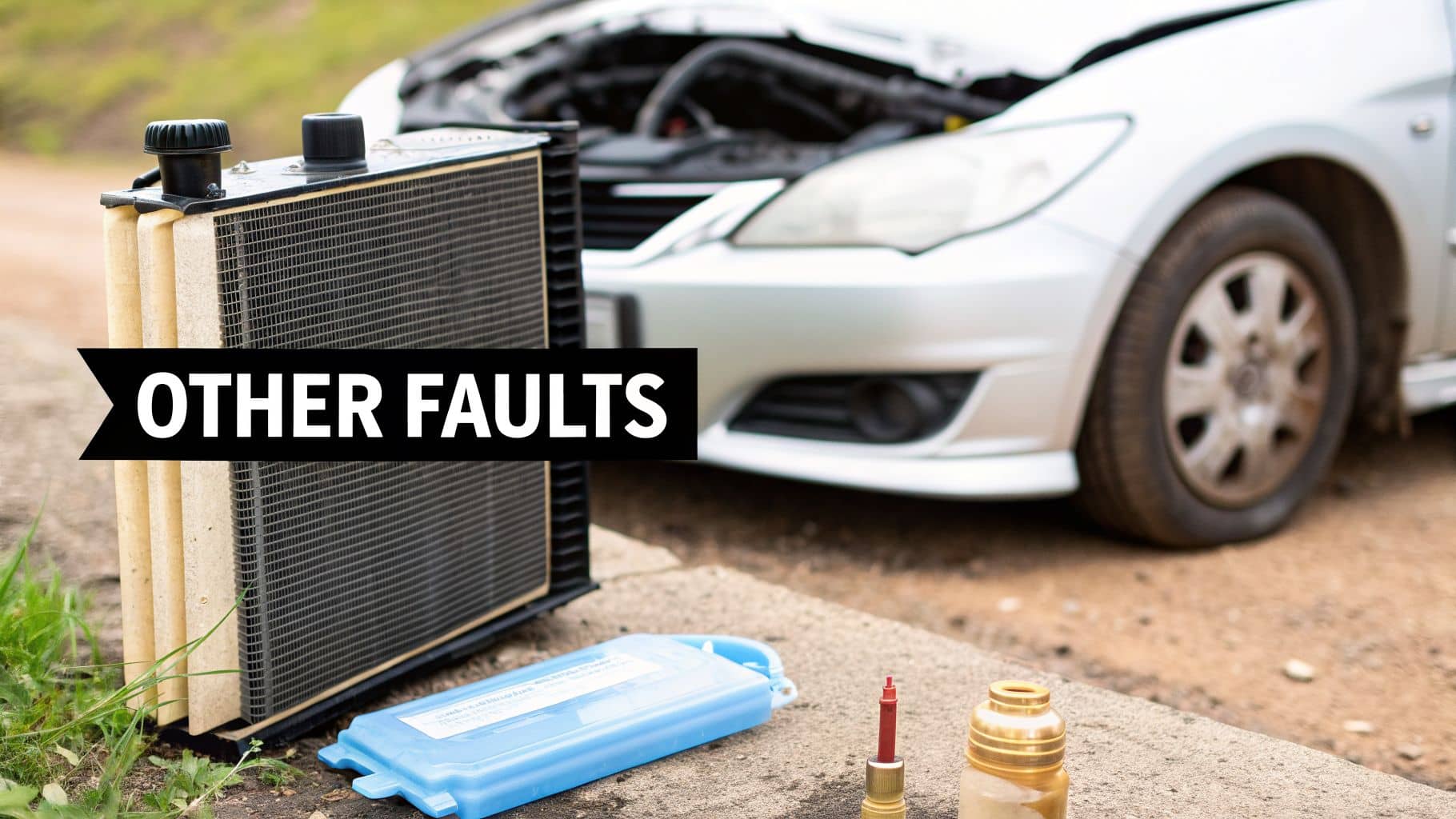
Let's break down how a blocked radiator can choke your cooling system, why a dead fan causes chaos in traffic, and the tell-tale signs of that most serious problem of all—a blown head gasket.
Radiator Blockages and Clogging
Think of your radiator as your car’s lungs, breathing out heat into the air. This part is a heat exchanger made of aluminium or brass, with thin tubes for coolant to flow through and thousands of delicate metal fins to dissipate heat. If those fins get blocked, it’s like trying to run a marathon with a hand over your mouth—it just won’t work.
Radiator blockages can happen in two main ways:
Externally: This is when dirt, dead leaves, insects, and general road grime get wedged between the fins, creating a physical barrier that stops air from passing through.
Internally: Over time, rust, limescale, and sludge from old, tired coolant can break loose and clog up the tiny tubes inside the radiator. This creates a bottleneck, preventing coolant from circulating properly.
Stuck towing a caravan on the M6 in a summer heatwave and the temperature needle starts creeping up? That's a classic scenario. Clogged radiators and fan failures accounted for 22% of overheating callouts in the RAC's 2025 UK data, leading to 68,000 breakdowns. Debris from pothole-riddled roads can block fins and slash airflow by up to 40%. AA data also shows a 27% rise in these faults since 2021, which they've linked to the 40% of UK cars now overdue for a proper coolant flush. You can find more latest insights on engine overheating causes and see just how big an issue this is for UK drivers.
Cooling Fan Faults
The cooling fan is the radiator's best mate, especially when you’re not moving. When you’re driving along the motorway, air is naturally forced through the radiator, keeping things cool. But in stop-start city traffic or when you're just idling, there’s no airflow. Without help, the engine temperature would skyrocket.
This is where the cooling fan jumps into action. Most modern cars have an electric fan controlled by a temperature sensor and a relay. When the coolant reaches a set temperature, the sensor signals the relay to switch the fan on, pulling air through the radiator. If the fan motor, the sensor, or the relay fails, your car will behave perfectly on the open road but will start to overheat the moment you hit a traffic jam.
A classic sign of a faulty cooling fan is an engine that only overheats in slow traffic or when stationary. As soon as you start moving again and air flows through the radiator, the temperature will drop back to normal.
Blown Head Gasket
This is the big one. It's the diagnosis every car owner dreads because it’s almost always the most serious and expensive overheating fault to fix. The head gasket is a vital seal sandwiched between the main engine block and the cylinder head that sits on top. Its job is to keep three things separate: coolant, oil, and the immense pressure from combustion.
When a head gasket "blows," it fails, and those separate channels start to mix. This can cause overheating in a couple of ways. Hot exhaust gases can be forced into the cooling system, boiling the coolant from the inside out. Or, coolant can leak into the engine's cylinders to be burned away with the fuel.
Look out for these tell-tale signs of a blown head gasket:
Thick white smoke puffing from the exhaust that has a strangely sweet smell. That's steam from coolant being burned in the engine.
A "milky" or "mayonnaise-like" sludge on the underside of your oil filler cap. This is a dead giveaway that oil and coolant have mixed.
Constant, frantic bubbling in the coolant reservoir, even when the engine is cool. This is exhaust gas being pushed into the cooling system.
A sudden loss of power or an engine that runs very roughly.
If you spot any of these symptoms, you must stop driving immediately. Continuing on with a blown head gasket can quickly lead to catastrophic, and often irreparable, engine damage. It's time to call a mechanic for a professional diagnosis.
What to Do When Your Car Overheats on the Road
What to Do When Your Car Overheats
It’s a sight every driver dreads: steam pouring from under the bonnet and that little temperature needle climbing deep into the red zone. It’s a moment that can send a jolt of panic through anyone.
An overheating engine isn't just a minor inconvenience; it's a critical failure that can lead to eye-wateringly expensive damage if you don’t handle it correctly. Keeping a cool head and knowing exactly what to do in those first few minutes is key. It can mean the difference between a quick fix and a complete engine meltdown.
Emergency Action Plan
If your car starts to overheat, don't try to push on and hope for the best. Follow these steps right away.
Turn Your Heater On Full Blast: It sounds completely mad, I know, but this is a brilliant little trick. Crank the car’s heater up to its hottest setting with the fan on high. This uses the heater core—a small, radiator-like part inside your dashboard—to pull some of that dangerous heat away from the engine. It might just buy you the precious moments you need to find a safe spot to pull over.
Indicate and Pull Over Safely: As soon as you can, find a safe place to stop, well away from traffic. Flick on your hazard lights immediately to let other drivers know you’re in trouble.
Switch Off the Engine: Once you’re safely parked, turn the engine off. This stops it from generating any more heat and is the most important step to prevent further damage.
Wait it Out: Pop the bonnet release from inside the car, but do not open the bonnet yet. The cooling system is under incredible pressure. Opening the bonnet or radiator cap too soon can cause a violent explosion of scalding steam and boiling coolant. You need to let everything cool down, which will take at least 30-45 minutes.
Never, under any circumstances, try to open the radiator cap while the engine is hot. The system is highly pressurised, and releasing the cap can cause boiling fluid to erupt with incredible force, leading to severe burns.
Once the temperature gauge is back in the normal range and the bonnet feels cool when you touch it, you can carefully open it up. Have a quick look around for any obvious problems – are there puddles of green or orange coolant on the ground? Can you see any split hoses or steam hissing from a specific spot?
You can also check the coolant level in the plastic overflow tank (it’s usually a see-through bottle next to the radiator). If it’s bone dry, you’ve definitely got a leak. If you happen to have spare coolant with you, you can top it up once the engine is completely cold. Just remember, this is a temporary patch-up to get you to a garage. You still need a proper diagnosis for what causes a car to overheat in the first place.
Prevent Overheating with Smart Maintenance and Parts
Knowing what causes your car to overheat is one thing, but stopping it from happening in the first place is the real win. Trust me, a bit of proactive maintenance is a lot less stressful—and cheaper—than finding yourself stranded on the hard shoulder with steam pouring from under the bonnet.
A few simple checks can help you spot trouble brewing. Take a quick look at your cooling system hoses for any obvious signs of wear and tear, like cracks, bulges, or mushy spots. You’ll also want to check the coolant itself. It should be a bright, clear colour. If it looks rusty, sludgy, or has bits floating in it, it’s well past its prime and needs changing.
Your Proactive Maintenance Checklist
Staying on top of your car's cooling system doesn't require a full workshop. It’s all about a simple, regular routine. By connecting these quick checks to the parts we've already discussed, you can catch minor issues before they turn into a full-blown overheating emergency.
Coolant Level and Condition: Every couple of weeks, pop the bonnet and check the coolant reservoir. If the level is consistently dropping, you’ve almost certainly got a leak somewhere.
Hose Inspection: When the engine is completely cold, give the main radiator hoses a gentle squeeze. They should feel firm but not rock-solid or spongy.
Listen for Noises: Pay attention to any new or unusual sounds coming from the engine bay. A high-pitched whine that changes with engine speed could be the first warning of a failing water pump bearing.
Radiator Fins: Keep the front of your radiator clear. It’s a magnet for leaves, insects, and road grime, all of which block airflow and stop it from doing its job.
Picture this: you're stuck in traffic on the M25 on a sweltering summer day, and you watch in horror as the temperature needle climbs into the red. This is a classic UK overheating scenario, and more often than not, it's down to low coolant. According to the RAC's 2025 breakdown statistics, cooling system failures accounted for around 12% of all engine-related callouts, with over 45,000 incidents reported during recent heatwaves. The AA added that 28% of these breakdowns came from simple coolant shortages, often caused by small, undetected leaks made worse by the UK’s classic freeze-thaw cycles.
The best repair is the one you never have to make. A five-minute check once a month can save you hours on the hard shoulder and hundreds of pounds in potential engine damage.
Sourcing the Right Parts for the Job
When a part eventually gives up, fitting the right replacement is everything. Whether it’s a stuck thermostat, a leaky water pump from a top brand like Delphi, or a brand-new radiator, getting the quality and fitment correct is non-negotiable.
Of course, you'll also need the right engine coolant for your specific vehicle to make sure the system is properly protected. The quickest and easiest way to get exact-fit components is to use an online number plate checker. It takes all the guesswork out of the equation, ensuring you get reliable, affordable parts for your DIY fix.
At GSF Car Parts, we make it simple to find high-quality, affordable components to keep your car running smoothly. From brake pads to cooling system essentials, simply enter your number plate to find the exact parts you need, with free UK delivery on orders over £25 and Click & Collect available in as little as 30 minutes. Find your parts today at https://www.gsfcarparts.com.