You're halfway through a long journey when a warning light appears, a brake pedal feels different, or one headlamp suddenly stops illuminating the road. Often, the first sign of trouble isn't dramatic. It's a dim bulb, a tyre with uneven wear, a damp shock absorber or an advisory you meant to deal with later.
A proper vehicle safety check catches those clues before they become a breakdown or an MOT failure. The most effective approach isn't a random glance around the car. It's a repeatable inspection that starts with the systems most likely to fail and treats MOT advisories as maintenance information, not paperwork to ignore.
Why Proactive Vehicle Safety Checks Prevent Breakdowns
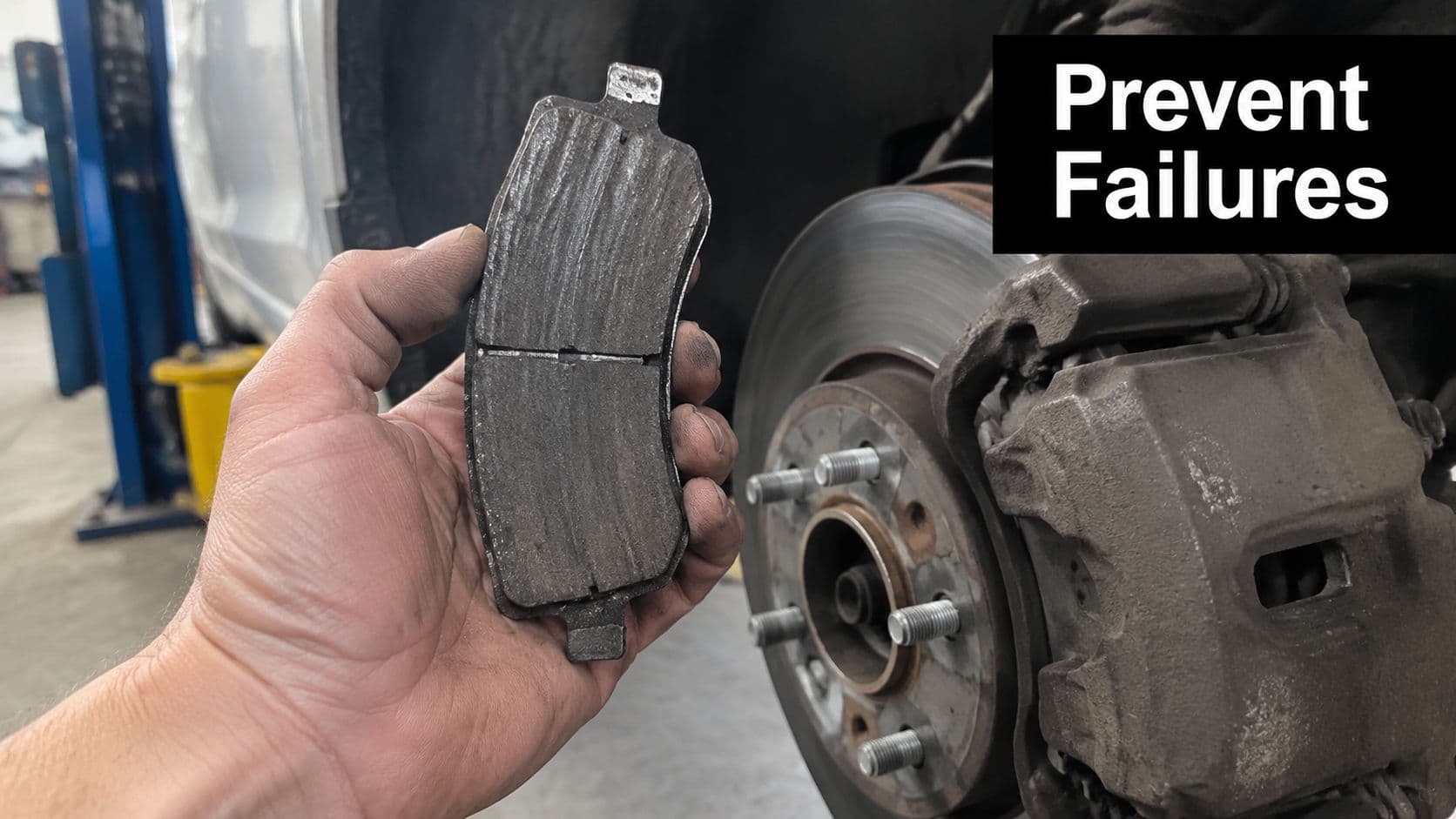
A brake pad can look acceptable at the last service and still become a problem before the next appointment. Listen for brake noise, notice whether the car pulls under braking, and pay attention to increased pedal travel. A tyre that loses pressure slowly or a number-plate lamp that fails can develop just as gradually, often without any dashboard warning.
The MOT provides a statutory roadworthiness checkpoint, but it is a snapshot of the vehicle on the day of the test. It cannot identify defects that appear afterwards, and it does not replace checks between appointments. Use the test as one part of a maintenance routine, not as permission to leave the car unchecked for a year.
A glance is not an inspection
A quick look may show a clean, presentable car. A proper inspection checks whether each safety-critical component operates correctly, remains secure and shows deterioration. That means checking the condition as well as confirming that a part still works.
DVSA guidance advises drivers to check before every journey that the windscreen, windows and mirrors are clean, all lights work and the brakes work, as set out in its vehicle safety guidance. These checks establish a useful daily baseline. A weekly or pre-trip inspection should then cover tyre condition, fluid levels, wipers, battery terminals and visible suspension or brake defects.
Practical rule: Deal with any defect affecting what you can see, how you stop or whether the vehicle stays in contact with the road before attending to convenience items.
Early repairs preserve options. A bulb or wiper blade can usually be replaced before poor visibility creates a greater risk. Resolving a tyre problem while the casing remains intact is safer than finding a flat at the roadside. A garage should assess faults that are unsafe or impractical to diagnose at home, including brake performance, bearing condition, steering play and electronic safety-system faults.
MOT advisories deserve the same attention as obvious symptoms. They may describe wear that has not yet reached a failure threshold, giving the owner time to plan inspection or replacement. A pass certificate confirms the result at that test. It does not confirm that every advisory can be ignored.
The same process benefits fleets. A consistent walkaround gives drivers a clear way to report defects and helps operators decide whether a vehicle should remain in service. Vehicle safety checks keep minor deterioration from becoming a breakdown or a safety-critical failure.
Inspecting Lighting and Electrical Systems First
A car can start normally and still fail an MOT because its road-facing lighting is defective. Lighting and electrical equipment deserve an early, detailed check because they accounted for the largest share of recent UK MOT failures. Lamps and electrical equipment accounted for 11% of failures and remained the leading category for three consecutive years, according to recent UK MOT failure reporting.
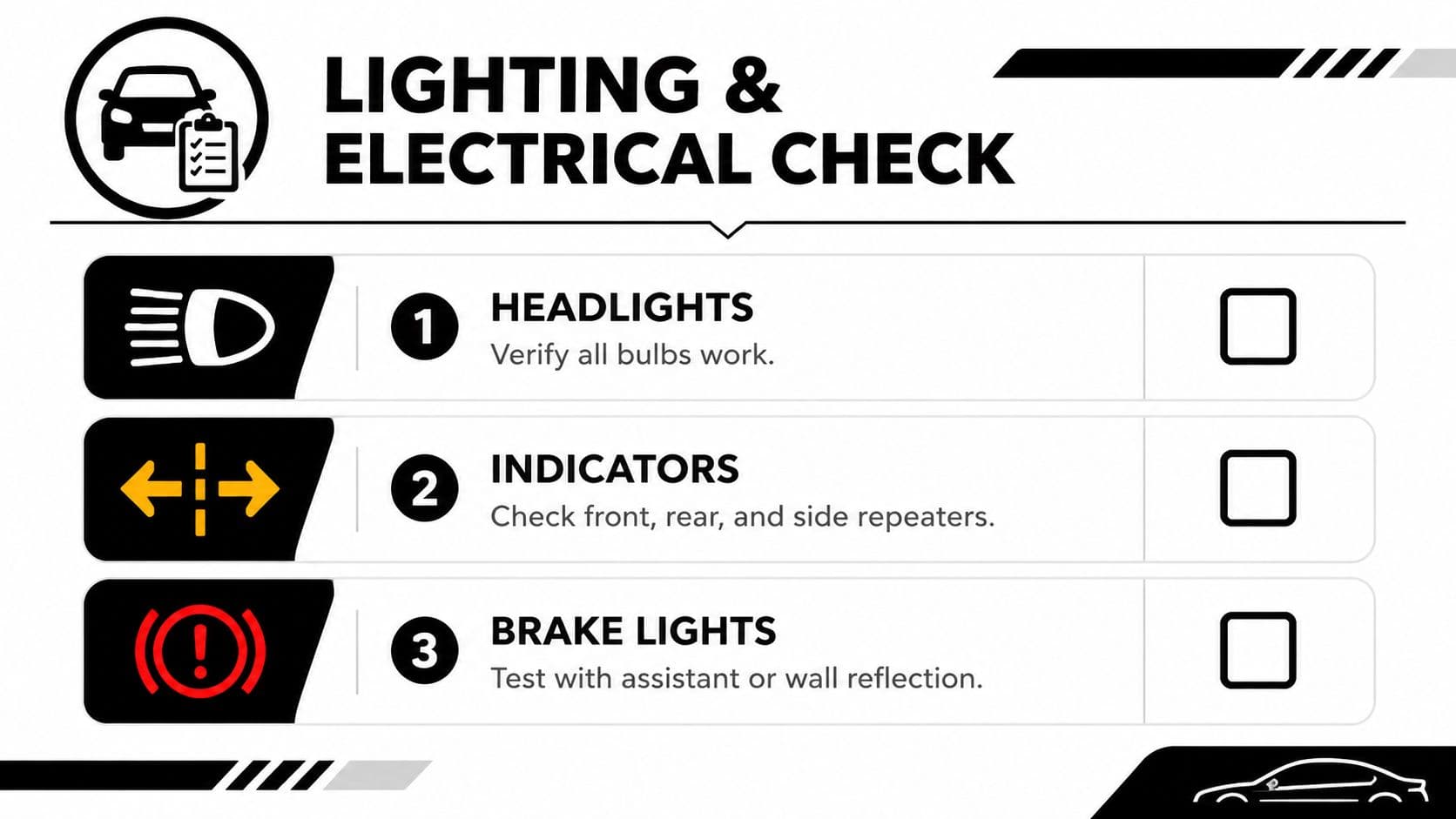
Park safely on level ground, switch on the ignition and walk around the vehicle. Dashboard indicators cannot confirm that every bulb, lens and connection is working.
Use a live lighting sequence
Headlamps: Test dipped beam and main beam. Check that both sides illuminate evenly, with no cracked, loose or heavily clouded lenses.
Position lamps: Confirm front and rear lamps work with the correct switch selected.
Indicators: Test front, rear and side repeaters, then operate the hazard warning lamps. A rapid flashing rate often indicates a bulb or circuit fault.
Brake lamps: Ask someone to press the pedal, or use a safe reflection against a wall or garage door. Check every visible stop lamp.
Reversing and fog lamps: Test them where conditions allow. Confirm that the dashboard tell-tales respond correctly.
Number-plate lamps: Inspect the registration area directly. A missing or failed lamp is a frequent individual MOT failure item.
Electrical warnings: After starting the engine, check battery, ABS, airbag and other safety-system warning lights. Persistent warnings require diagnosis, not dismissal as glitches.
Test the complete system in real time. Use the relevant switch, pedal or gear selection, then inspect accessible wiring, sockets and lenses for corrosion, water ingress and physical damage. One working bulb does not prove that the circuit is sound.
Low-light inspections are easier with a dedicated vehicle inspection light. It can reveal damaged connectors, loose wiring and fluid traces without putting hands near moving components. It does not replace a multimeter or professional electrical diagnosis, but it makes a visual check more reliable.
Treat an advisory involving a lamp, lens, wiring or warning light as an early repair prompt. A vehicle may pass while a component is deteriorating, and postponing the repair can turn a simple bulb or connector fault into poor visibility or a larger electrical problem. The priority is the condition that affects what other road users can see, and what the driver can see after dark.
Checking Tyres Brakes and Suspension Components
A vehicle can pass its lighting checks yet still have poor grip, stopping performance or wheel control. Tyres, brakes and suspension work as one system. The tyre supplies contact with the road, the brakes control deceleration, and the suspension keeps the wheel planted while managing movement. Inspect them in that order because defects in these areas affect the way the vehicle responds immediately.
Tyres need more than a tread glance
The UK legal minimum for car tyre tread is 1.6 mm across the central three-quarters of the tread around the entire circumference, as explained in this tyre inspection guidance. That figure is the legal floor, not a target for a tyre showing damage or uneven wear.
Check every tyre in good light:
Tread depth: Use a tread-depth gauge at several points around the tyre. A single reading can miss localised wear.
Shoulders: Wear on the inner or outer shoulder can indicate incorrect pressure, poor alignment or a worn suspension component.
Sidewalls: Look for cuts, bulges, cracking and exposed cords. Structural damage needs professional assessment.
Fitment: Confirm that the size and type suit the vehicle and axle requirements.
Pressure: Set pressures with the tyres cold, following the vehicle manufacturer's specification rather than a generic figure.
A car tyre inflator can correct low pressure, but it cannot repair casing damage or uneven wear. A tyre that repeatedly loses pressure needs its valve, bead, puncture history and wheel checked, rather than being topped up indefinitely.
Brakes need a functional check
At home, assess brake operation and visible condition. Leave measurements and faults requiring lifting or brake-testing equipment to a properly equipped garage.
On a quiet, safe road, braking should feel progressive and predictable. A soft or sinking pedal, pulling to one side, steering-wheel vibration or grinding noise needs investigation. Check that the parking brake holds the vehicle securely on a suitable incline, without excessive travel or a warning light remaining illuminated.
Look through the wheel spokes for obvious disc scoring, heavy corrosion or pad material that appears very thin. This visual check cannot confirm pad or disc thickness. Brake fluid leaks, wet areas around callipers or pipes, and a sudden change in pedal feel are reasons to stop driving and seek professional advice.
Suspension faults show up in behaviour
Inspect dampers for visible oil leakage, then look for damaged springs, loose components and uneven ride height. Pressing down on a corner may reveal excessive movement, but a bounce test cannot reliably identify every worn bush, top mount, ball joint or damper fault.
Pay attention to knocking over speed humps and rough surfaces. Wandering, excessive dipping under braking, continued movement after a bump and uneven tyre wear can all indicate suspension or steering problems. A proper inspection is safer than replacing parts based on guesswork.
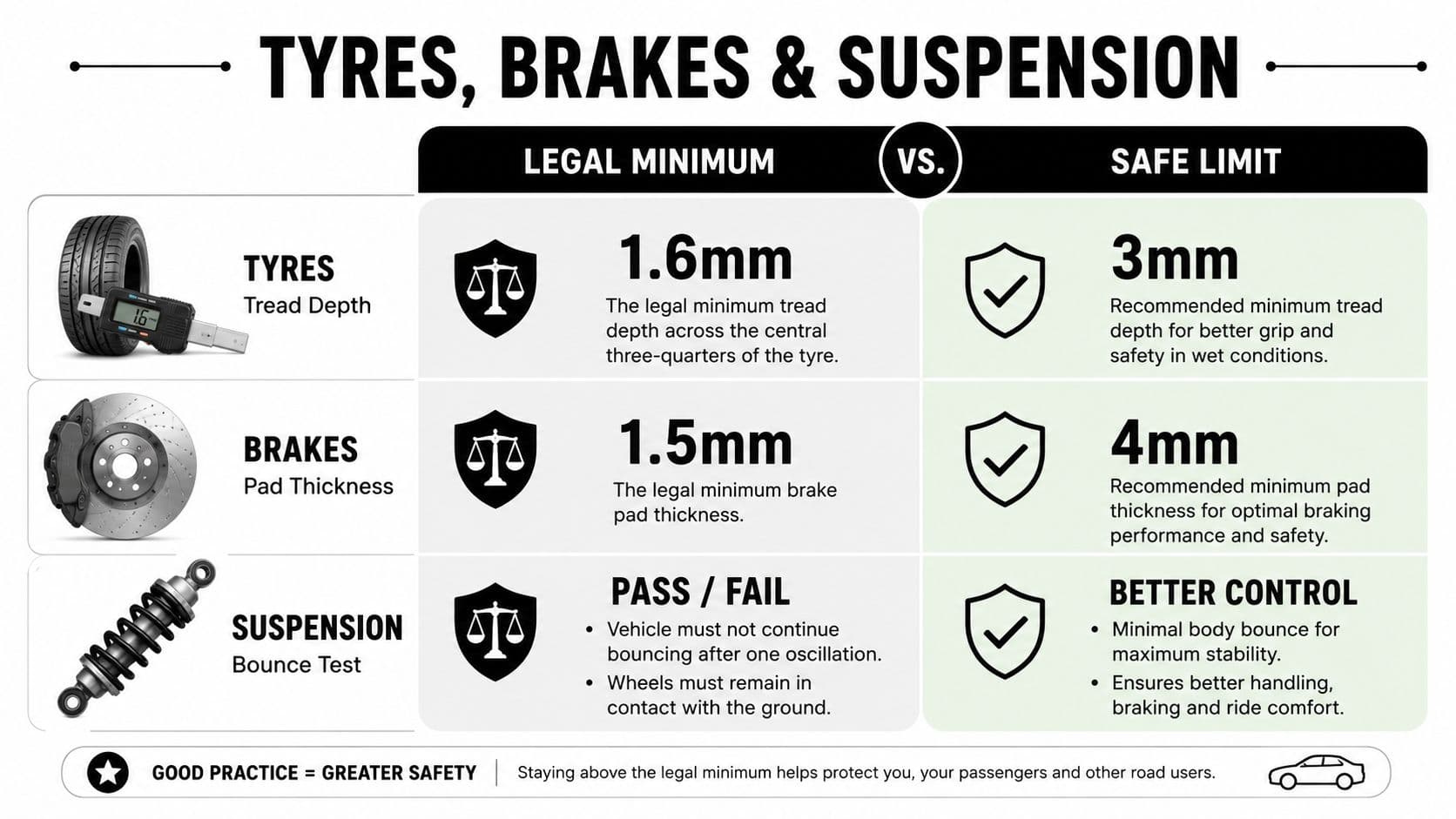
The practical order is tyres first, then brake feel and parking-brake operation, followed by suspension condition and vehicle behaviour. This focuses attention on faults that can affect grip, stopping and control, while leaving specialist measurements to a suitably equipped garage. A tyre, brake or suspension advisory should also be treated as an early warning, not just recorded as a pass outcome.
Interpreting MOT Advisories as Early Warning Signs
A pass certificate doesn't mean every component is fresh. An advisory identifies a condition that hasn't reached the failure threshold but deserves attention. Treating that note as a maintenance forecast is more useful than filing it away until the next test.
The scale is significant. Over half of Class 4 vehicles tested in 2025 received at least one advisory, around 22.5 million out of 40 million tests, while total advisories rose from 60.5 million in 2022 to nearly 66 million in 2025, according to DVSA vehicle enforcement data for Great Britain. Advisories commonly concern wear items such as tyres, brakes, suspension components, bulbs and fluids.
Prioritise the consequence, not the wording
An advisory about a worn tyre, brake component or suspension joint deserves a different response from a note about minor corrosion or a non-critical trim issue. The wording may be brief, so combine it with symptoms, mileage, vehicle use and the technician's explanation.
Advisory Category | Typical Component | Safety Risk Level | Recommended Action Window |
Lighting or electrical | Bulb, lens, wiring or number-plate lamp | High if visibility or signalling is affected | Repair promptly |
Tyres | Tread, pressure, damage or uneven wear | High | Inspect immediately and replace or correct as required |
Brakes | Pad, disc, fluid or brake pipe condition | High | Arrange a professional assessment promptly |
Suspension | Damper, spring, bush or joint wear | High where control or tyre contact is affected | Book an inspection soon |
Visibility | Wiper, washer, mirror or glass condition | Medium to high | Correct before poor weather or impaired visibility |
Fluids | Oil, coolant, brake fluid or screen wash | Varies by fluid and level | Check promptly and investigate losses |
Use the advisory to plan, not panic
An advisory isn't automatically a demand for immediate replacement. It's a prompt to inspect the component, understand how quickly it may deteriorate and plan the work before the condition crosses into a failure. A tyre with uneven wear may need an alignment check as well as a replacement. A brake advisory may justify measuring pads and discs, checking callipers and considering the vehicle's driving pattern.
Regional context can help you think about risk, but it shouldn't replace inspection. London recorded the highest MOT pass rate in 2025 at 87%, according to the DVSA vehicle enforcement checks dataset. Urban stop-start use can place more demand on brakes, while damp conditions, parked exposure and low-use patterns can contribute to corrosion or battery problems. Higher annual mileage, motorway use and heavily loaded light commercial work create different wear patterns.
Record the advisory, the date, the mileage and the action taken. That turns the MOT history into a useful maintenance record rather than a pass-or-fail snapshot.
Under-bonnet Fluid Battery and Visibility Maintenance
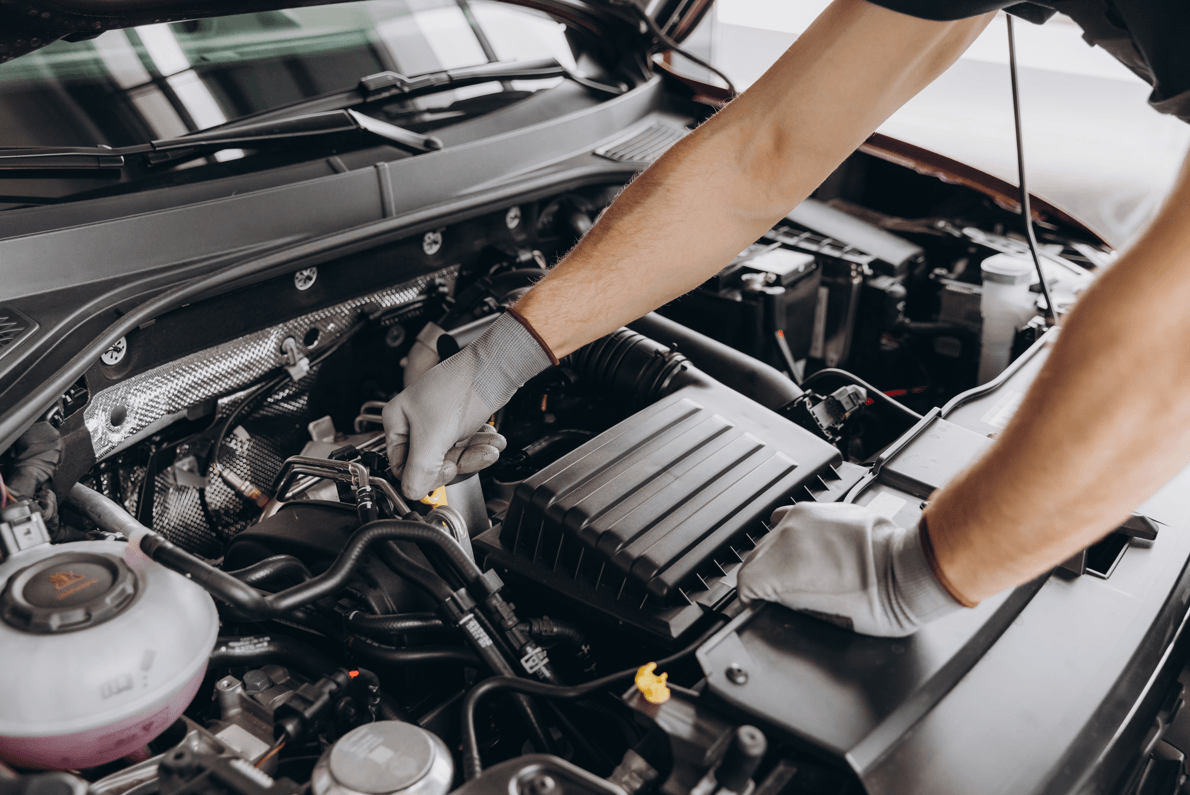
A vehicle can pass a short drive and still have a fluid loss, weak battery or poor washer coverage waiting to cause trouble. Park on level ground, switch off the engine and let hot components cool before checking levels. Never remove a pressurised coolant cap while the engine is hot.
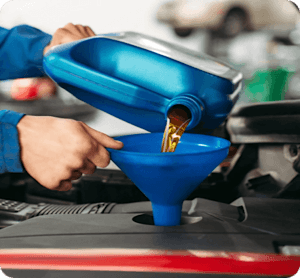
Engine oil needs checking with the dipstick on level ground, following the manufacturer's procedure. Check the level and look for changes, but colour alone does not diagnose an engine fault. A falling level, creamy contamination, strong fuel smell or fresh oil around the engine calls for investigation.
Coolant should sit between the reservoir markings when cold. Look for staining around hoses and the reservoir, damaged caps and repeated losses. Topping up may restore the level, but it does not explain where the coolant went.
Brake fluid should remain between the minimum and maximum marks. A low level may indicate pad wear, a leak or another brake-system fault. Find the cause before refilling and continuing to drive. Brake fluid absorbs moisture, so replacement should follow the vehicle manufacturer's service information.
Screen wash supports clear visibility in rain and road spray. Test the washers, not just the reservoir level. A blocked jet, weak pump or split hose can leave part of the windscreen uncleared.
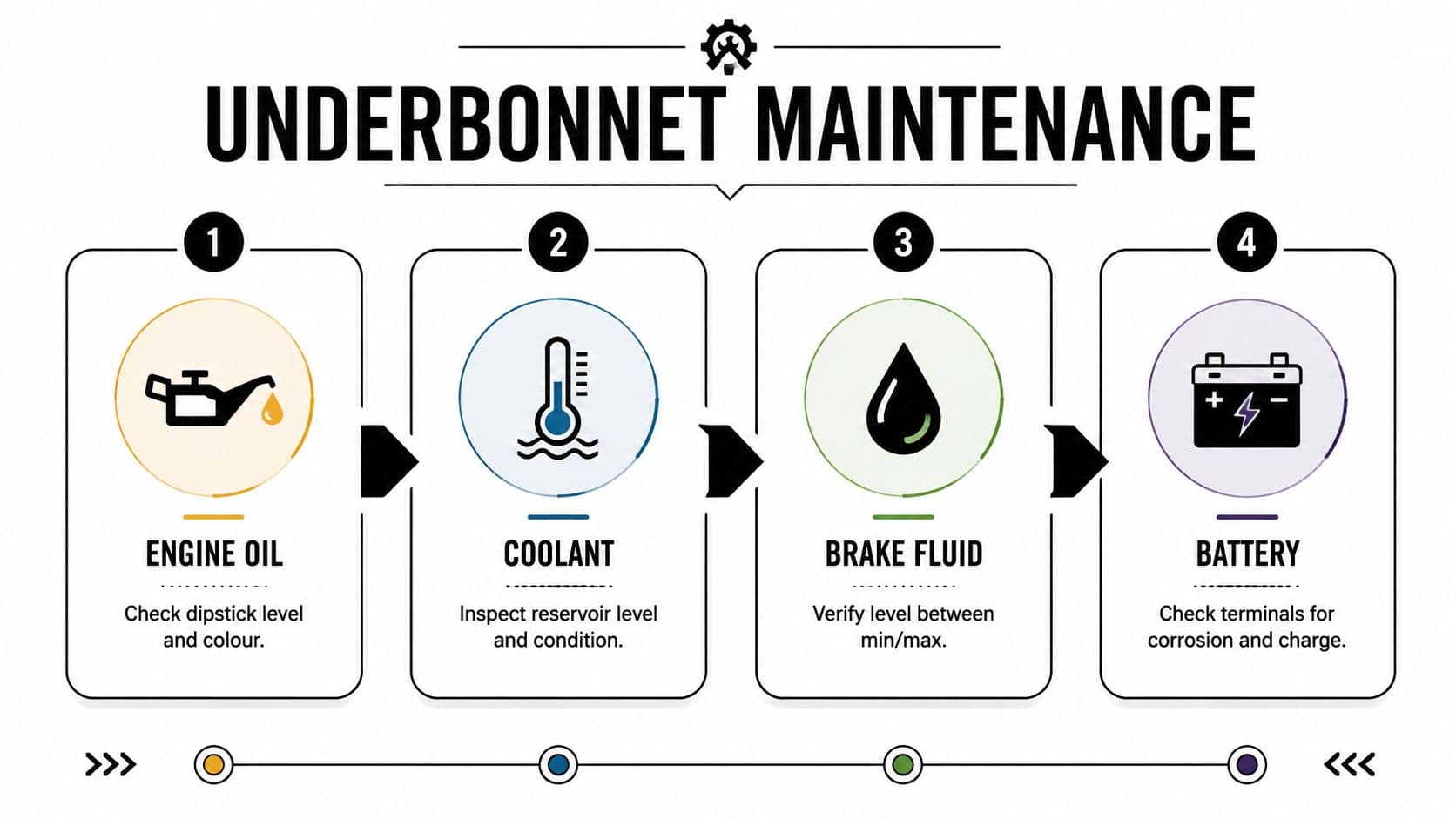
Battery and visibility checks
Inspect the battery case for cracks or swelling and confirm that it is securely mounted. Terminals should be tight and free from heavy corrosion. Slow cranking, repeated flat starts or electrical warnings justify a voltage and charging test before fitting a replacement battery.
A battery charger can help a vehicle that spends long periods parked, particularly where short journeys do not fully restore charge. It cannot diagnose a failing battery, alternator or parasitic drain. Match the charger to the battery type and follow its safety instructions.
Clean the windscreen, windows and mirrors before checking them properly. Wiper blades should not split, smear or leave untreated sections. Washer jets need to cover the required area, while damaged mirrors or glass require replacement rather than adjustment alone.
These checks also help interpret MOT advisories. An advisory for visibility, a battery mounting issue or fluid leakage is an early warning, even if the vehicle has passed. Record the defect and arrange inspection before it becomes a failure or a roadside breakdown.
Building Your Regular Safety Check Routine
Build the routine around when defects are easiest to spot. Before driving, check visibility, lighting and brake operation. Each week, inspect tyre pressures and condition, fluid levels, wipers, battery security and obvious leaks. Before a long journey, or after an MOT advisory, examine tyres, brakes, suspension and under-bonnet components more closely.
Match the frequency to the vehicle's work. High mileage, age, regular loads and repeated short urban trips can expose faults sooner than light use on longer runs. Seasonal checks deserve attention too, particularly for lighting, battery condition, tyres, coolant and screen wash.
DIY checks suit bulbs, pressures, tread measurement, fluid levels, wipers and cleaning. A reputable garage should assess brake performance, hydraulic leaks, wheel-bearing noise, steering play, suspension joints and electronic warning lights. Book an inspection for any defect you cannot identify confidently.
The MOT provides an independent checkpoint, but it is only a snapshot. Your routine covers the time between tests. Treat an advisory for worn tyres, brake wear, corrosion, poor lighting or fluid leakage as a repair prompt, not paperwork to file away. Recording the defect and arranging an inspection can prevent a later failure or roadside breakdown.
Set calendar reminders and keep a simple defect log. Buy the correct specification rather than the cheapest substitute. For bulbs, brake components, batteries, fluids, tools and other maintenance items, GSF Car Parts provides online ordering and free Click & Collect from stores across the UK and Ireland, supporting planned or urgent safety work.
Before the next journey, walk around the car, test every lamp, inspect the tyres, check brake operation and confirm that the windscreen and mirrors provide a clear view. Correct small defects while they remain manageable.