You're usually not thinking about coolant when everything's fine. Then one day you glance at the dash on the way to work, the school run, or a weekend trip, and a warning light appears. That's the moment most drivers start asking the same question. Can I top up coolant myself, and how do I make sure I don't make things worse?
The good news is that a coolant top-up is one of the more approachable bits of car maintenance for a DIYer. The bad news is that it's also one of the jobs people rush, guess, or do with the wrong fluid. That's where trouble starts. A cooling system is simple in principle, but it only stays reliable when the right fluid is in the right place, at the right level, and under the right conditions.
If you understand what the reservoir does, how coolant differs from plain water, and why the fluid type matters, you'll handle this job with a lot more confidence.
Why That Little Light on Your Dashboard Matters
You're driving somewhere important and a small warning light shows up on the dash. At first, it's easy to hope it's nothing. Maybe the engine just got a bit warm in traffic. Maybe it'll clear on its own. That hesitation is exactly why coolant issues catch people out.
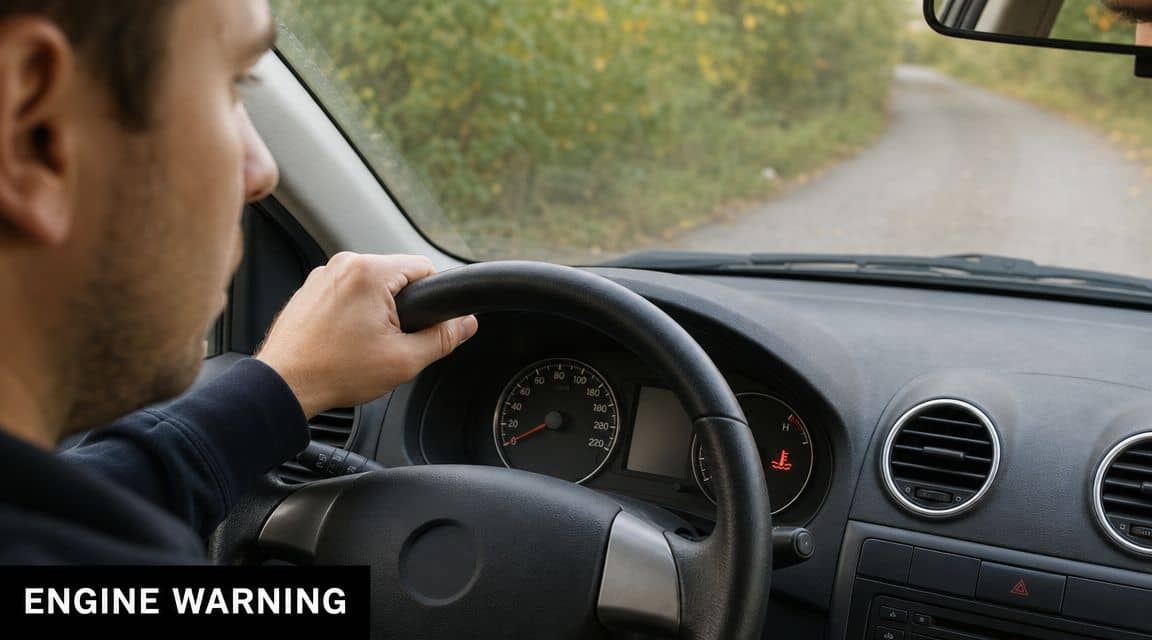
Engine coolant does far more than many drivers realise. It carries heat away from the engine, helps stop freezing in cold weather, and protects internal parts from corrosion. When the level drops too far, the system can't do that job properly. Heat builds up, weak points get exposed, and a simple warning can turn into a breakdown.
It's not just radiator water
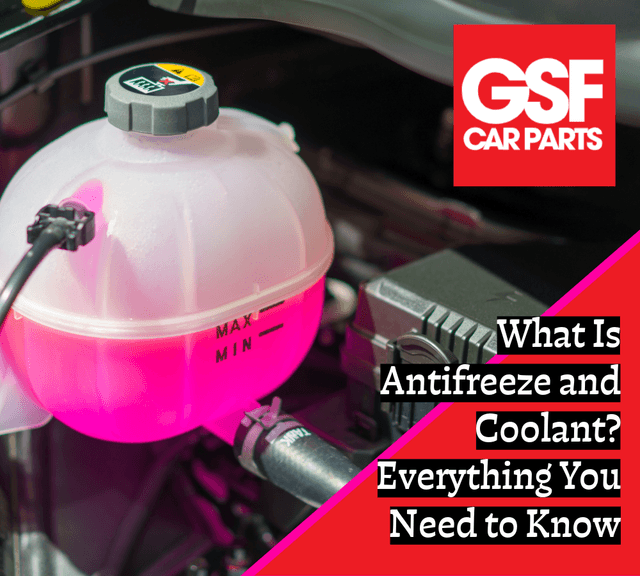
A lot of people still describe coolant as “water in the radiator”. That's understandable, but it misses the point. Modern coolant is a formulated fluid, and the system depends on it. The translucent plastic bottle under the bonnet isn't just a spare tank either. It's part of the cooling system, and the level in that reservoir tells you whether the engine has enough fluid available as temperatures change.
If your warning light comes on and the level looks low, don't ignore it and keep driving as normal. A low level can be a one-off issue after normal use, but it can also be your first clue that something else is happening, such as a leak or a faulty coolant level sensor.
Practical rule: A coolant warning is never a light to “deal with later” if you can avoid it.
Small checks prevent big repairs
The reason mechanics take coolant seriously is simple. Engines don't tolerate overheating well. When the cooling system is doing its job, you barely notice it. When it isn't, the damage can get expensive very quickly.
That's why learning to top up coolant properly matters. It's not just a quick refill. It's one of the easier preventative maintenance habits a driver can build, and it gives you an early look at whether your car is healthy or trying to tell you something.
Essential Checks and Tools Before You Start
Before you open anything, slow down. Most coolant mistakes happen in the first few minutes, usually because someone opens the wrong cap or works on an engine that's still too warm.
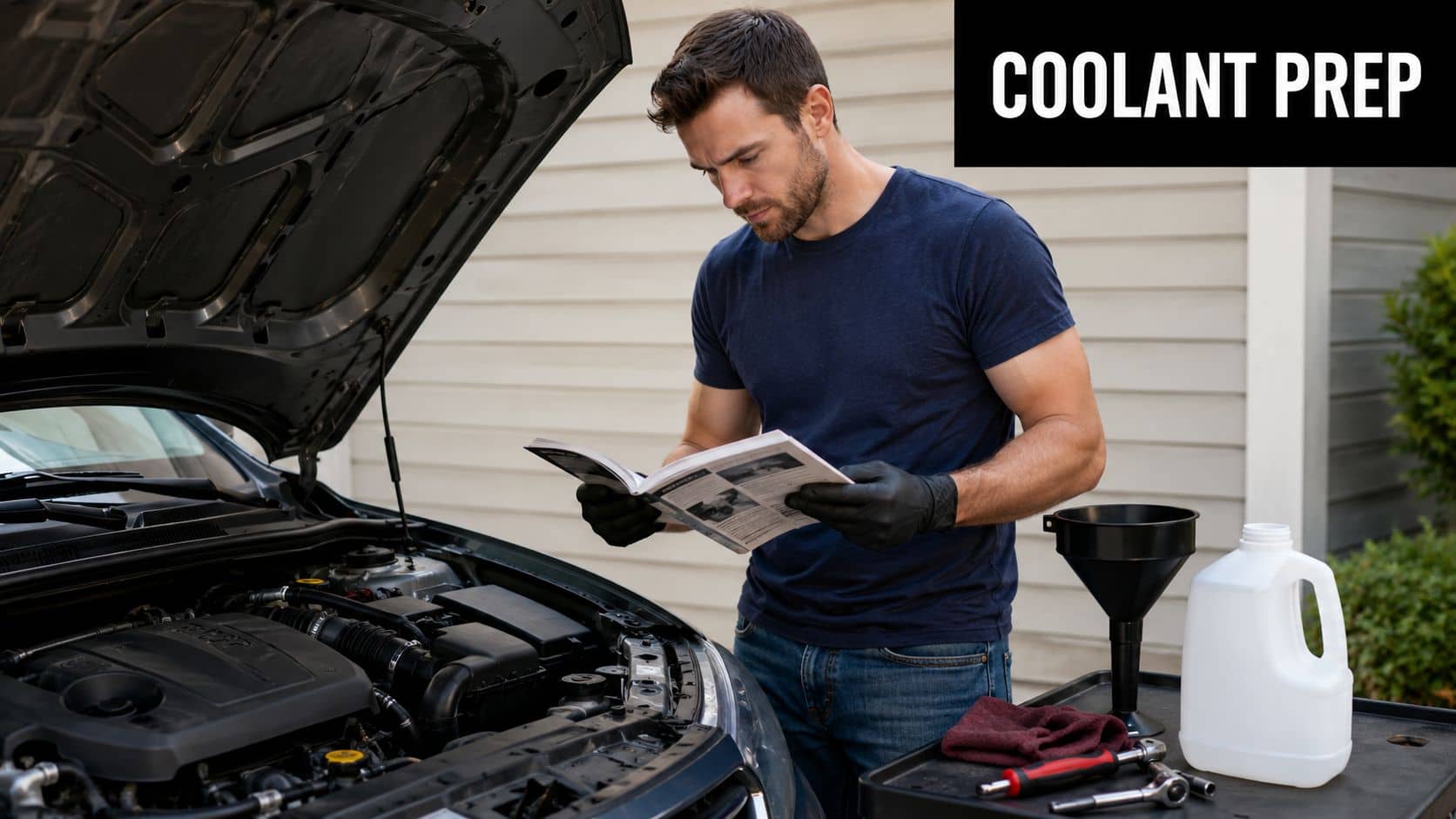
A practical maintenance benchmark is to inspect coolant at least once a month and before long trips, and for safety you should wait at least 30 minutes after the engine has been running, with some mechanics advising up to an hour before opening the system because it remains pressurised while hot, as noted in this UK coolant checking guidance.
Identify the correct tank
Under the bonnet, the coolant reservoir is usually a translucent plastic tank with visible MIN and MAX marks on the side. It often has a screw cap with a warning symbol or wording that tells you not to open it when hot.
The washer bottle is the one people confuse it with most often. That tank usually has a cap marked with the windscreen washer symbol. Don't mix them up. Windscreen wash in the coolant system creates a much bigger job than a simple top-up.
A quick visual check helps:
Coolant reservoir. Semi-clear plastic, level marks on the side, pressure cap, usually mounted near the engine bay edge.
Washer bottle. Often larger, usually has a flip cap, marked with a windscreen symbol.
Brake fluid reservoir. Smaller, often near the bulkhead, and not something you should casually top up without understanding why the level has changed.
Get your tools ready
You don't need a full workshop setup for this job, but you do need to be organised. Lay everything out first so you're not hunting around with an open cap in your hand.
Correct coolant. Match the vehicle specification, not just the colour.
A clean funnel. It helps you avoid spills and keeps dirt out of the system. A set of automotive funnels makes the job tidier.
Gloves. Coolant isn't something you want on your skin.
A cloth. You'll use it when loosening the cap.
Owner's manual. If there's any doubt about fluid type or fill procedure, that's your best first check.
Let the engine cool fully, park on level ground, and confirm you're looking at the reservoir before you touch the cap.
Check the level properly
Level ground matters because fluid readings can mislead you if the car is parked on a slope. Look at the side of the reservoir, not just down through the top. If the coolant sits below the minimum mark, a top-up makes sense. If it's hovering between the marks, don't rush to add more.
This is also the moment to look at the fluid condition. If it appears clean and normal for the coolant already in the vehicle, that supports a straightforward top-up. If it looks sludgy, rusty, or contaminated, stop there and investigate further rather than pouring more in.
Choosing the Right Coolant for Your Car
The biggest myth around coolant is that it's all basically the same. It isn't. Consequently, a cautious DIYer usually does better than an overconfident one, since the careful driver checks the specification instead of grabbing the first bottle with a familiar colour.
Coolant type matters more than colour
You'll often hear coolant described by technology type, such as IAT, OAT, or HOAT. Those labels refer to the additive package and corrosion protection chemistry, not just branding. Colour can offer a clue, but it is not a reliable decision tool on its own. Manufacturers use different dye colours, and two coolants that look similar can still be wrong to mix.
If you mix incompatible coolant types, the result can be messy. In practice, the system may lose protection, and in some cases the fluid can thicken or leave deposits that block passages. That's when a simple top-up turns into a flush, parts replacement, and a lot more expense.
Here's the basic comparison many DIYers find useful:
Coolant Type | Common Colour(s) | Technology | Typical Lifespan |
IAT | Green | Inorganic Additive Technology | Varies by vehicle |
OAT | Orange, red, pink | Organic Acid Technology | Varies by vehicle |
HOAT | Yellow, pink, turquoise | Hybrid Organic Acid Technology | Varies by vehicle |
Concentrate or ready mixed
You'll also see coolant sold as concentrate or pre-mixed. Concentrate gives you flexibility, but only if you dilute it correctly. For concentrated coolant, the standard UK ratio is 50/50 with de-ionised water, and using only water is an emergency-only measure. If the final mixture ends up with over 60% water, a full flush and replacement is recommended, according to this coolant mixing guidance.
That's the trade-off. Pre-mixed coolant is simpler and reduces the chance of dilution mistakes. Concentrate is fine when you know exactly what you're doing and you use the right water.
If you're unsure whether the bottle is concentrate or ready mixed, stop and read the label before it goes anywhere near the car.
What actually works
What works is simple. Match the coolant to the vehicle manufacturer's specification. Don't rely on colour alone. Don't mix unknown fluids unless the manufacturer guidance clearly allows it. If the system already contains mystery coolant from a previous owner or old repair, a proper drain and refill is often the cleaner long-term answer.
For drivers who want to cut down the guesswork, the engine coolant finder at GSF Car Parts can help you narrow products to the right application using your vehicle details.
A Safe Guide to Topping Up Your Coolant
Once the engine is fully cold, the car is on level ground, and you've got the correct coolant ready, the job itself is straightforward. The key is to do it calmly and not treat it like pouring washer fluid into a bottle.
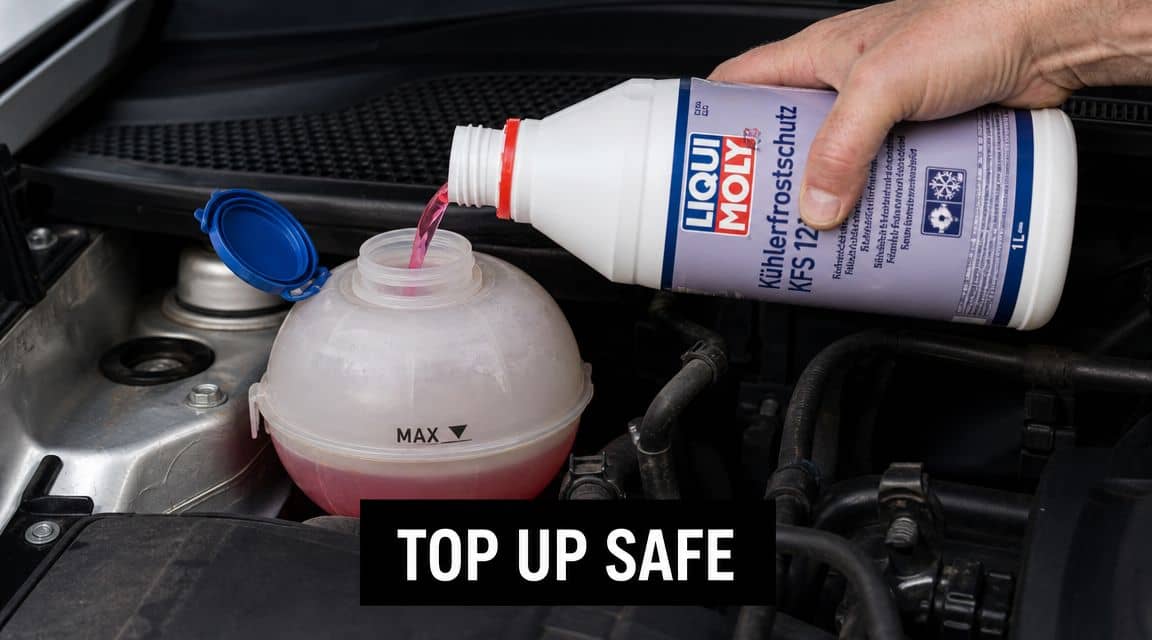
A safe top-up should be done only on a cold engine and level ground. Open the cap with a cloth because the system can retain pressure, and fill only to the MAX line, not above it, as explained in this safe coolant top-up guide.
Open the system carefully
Place the cloth over the reservoir cap and loosen it slowly. Even when the engine feels cool, there can still be residual pressure in the system. That's why experienced mechanics never whip the cap off in one movement.
If you hear any release of pressure, pause. Let it settle, then continue. This is one of those small habits that prevents burns and keeps the job controlled.
Fill slowly and watch the marks
Use a clean funnel if the reservoir opening is narrow. Pour slowly enough that the fluid settles rather than splashing back. Keep your eye on the side markings as you go.
Stop at the MAX line. Don't be tempted to add “a little extra for safety”. The system needs space for expansion as the engine heats up. Overfilling often creates its own mess, and it can mislead you when you check the level later.
A simple sequence works well:
Confirm the level before filling. If it's only slightly below the mark, add a small amount first.
Pour in stages. Let the level settle after each small addition.
Check from the side of the reservoir. Looking straight down can fool you.
Refit the cap securely. A loose cap can cause pressure and level issues.
This short walkthrough is useful if you want to see the motions before you start: How to Add Antifreeze To Your Engine
Finish the job properly
Wipe away any spills around the reservoir and nearby parts. Then make sure the cap is fully seated and tightened properly. If the cap cross-threads or doesn't feel right, remove it and start again rather than forcing it.
That final check matters because the cap is part of the system. A careless fit can create the sort of problem people wrongly blame on the coolant itself.
A neat top-up is a good top-up. No overfill, no spills, no guesswork.
Common Mistakes and How to Spot Trouble
Most coolant top-ups go wrong because people assume filling the bottle solves the whole problem. Sometimes it does. Sometimes the low level was just the symptom.
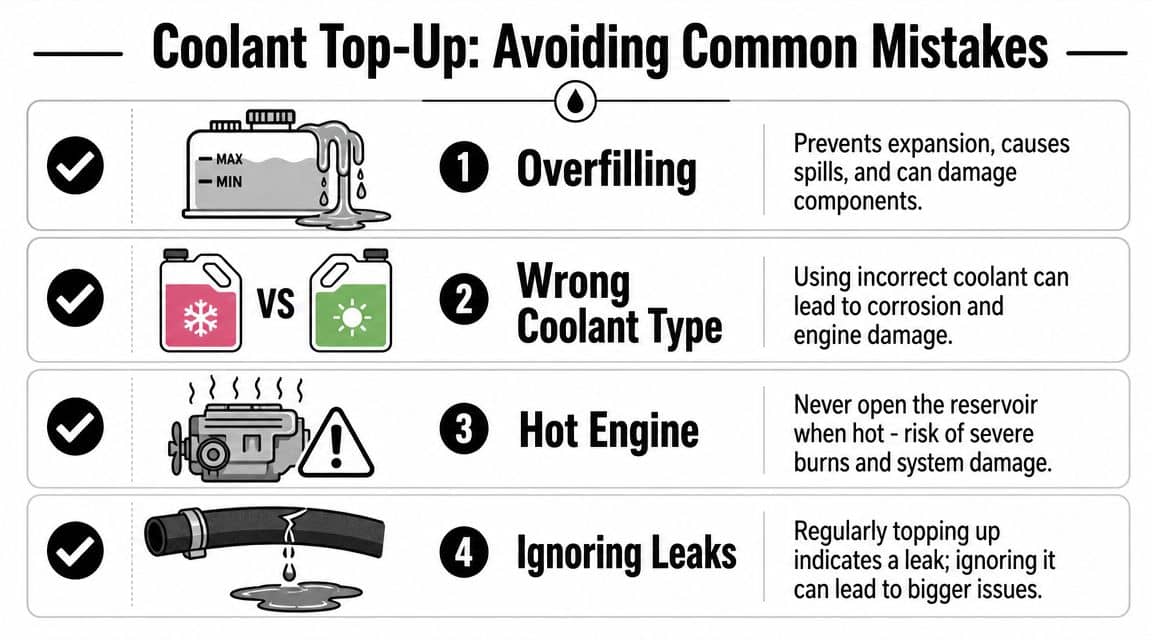
The mistakes that come up most often
A few errors turn up again and again in workshop conversations:
Overfilling the reservoir. Extra fluid doesn't give extra protection. It removes expansion space.
Using the wrong coolant. Matching colour alone is a gamble.
Opening the system too soon. Heat and pressure are what make this job dangerous.
Ignoring repeated loss. If you keep topping up, you're probably masking a fault rather than maintaining the car.
The last one catches people most. They top it up, the warning goes away, and they move on. Then the level drops again. That isn't normal maintenance anymore. That's diagnosis time.
Airlocks can fool you
One of the trickier problems after refilling is trapped air. The reservoir level can look fine at first, but once the engine warms up and the air works its way through the system, the level can drop again. A workshop bleed procedure often involves running the engine until the radiator fan cycles on and off at least twice, which can take around 30 minutes, before carrying out the final top-up and checks, as shown in this cooling system bleeding procedure.
That doesn't mean every quick top-up turns into a full workshop bleed. It does mean you shouldn't assume the first reading is the final one. After a top-up, keep an eye on the level over the next normal checks.
Don't judge the result the second you put the cap back on. Cooling systems often tell the truth after they've gone through a proper heat cycle.
Signs the problem is bigger than a top-up
If the level keeps falling, start looking for evidence rather than adding more fluid and hoping for the best.
Watch for things like:
Puddles or drips under the car. Especially after parking.
A sweet smell in the engine bay. Coolant often has a distinct smell.
Dampness around hoses, the radiator, or the reservoir. Leaks don't always make it to the ground.
Rising temperature readings. Even if the bottle looks full.
Sludge or discolouration in the tank. That points away from a routine top-up.
A good DIYer doesn't just refill. They observe. That's often what catches a small cooling system fault before it becomes a recovery truck job.
When to Call a Mechanic and How GSF Can Help
There's no shame in stopping at the point where the job moves beyond a simple top-up. In fact, that's the smart call. If the coolant level drops again after you've filled it correctly, if the engine is overheating, if the fluid looks brown or sludgy, or if you notice white smoke from the exhaust, get the car checked by a mechanic.
Those signs suggest a fault, not a maintenance gap. It could be a leaking hose, a failed cap, a radiator issue, or a deeper engine problem. Topping up won't cure any of those.
For drivers doing basic maintenance at home, and for garages carrying out proper cooling system repairs, getting the correct fluid and parts matters just as much as fitting them correctly. That's where a supplier with the right range, vehicle lookup tools, and fast collection options makes life easier when a routine check turns into a same-day parts run.
If you need coolant, a replacement cap, or parts for a wider cooling system repair, GSF Car Parts lets you search by vehicle, order online, and use Click & Collect when time matters.