How to Dispose of Old Car Oil: A UK Guide for 2026
You've finished the oil change. The sump plug is back in, the fresh oil is in the engine, the dipstick reads right, and you've got that satisfying feeling that comes from doing a proper job yourself.
Then you look down at the drain pan and remember the part plenty of people leave vague. What do you do with the old oil?
The Final Step of Your DIY Oil Change
For most DIY jobs, clearing up is just tidying away tools. Used engine oil isn't like that. In the UK, engine oil is classed as hazardous waste, and Recycle Now says it must be kept in a sealed container, not mixed with other substances, and taken to a designated recycling point. That means the job isn't finished when the new oil goes in. It's finished when the old oil is stored properly and handed over the right way.
That catches some people out because the oil change itself feels straightforward. You drain it, swap the filter, refill, check for leaks, and clean up. If you've used one of the purpose-made oil drainers available for DIY servicing, collecting the waste oil is easier, but what matters most is what happens next.
Practical rule: If it can leak in your garage, boot, or driveway, it isn't stored properly yet.
The mistake I see most often is people treating old oil like an ordinary household leftover. It isn't. You can't pour it into a drain, tip it onto the ground, or sling the container into the general bin and hope for the best. You also shouldn't leave an open pan of used oil sitting around where rain, dust, pets, or curious kids can get to it.
A proper disposal routine isn't difficult. It just needs a bit of care. Keep the waste oil sealed, keep it clean, and take it to an authorised place that accepts it. Do that, and you've completed the oil change properly. Skip it, and you haven't.
Why You Must Never Pour Old Oil Down the Drain
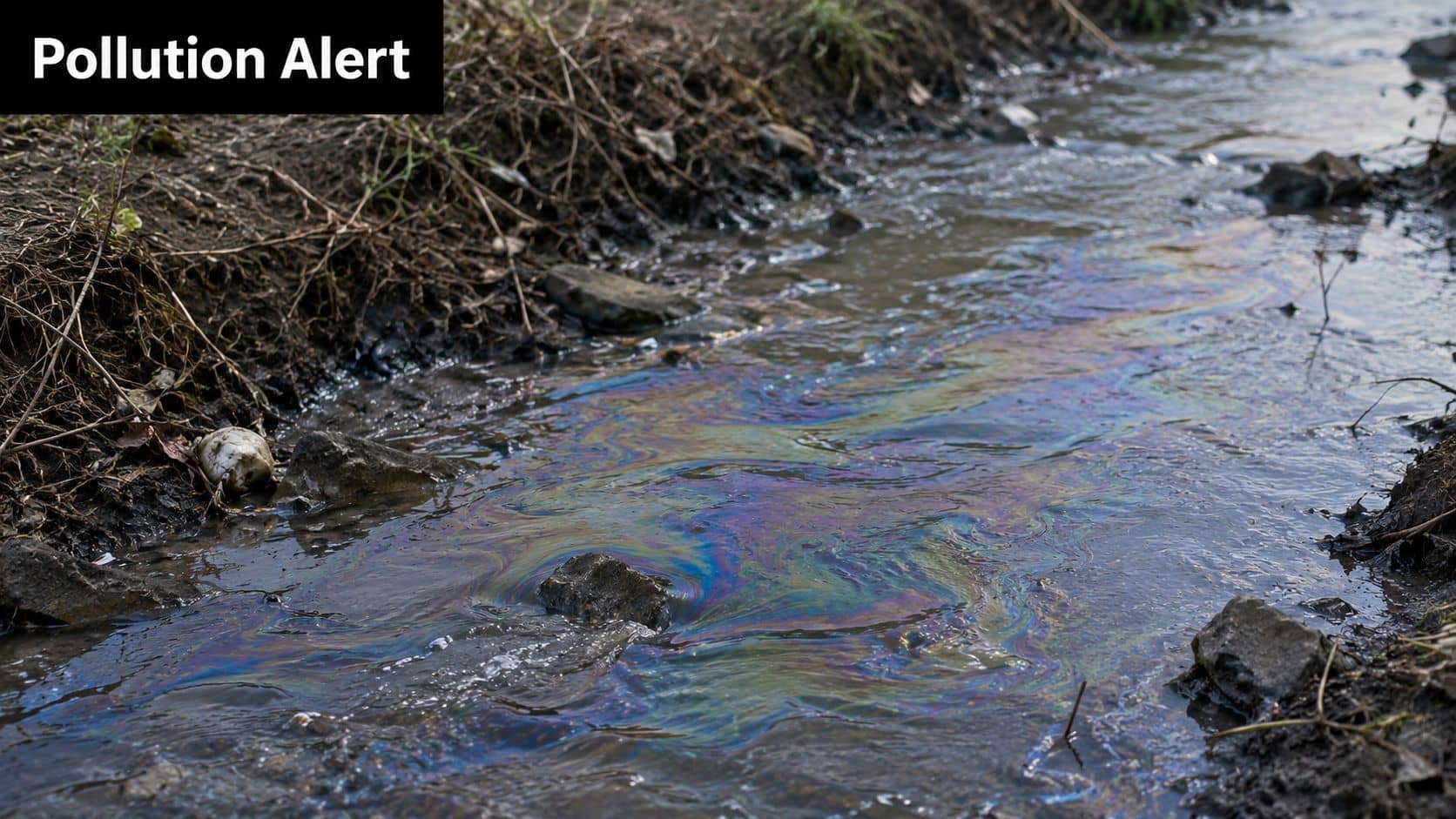
Used oil looks manageable when it's sitting in a drain pan under one car. That small amount makes people think it can't do much harm. It can.
Used engine oil is a hazardous waste stream under UK law, and the contamination risk is severe. The US EPA states that one gallon of used oil can contaminate one million gallons of water. You don't need to be in the US for that to matter. Oil behaves the same way when it reaches drains, soil, and waterways in the UK.
What goes wrong when oil is tipped away
When someone pours old oil into a surface drain, it doesn't magically disappear. It travels. It can move through drainage systems, spread through water, and leave a slick that affects far more than the small patch where it was first dumped.
If it's poured onto soil or gravel, the damage isn't contained neatly under the car either. The oil can soak in, spread below the surface, and create a longer, messier clean-up problem than is often anticipated.
It only takes one careless disposal to turn a simple home service job into preventable pollution.
There's a legal side as well. Hazardous waste has to be handled like hazardous waste. For a householder, that means keeping it secure and taking it to an authorised collection point. The practical standard is simple. If the disposal method involves a drain, the ground, or the general bin, it's the wrong method.
This quick visual sums up why disposal matters.
How Do I Safely Dispose Of Used Oil? - Teenager Guide to Life
The trade-off isn't worth it
People usually pour oil away for one reason. Convenience. They want the job done and the mess gone.
But the “easy” option is only easy for a minute. After that, it becomes someone else's contaminated drain, someone else's polluted ground, or your own problem if the container leaks where it shouldn't. Taking used oil to a proper recycling point is the slower option by a small margin. It's the cleaner option, the legal option, and the one that doesn't create a bigger mess than the oil change itself.
Safely Collecting and Storing Your Used Oil
The cleanest part of how to dispose of old car oil is the part that happens before you leave the house. If you collect and store it properly, the trip to the recycling point is easy. If you rush this stage, everything becomes harder. The container leaks, the boot smells, the oil gets contaminated, or the recycling site refuses it.
The safest workflow is straightforward. Drain the oil into a dedicated, leak-proof container, keep it free from antifreeze, brake fluid, and solvents, then seal and label it for transport to a certified collection point. Contamination is the big one. Once oil gets mixed with the wrong fluid, it may no longer be recyclable as used oil.
Choose the right container
A proper used-oil container wants three things. It must be leak-proof, it must seal properly, and it must be used for oil only.
If your old drain pan has a screw cap and pouring spout, that's usually fine as long as the seals are sound. If you're transferring oil, use a dedicated workshop-style container designed for storing automotive fluids rather than whatever bottle happens to be lying around.
A few things regularly go wrong here:
Open buckets get knocked over: They're fine for catching oil during the drain. They're poor for storage.
Thin household bottles split or deform: Hot used oil and sharp handling are a bad combination.
Unlabelled containers cause mix-ups: Someone sees a container in the garage and tops it up with another fluid. That ruins the batch.
Workshop habit: Seal the container as soon as the oil has cooled enough to handle safely. Don't leave it open “for now”.
Keep contamination out
This is the part many generic guides barely mention, but it matters. Old engine oil should stay as old engine oil. Don't mix in coolant, brake fluid, petrol, degreaser, white spirit, or anything else from the shelf.
Why? Because mixed fluids create a disposal problem instead of a recycling job. Even a careful DIY owner can spoil a whole container by draining another fluid into it out of convenience.
Use this quick check before you cap the container:
Do | Don't |
Use one container only for used engine oil | Mix oil with antifreeze, brake fluid, or solvents |
Wipe the outside of the container after filling | Store it with residue running down the sides |
Label it clearly as used engine oil | Assume you'll remember what's in an unmarked bottle |
Keep the cap tight and upright | Lay the container on its side in storage |
Store it away from drains, children, and pets | Leave it where it can be knocked over or tampered with |
Store and transport it sensibly
A sealed container still needs sensible handling. Keep it upright in a cool spot out of direct traffic in the garage or shed. Don't leave it where rain can get in if the lid loosens, and don't leave it balanced on a shelf edge.
When it's time to take it in, put it upright in the boot with some absorbent material underneath. Cardboard, an old tray, or absorbent pads all help catch a dribble if the cap wasn't tightened properly. It's a small precaution that saves a lot of cleaning later.
Finding Your Local Oil Bank in the UK
Once the oil is sealed up properly, the next question is usually simple. Where do you take it?
In the UK, the primary solution is a local council household waste recycling centre or another designated oil collection point. Some garages may also accept used oil, but don't assume. Ring first and ask what they take, whether they accept household quantities, and whether they want the oil and filter presented separately.
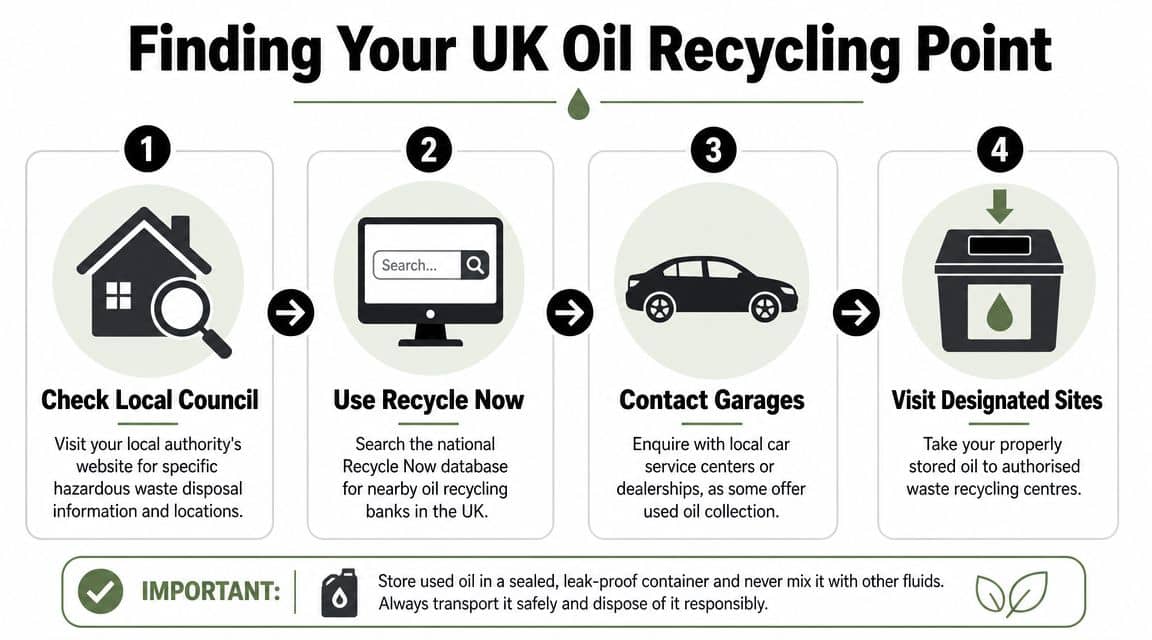
The easiest ways to find a recycling point
The simplest route is to work from official local information rather than forum guesses or old social posts. Sites and acceptance rules can change, and some centres accept engine oil but have conditions about containers, opening hours, or vehicle type.
Start with these checks:
Search your local council website
Look for household waste recycling centres, hazardous household waste, or engine oil disposal. Councils usually spell out whether the site accepts motor oil and what arrival rules apply.Use the Recycle Now postcode search
Recycle Now is the most practical national starting point for household recycling information in the UK, especially if you've moved recently or you're helping a family member with their car.Phone a nearby garage before driving over
Some independent workshops are happy to help. Others can't take household waste because of their own collection arrangements.Check the site rules before you load the car
Some centres have booking systems, ID requirements, or limits on what non-residents can drop off.
If a place isn't clearly authorised to take used oil, don't improvise. Ask first.
What it's like when you arrive
Most recycling centres make this part pretty painless. Staff will usually direct you to the correct area, and they may ask you to pour the oil into a marked tank or hand over the sealed container for the proper stream. Keep the container upright until you're told otherwise.
Take the filter with you too, but keep it separate from the oil container if possible. That makes things cleaner for you and simpler for the site staff.
If you're learning how to dispose of old car oil for the first time, this is often the bit people overthink. In reality, once the oil has been stored properly, the handover is the easy part.
What to Do with the Old Oil Filter
The oil filter is the bit people forget because it looks like a simple metal canister. It isn't empty once it comes off the engine.
A typical used oil filter can hold up to a pint of residual oil, and Illinois EPA guidance recommends draining it for at least 12 hours. That's a useful technical benchmark because it shows how much oil can stay trapped inside if you just toss the filter aside after removal.
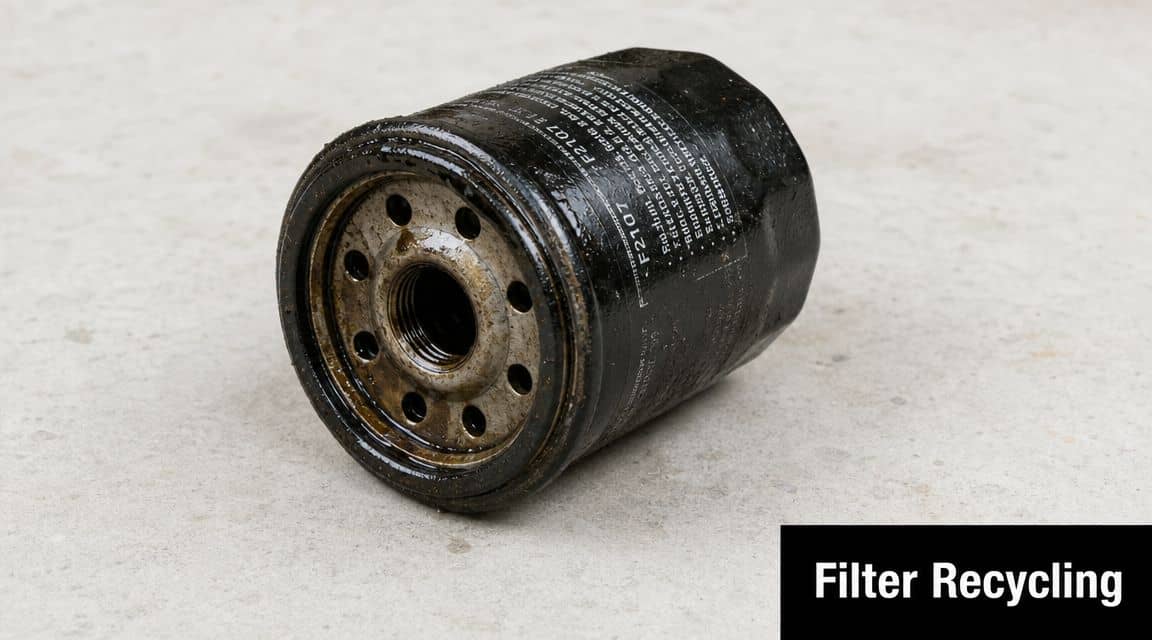
Why the filter still matters
Inside the filter canister, the filter media and internal spaces hold onto dirty oil even after the engine has drained. That's why a filter can feel heavier than expected when you remove it. If you drop it straight into a bin bag or a cardboard box, it can leak for hours afterwards.
If you're replacing your engine oil filter as part of routine servicing, treat the old one as part of the same waste stream, not as an ordinary scrap part.
How to drain it properly
A clean routine works better than a rushed one:
Remove it carefully: Keep the open end facing upward if you can, especially on spin-on filters that come off full.
Let it drain over your waste oil container: Give it time rather than trying to shake every last drop out by hand.
Leave it to drain thoroughly: The 12-hour hot-drain guidance is a good reference point for reducing the amount of oil left inside.
Transport it separately: A plastic tray, old tub, or sealed bag helps contain any final drips on the way to the recycling centre.
A drained filter is cleaner to handle, easier to transport, and less likely to make a mess in the car.
Some centres have a separate place for used filters. Others will tell you exactly where to put it when you arrive. Either way, don't assume the general rubbish bin is acceptable. It isn't the right home for a part that still contains used engine oil.
Quick Answers to Common Oil Disposal Questions
A few questions come up again and again after a home oil change. These are the ones worth sorting before they turn into a mess.
What if I spill oil on the driveway
Act quickly. Cover the fresh spill with an absorbent material and let it soak up the liquid before you start scrubbing. Once the loose oil is absorbed, clean the residue off the surface and bag up the contaminated absorbent material for proper disposal according to your local council's guidance.
Don't hose the spill into the road or a drain. That just moves the problem.
Can I mix synthetic and conventional engine oil for disposal
If both are used engine oils and nothing else has gone in, many householders keep them together in the same used-oil container for disposal. The line you must not cross is contamination with other automotive fluids or solvents.
If you're unsure what's already in the container, don't add more. Start a fresh one and ask the recycling point what they'll accept.
What if rainwater gets into the oil
Treat that as contamination risk. A little moisture might seem harmless, but once the oil isn't cleanly separated as used engine oil, the recycling route can get more complicated. If water has clearly got in, contact the recycling site before travelling and tell them what happened.
That's another reason to keep the container sealed and stored indoors or under proper cover.
How much can I take to the recycling centre
That depends on the local site. Councils and recycling centres set their own household rules, and some ask for bookings or proof that you live in the area. Check before you go rather than turning up with more than the site wants to accept in one visit.
Can I leave the oil in the garage for months
You can store it for a short period if the container is sealed, upright, and out of harm's way, but don't turn temporary storage into permanent clutter. The longer it sits there, the more chance there is of a leak, a knock-over, or someone adding the wrong fluid.
What's the simplest way to get this right every time
Use one dedicated drain pan, one dedicated storage container, and one routine. Drain the oil cleanly, seal it, drain the filter separately, and take both to an authorised site as soon as practical. Most disposal problems start when people improvise.
If you're planning your next service, GSF Car Parts stocks the everyday essentials that make the job cleaner and easier, including oil filters, containers, drainers, and other workshop consumables for DIY maintenance.