


A professional head gasket repair in the UK typically costs £1,500 to £2,500 at an independent garage. If the job gets more involved, the wider professional range commonly lands between £1,900 and £3,200, and badly overheated engines can go much higher.
If you’re reading this after seeing white smoke, finding mayonnaise-like sludge under the oil cap, or watching the temperature gauge climb higher than it should, you’re probably worried about two things. Is it really the head gasket, and how bad is the bill going to be?
That worry is justified. A head gasket failure can be expensive, but it's a mistake to guess. Once you understand what the gasket does, why the labour is so high, and where you can sensibly save money on parts, the quotes start to make a lot more sense.
That Sinking Feeling When You Suspect a Blown Head Gasket
Most drivers don’t start by saying, “I think the head gasket has failed.” They say the car suddenly started running hot. Or there’s smoke from the exhaust that wasn’t there last week. Or the heater’s gone cold, the coolant bottle keeps dropping, and the engine doesn’t feel right.
That’s usually when the stomach drops, because people know this repair has a reputation. And for good reason. Even before anyone picks up a spanner, you’re dealing with a fault that can affect combustion, cooling, lubrication, and the top end of the engine all at once.
The usual signs drivers notice first
A blown head gasket often shows itself through what the driver can see or smell:
White exhaust smoke: Coolant may be getting into a cylinder and burning off.
Milky sludge on the oil cap: Oil and coolant may be mixing.
Overheating: Pressure and coolant control inside the engine may have been compromised.
Coolant loss with no obvious leak: The coolant has to be going somewhere.
Rough running or misfire: Compression may not be sealing properly.
Sometimes you get one symptom. Sometimes you get three at once. The key thing is not to keep driving and hope it clears up. If the engine overheats hard enough, the repair can move from “replace the gasket” to “repair the damage caused by the failure as well”.
Practical rule: If the car is overheating and you suspect a head gasket issue, stopping early is usually cheaper than driving on and funding a bigger repair.
The good news is that not every scary symptom means the engine is finished. I’ve seen cars come in early enough that the owner was mainly paying for labour, parts, and proper machine work. I’ve also seen owners turn a repairable job into a financial write-off by topping up coolant for days and carrying on. Timing matters.
Understanding Your Engine’s Most Critical Seal
The head gasket sits between the engine block and the cylinder head and keeps three separate systems apart. It has to hold back combustion pressure, keep coolant in its passages, and keep engine oil where it belongs. If it stops doing that, the engine starts mixing heat, pressure, and fluids in ways it was never designed to handle.

How the gasket actually works
On a running engine, the gasket has a hard life. It sits between two metal surfaces that heat up, cool down, and expand at different rates. At the same time, it has to seal very high cylinder pressure next to oil galleries and coolant passages.
That is why a head gasket failure causes such a messy mix of symptoms. One failed sealing point can let combustion gases enter the cooling system, coolant enter a cylinder, or oil and coolant cross-contaminate. The exact symptom depends on where the seal has broken down.
What the common symptoms usually mean
A lot of diagnosis gets clearer when the symptom is tied to the part of the seal that has failed:
Milky oil: Coolant has likely mixed with engine oil.
White smoke from the exhaust: Coolant may be entering the cylinders and burning off.
Persistent overheating: The cooling system may be losing pressure, or combustion gases may be forcing their way into it.
Poor running: Compression may be escaping from one or more cylinders.
Unexplained pressure in hoses: Combustion gases may be entering the cooling circuit.
None of those signs proves the head gasket on its own. A cracked EGR cooler, failed oil cooler, thermostat issue, water pump fault, or even a bad radiator cap can point you in the wrong direction. Good diagnosis matters because the repair bill changes fast once parts start getting replaced on guesswork.
Catching it early matters because the gasket is rarely the expensive bit. Labour, machining, bolts, fluids, and any heat damage are what push the bill up.
Why this part fails
Overheating is the usual starting point. Once an engine runs too hot, the cylinder head can warp enough to reduce clamping force across the gasket. After that, combustion pressure finds the weak spot.
Poor previous repairs also cause trouble. Reusing stretch bolts, skipping head skim checks, or fitting cheap parts with poor tolerances can leave the new gasket with little chance of lasting. I have seen cars come back after a budget repair where the owner saved a bit on parts but still paid the labour twice.
That is where buying parts sensibly matters. A quality aftermarket head gasket set, bolts, thermostat, and water pump from GSF can cut the parts cost compared with dealer pricing, without gambling on unknown low-grade components. In the UK, that can make the difference between a repair that is worth doing and one that starts looking uneconomical.
The gasket may be a thin component, but it sits at the centre of the whole job. If the seal fails, the repair is never just about replacing one piece. It is about restoring the flatness, clamping force, and cooling control that let the engine survive the next few years.
How Much Does a Head Gasket Repair Cost in the UK
You get the call from the garage, hear the words head gasket, and the first question is usually the same. How can one gasket cost that much to replace?
In the UK, the answer is simple. The gasket itself is only a small part of the bill. According to CarParts on typical head gasket repair pricing, professional repairs typically range from £1,900 to £3,200, with labour making up 65 to 70% of the bill, the work taking 6 to 12 hours, labour costs of £1,574 to £2,310, and parts priced between £901 and £936.
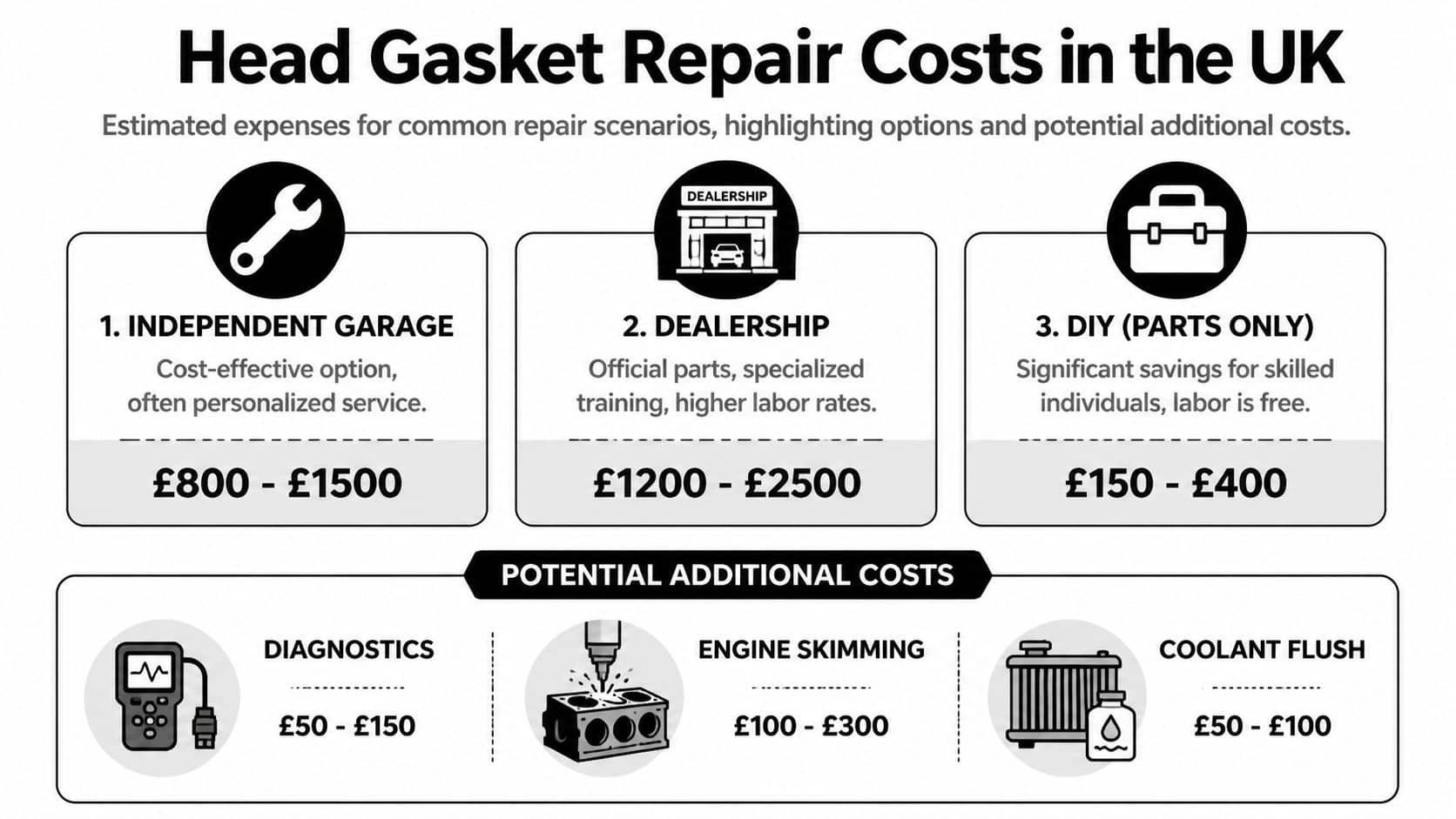
A practical UK cost comparison
For a UK owner, the rough picture usually looks like this:
Repair route | Typical cost |
DIY repair | £250 to £800 |
Independent garage | £1,500 to £2,500 |
Broader professional range | £1,900 to £3,200 |
Complex cases with extra work | £4,000 to £6,000 |
DIY can look tempting because the parts bill is far lower than the labour bill. That said, DIY only stays cheap if the head is flat, the timing setup is straightforward, and you already have the tools, space, and enough experience to strip and rebuild the top end without creating more trouble.
For many owners, the sensible middle ground is an independent garage using decent aftermarket parts. That is often where the savings are. Buying a quality gasket set, bolts, coolant, and related items from GSF can keep the parts side of the invoice under control, especially if the garage is happy to fit customer-supplied components or price-match against sensible aftermarket options. If the cooling system has contributed to the failure, replacing a tired water pump for the cooling system at the same time can also save paying for overlapping labour twice.
What you’re actually paying for
A proper quote usually includes more than the headline gasket replacement:
Labour: removing the top end of the engine, stripping parts for access, cleaning surfaces, refitting, and setting timing correctly
Parts: head gasket set, head bolts, seals, oil, coolant, and filters
Machine shop work: pressure testing and skimming the cylinder head if required
Consumables: sealants, cleaners, and workshop materials
This is why cheap quotes need reading carefully.
One garage may include bolts, fluids, and head testing from the start. Another may quote a base price, then add machining and related parts once the engine is apart. Neither is automatically wrong, but they are not the same quote.
Why labour takes such a large share
On many engines, getting to the head gasket means removing intake parts, exhaust components, timing gear, and a long list of fixings and ancillaries before the head even comes off. Reassembly is where the skill is. Everything has to go back clean, timed correctly, and torqued in sequence.
That is why a head gasket job can be expensive even on an older car with modest parts prices. You are paying for hours, accuracy, and the checks that stop the engine coming apart again a month later.
Money-saving truth: Ask for an itemised quote and compare what is included, not just the total. Good aftermarket parts from GSF can reduce the bill. Cutting corners on bolts, fluids, or machining usually does the opposite.
Factors That Drive Your Final Repair Bill
No two head gasket jobs are priced exactly the same because no two engines are laid out the same, and no two failures stop at the same point. One owner gets away with a straightforward repair. Another has damage that spreads well beyond the gasket.
According to CarBuzz on model-specific head gasket replacement costs, quotes can range from £1,527 for a Chevrolet Spark to £3,766 for a BMW X5. The same source notes that overheating damage such as a warped cylinder head can push total costs beyond £6,000.
Vehicle design changes everything
A small, simple engine is usually less costly to strip and rebuild than a larger, tighter-packed engine. Access matters. So does layout. If the engine bay is cramped, or major components have to come off just to reach the cylinder head, labour climbs quickly.
Premium and luxury cars also tend to attract higher labour rates, and some engines demand more care and more time to dismantle correctly.
The real killer is secondary damage
The gasket itself might be the starting point, but overheating is what turns a bad bill into a brutal one. Once an engine has run too hot, a garage may find:
A warped cylinder head
Bearing contamination from mixed fluids
Damage elsewhere in the cooling system
Catalytic converter problems if coolant has been burning through the exhaust
That’s why a cheap early diagnosis is worth having. If the root cause was a failing cooling component, sorting that matters too. For example, if the water pump has contributed to overheating, it makes sense to inspect related cooling parts such as a replacement water pump while the fault is being traced.
Where the job is done also affects the price
A trusted independent garage will often price the work differently from a main dealer or specialist. The labour rate, the parts policy, and the way they write estimates all affect the final number.
If you’re comparing quotes, don’t just ask “how much”. Ask what happens if the head needs machining, whether the bolts and fluids are included, and whether the estimate assumes no further heat damage. That’s where the final bill can move.
What Happens During a Head Gasket Replacement
Most owners only see the quote and the finished car. They don’t see how much work sits between those two points. A proper head gasket repair is a top-end engine job, and that’s why the labour is so high.
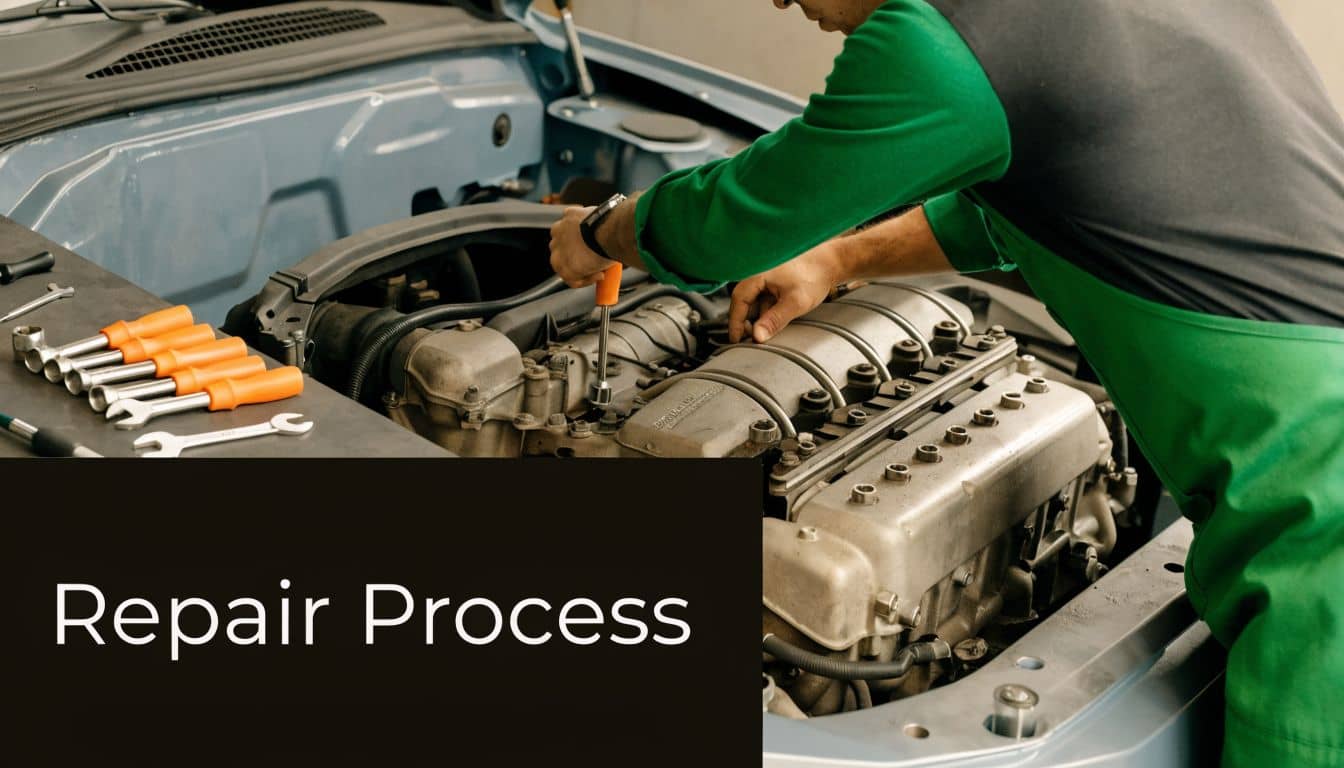
According to K-Seal’s guide to head gasket repair cost, the job typically involves 8 to 12 hours of labour, including cylinder head removal and machining to resurface a warped head to a 0.05mm flatness tolerance. The same source notes that quality parts such as a Mahle or Elring MLS gasket kit can reduce the risk of repeat failure.
Diagnosis comes first
A garage should confirm the problem before tearing the engine apart. That usually means testing for loss of compression or signs that combustion gases are entering the cooling system. Good diagnosis matters because once the strip-down starts, labour accumulates quickly.
A mechanic also needs to judge whether the engine has lost the gasket seal or whether overheating has already affected the head itself.
Then the real labour starts
The top of the engine has to come apart. Depending on the vehicle, that can include intake parts, exhaust-side components, timing gear, covers, hoses, electrical connections, and the cylinder head itself.
Once the head is off, nobody sensible just throws a new gasket on and bolts it back together. The mating faces have to be inspected, cleaned, and measured. If the head isn’t true, the new gasket won’t last.
Here’s a useful visual overview of the sort of work involved: The Only Way To Replace a Head Gasket
Machine work and careful reassembly
If the head has warped, it often needs resurfacing. That’s the stage many owners don’t know about until the quote changes. But skipping it is false economy. A new gasket on a poor surface is asking for a repeat job.
Reassembly is just as important as strip-down. The head bolts are tightened in the correct sequence and to the correct specification. Timing has to be set correctly. Fresh oil and coolant go in. Then the system is checked again for leaks, proper circulation, and stable running.
For anyone buying parts for this kind of job, a complete head gasket set is usually the sensible starting point rather than sourcing seals one by one.
A head gasket job fails most often when someone rushes the cleaning, ignores machine work, or treats bolt tightening as a rough guide instead of a precision step.
Smart Ways to Reduce Your Head Gasket Repair Bill
A head gasket job gets expensive because labour hours stack up fast. The practical way to bring the bill down is to avoid false savings and spend carefully on the parts and work that matter.
DIY only saves money if you can finish the job properly
DIY can cut the cash outlay heavily, but only for someone with the right tools, enough time, and experience setting timing, following torque sequences, and checking surfaces properly. If any of that is missing, the cheap route can turn into paying twice.
The biggest labour saving comes from doing the strip-down and reassembly yourself. The risk is that one mistake, poor cleaning, reused bolts where they should have been replaced, incorrect timing, or a head that needed machining, can ruin the new gasket quickly.
Sealants are where many owners try to save money after seeing a four-figure quote. In practice, bottled fixes are usually a short-term gamble, not a proper repair. If a workshop manual calls for a specific sealing product on certain joints, use the correct gasket compound for engine sealing jobs, not a random tube from the shelf.
The safer saving for most UK owners
The sensible middle ground is simple. Pay for skilled labour. Control the parts cost where the garage is happy for you to supply them.
That is often where the worthwhile savings are. Dealer parts pricing can be hard to justify on an older car, while good aftermarket brands can lower the bill without cutting standards. That matters more in the UK than many US-focused guides admit, because labour is only part of the story. Parts sourcing can swing the final number by hundreds.
GSF Car Parts is a practical place to look for OE-quality aftermarket engine parts, service items, and workshop consumables. If you are comparing quotes, pricing the parts separately gives you a clearer view of whether the garage estimate is fair or padded.
What saves money, and what usually wastes it
Ask for a written quote that lists machining, head bolts, fluids, and VAT. A cheap headline figure means little if half the job is missing.
Get more than one quote. One garage may include pressure testing and skimming checks, while another leaves them as extras.
Use known aftermarket brands where appropriate. That can trim the parts bill without dropping into bargain-bin quality.
Replace sensible access-off items at the same time. Thermostats, belts, water pumps, and coolant hoses can be cheaper to do now than later, if your mechanic spots wear.
Do not buy parts on price alone. A poor gasket set or wrong bolts can wipe out any saving.
Do not rely on a bottle fix for a seriously failed gasket. It rarely ends as the cheap option.
If the labour bill is the biggest part of the job, it makes sense to protect it with decent parts and proper machine checks.
Repair or Replace Making the Right Financial Call
At some point, this stops being a mechanical question and becomes a money question. Is the car worth repairing, or are you about to put a large bill into a vehicle that won’t give you that value back?
Start with the total repair figure
You need a proper quote, not a guess. Once you have that, compare it with the car’s current market value in its present condition if repaired. If the repair cost is close to or above what the car is worth, the decision gets harder.
That doesn’t automatically mean you shouldn’t repair it. A car you know well can still be worth keeping if the rest of it is sound. But the numbers need to be faced squarely.
Then look beyond the headline price
A few questions help sort the decision:
What condition is the rest of the car in? If the gearbox, suspension, tyres, and bodywork are all tired, a major engine bill may not make sense.
Has the engine overheated badly? If there’s a strong chance of hidden damage, budget risk goes up.
Do you need reliability soon? A replacement vehicle also costs money, time, and uncertainty.
Is there sentimental value? That matters more to some owners than resale value.
The practical way to decide
Get the diagnosis confirmed. Get the repair estimate in writing. Ask exactly what’s included and what could increase the bill once the head is off. Then compare that final likely spend with the cost of replacing the car with something of similar condition and history.
That’s the point where emotion tends to settle and the right answer becomes clearer. Some cars are worth saving. Some aren’t. The mistake is making the call before you’ve got a firm number to work with.
If you’re pricing up a repair, start by checking the exact parts your car needs at GSF Car Parts. You can compare OE-quality options, use the number plate finder to narrow fitment, and get a clearer idea of where the parts side of the head gasket repair cost may be reduced before you commit to the full job.





